CHURCH IN JASENOVAC - WITNESS TO DEATH AND RESURRECTION
Croatia - SOC - feature story
04/26/2026
12:08
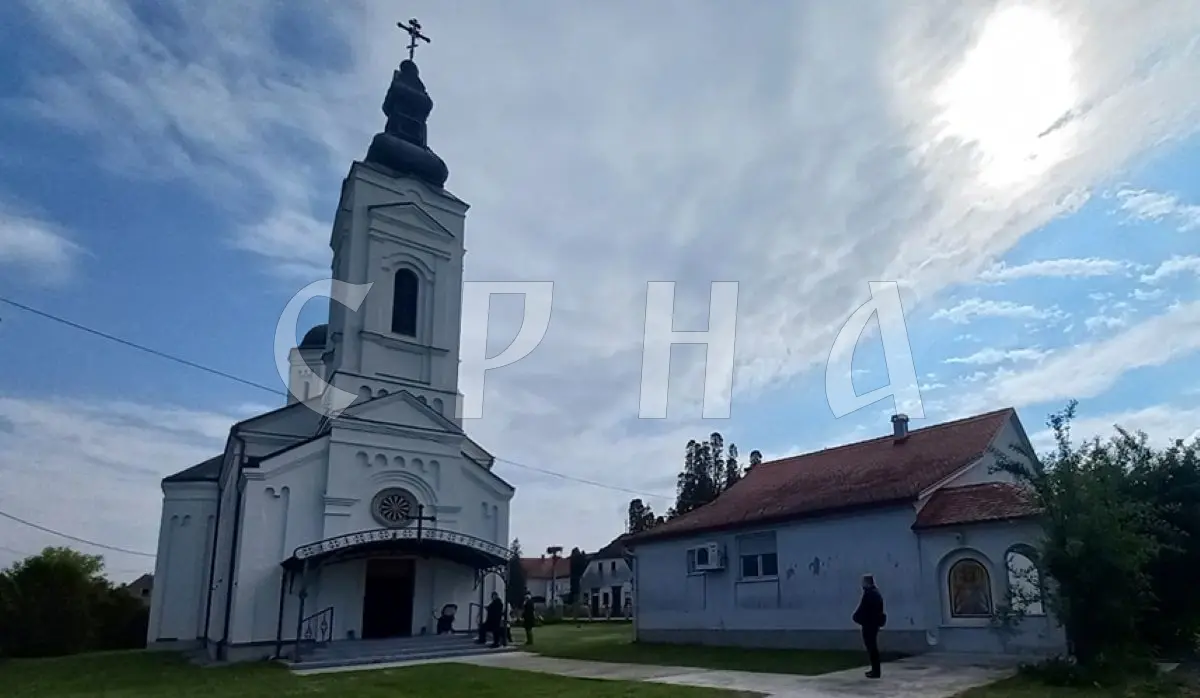
Resurrection is the only message that should come from Jasenovac. The essence is that people visit Jasenovac, only in that way can this place be preserved, Bishop Jovan emphasized. By Ana BENCUN
JASENOVAC, APRIL 26 /SRNA/ - There are no signs on the way to the Jasenovac Monastery indicating that a church is located there, a place that bears witness to great human suffering in such a small area, but also serves as a reminder of the strength and importance of spiritual life, renewal, community, and devotion to God.
An unavoidable trace of innocent victims, tortured and killed in the camp, remains in Jasenovac: painful, deep, and indelible, serving as a lasting reminder and lesson that one should forgive, but not forget.
The Jasenovac Monastery, with its church dedicated to the Nativity of Saint John the Baptist, belongs to the Eparchy of Pakrac and Slavonia of the Serbian Orthodox Church /SOC/. It is unusual in that it is located in the middle of a village, is easily accessible, and is cared for by six nuns.
BISHOP JOVAN: JASENOVAC - PLACE OF PROFOUND AND PERFECT PEACE
His Eminence Bishop Jovan of Pakrac and Slavonia told SRNA that the church dedicated to the Nativity of John the Baptist is a witness to death and resurrection, but also a place of profound and perfect peace.
“That peace is our duty, and no harsh word must leave this place directed at anyone. Resurrection is the only message that should come from Jasenovac. The essence is that people come to Jasenovac, and only in that way can this place be preserved,” Bishop Jovan said.
Bishop Jovan believes that historical research has not made sufficient efforts to thoroughly investigate the events in Jasenovac to produce a reliable book about the notorious camp from the era of the NDH /the Independent State of Croatia/, a site of suffering for Serbs, Jews, and Roma.
BUILDING A CULTURE OF REMEMBRANCE BASED ON HISTORICAL TRUTH
“Only based on historical truth, when we know what happened here, can we build a culture of remembrance. It is not enough to know the basic facts. Much remains unknown. A few years ago, we discovered a Ustasha hospital, the last building of the camp, which we have now turned into a museum and exhibition space. Much effort still needs to be invested to know the truth,” Bishop Jovan said.
Above all, the Bishop says, a person must first reconcile with themselves and understand that one should be here primarily because of the victims.
“If we do not pray for them, if we do not take care of them and visit their graves, then it is impossible to achieve that peace,” Bishop Jovan emphasized.
The monastery church was built at the beginning of the 18th century and was much larger than it is today, because at that time, as Bishop Jovan says, the Serbian community in Jasenovac was large and strong, and it continued to grow and strengthen all the way until the Second World War.
CHURCH DEDICATED TO THE NATIVITY OF JOHN THE BAPTIST - ONE OF THE FIRST VICTIMS OF CAMP
Bishop Jovan reveals that the Orthodox church in Jasenovac was one of the first victims of the camp, as the Ustashe forced the first prisoners to demolish it.
“When Jasenovac III camp was established, this was meant to be the base of a Ustasha motorized unit that pursued and killed people in the wider camp area. The first prisoners in the camp, mostly Jews, were forced to demolish the church, so Jasenovac entered 1945 without a church,” the Bishop said.
In a garage within the motorized unit complex, a church was established, which remained in use until 1984, as the socialist and communist authorities did not allow the construction of a new church.
Bishop Jovan says that in the first half of the 1970s, the construction of a new church began, but it progressed slowly, as this was a time when people were distanced from faith and the Church.
“The church was consecrated in September 1984, at a magnificent public gathering, and the then Serbian Patriarch German conveyed the famous words to the faithful - that we must forgive, but we must not forget,” Bishop Jovan recalled.
This church experienced another hardship and Golgotha during the last war. It was not destroyed but was devastated and left in ruins. It was restored in 2000, when Bishop Sava declared the Jasenovac church of the Nativity of Saint John the Baptist a monastery.
SIX NUNS GIVING LIFE TO THE MONASTERY
The monastery especially came to life in 2016, when three nuns arrived from Beška on Lake Skadar, as it had been a male monastery until then.
Among them was the current abbess, Mother Serafima, who says that the sisterhood gladly welcomes every guest, visitor, and even a casual passerby, and that in the past three years an increasing number of people have shown interest in Jasenovac.
“In the past three years, more and more people have been coming to visit this place in organized groups, which was not the case before. Earlier, visits were mainly limited to the church Patron Saint's Day /Slava/, but now it is different - around 15 buses of visitors arrive annually from countries across the region and the world, which is quite unusual, because few people even know that this monastery exists. There are no road signs or boards to inform passersby about the existence of this monastery,” Mother Serafima told SRNA.