NUŽDIĆ: CRIME GOES UNPUNISHED EVEN AFTER THREE DECADES
FBiH – the Petrovac Road – culture of remembrance
08/07/2026
10:04
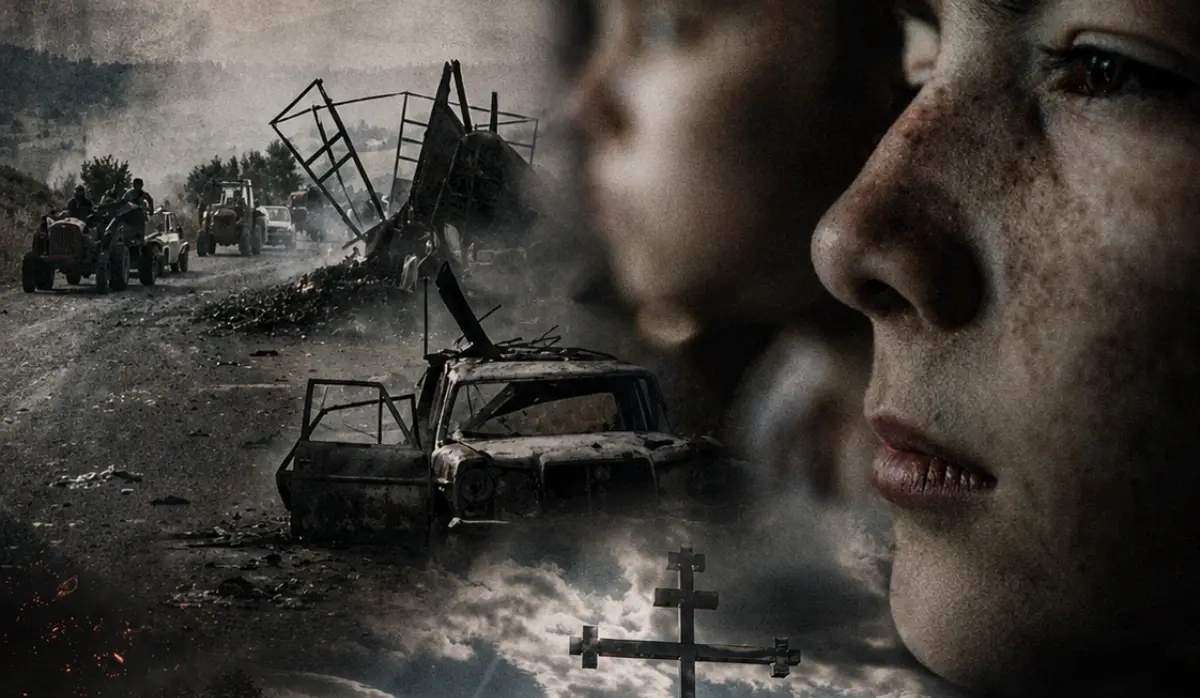
BOSANSKI PETROVAC, AUGUST 7 /SRNA/ - Acting Director of the Republika Srpska Centre for Research of War, War Crimes and the Search for Missing Persons Viktor Nuždić considers it devastating that, even after more than three decades, no one in Croatia has been held accountable for the crime against Serbs on the Petrovac Road in 1995, despite Croatia being a full member of the EU that professes the rule of law, human rights and equal values for all.
"Serbia has undertaken the obligation to prosecute those responsible, but the proceedings are being conducted in absentia because the defendants are not available to the judicial authorities," Nuždić told SRNA on the occasion of today's commemoration marking 31 years since the killing of Serbs from the Republic of Serbian Krajina in the refugee convoy on the Petrovac Road.
According to him, the Petrovac Road remains one of the most painful symbols of the suffering of the Serb people in both Krajinas and a lasting testimony to the crime committed against innocent civilians.
"Military targets were not attacked at that location, but rather a refugee convoy carrying women, the elderly and children, people who were leaving their homes in search of safety. Unfortunately, history repeated itself here: during the Second World War, Serb refugees were attacked by German aircraft, and in the 1990s by Croatian aircraft," Nuždić said.
He said that innocent people once again paid the highest price, and that children were among the victims, whose deaths cannot be justified in any way.
"The tragedy did not end on the Petrovac Road. The very next day, the attack was repeated in Svodna, where Serb civilians were killed again. That is why we cannot view these crimes in isolation, but rather as part of the wider suffering of the Serb people in both Krajinas," Nuždić said.
He said that, despite persecution and suffering, Serbs have survived, stressing that this is the greatest victory over all those who believed they would disappear.
"The institutions of Republika Srpska have a lasting obligation to preserve the culture of remembrance, safeguard the truth about the suffering of the Serb people, and preserve the memory of the Republic of Serbian Krajina and its victims," Nuždić said.
He stressed that it is particularly important that Republika Srpska and Serbia are jointly commemorating the most significant dates in Serbian history today, as this confirms that we are one people, bound by shared suffering, history and responsibility towards those who made the greatest sacrifice.
The criminal operation Storm began on August 4, 1995, with an offensive by the Croatian Army and police, as well as HVO units, in the areas of Banija, Lika, Kordun and northern Dalmatia, during which more than 220,000 Krajina Serbs were expelled from their ancestral homes.
The updated records of the Documentation and Information Centre Veritas contain the names of 1,904 Serbs who were killed or went missing during and after this operation, including 1,250 civilians, around three-quarters of whom were over the age of 60.
Among the victims were ten children under the age of 14 and 566 women, around four-fifths of whom were over the age of 60. Veritas said that this represents a particularly grim record of the civil wars of the 1990s in the territory of the former Yugoslavia.
In its February 2015 ruling, the International Court of Justice characterised Operation Storm as ethnic cleansing, but not as genocide, although international experts in the field of genocide studies have argued that the operation had all the characteristics of genocide.