LONG SERBS’ PRESENCE IN SARAJEVO
FBiH - Sarajevo - Serbs and the SOC's Property
08/24/2026
10:58

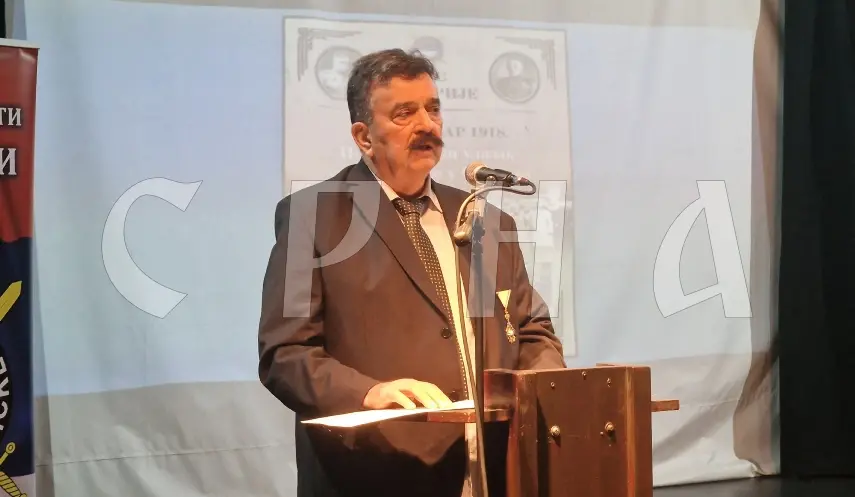
SARAJEVO, AUGUST 24 /SRNA/ - At a session held on March 12, 1939, the Council of the Sarajevo Church Municipality approved architect Aleksandar Deroko's project to build the Chapel of the St. Vitus Heroes in Koševo using crosses and tombstones from the Carina cemetery, in order to preserve them as testimony to long Serbs’ presence in Sarajevo, publicist Dragan Mijović told SRNA.
By Željka DOMAZET
The exhumation of the Carina cemetery finally began two months later, with a plan to relocate more than 1,500 graves, after first removing the tombstones.
"All work related to the exhumation, transfer of the bones, construction of the crypt and, finally, construction of the chapel for the St. Vitus Heroes was minitored by the Council of the Church Municipality, consisting of President Stevo Prnjatović, a merchant; Simo Umićević, senior adviser; Dr Kašiković; Đorđe Mandrapa, a merchant; Svetozar Cvijetić, a merchant; Tanasije Nastić, a caterer; Jovo Zagorac, a merchant, and others. They were significantly assisted by members of the Diocesan Administrative Board - Jovo Šošić, Živko Nježić and Vasilj Grđić. Everything was done with the blessing of Metropolitan Petar Zimonjić /later Saint Petar of Dabar-Bosnia/," Mijović specified.
Mijović emphasized that professional supervision of the exhumation, with the cataloguing of the tombstones, was carried out by prominent Serb scientist and former director of the National Museum in Sarajevo, Dr Vladislav Skarić, assisted by museum curator Milan Karanović.
He said Skarić meticulously catalogued all the tombstones and described those of particular significance, selecting nearly 700 of the 1,500 tombstones to be incorporated into the construction of the chapel.
"Uroš Bogdanović supervised the exhumation work. Around 100 workers, mostly Serbs recruited from the Sarajevo area, worked from morning until night. Thousands of cubic metres of earth were excavated to a depth of 1.3 metres. During the first month alone, 60 large, specially made sacks containing the bones of the deceased were removed. Even the British consul, Vibert, came to visit the exhumation site," Mijović said.
Mijović stresses that it is important to note that graves containing only one deceased person were rare, because old Serb families had been burying their members in the same family graves for more than a century.
"Thus, whenever a new burial took place, many bones of those previously buried were removed, which was common practice. There was a story of one burial when a pile of bones, including as many as twelve skulls, was removed from a grave to make room for the `new` deceased. Sometimes people were buried without coffins; the grave was lined with stone slabs and then covered with them," Mijović revealed.
FINDINGS DURING EXHUMATION
Mijović said it was interesting that a number of the male skeletons belonged to "two-metre-tall men," even though the average height of people at the time was considerably lower than today.
"Many of the bones showed visible injuries caused by sharp objects, while forged nails had been driven into one male skull and one child’s skull. Only 18 deceased Catholics were exhumed by the Sarajevo Parish Office and transferred to the Catholic cemetery," Mijović said.
Mijović continued that, apart from remnants of clothing and various personal belongings, some old coins, jewellery, silver breast clasps and buttons, an occasional medal, shields, head decorations, bangles, rings, amulets, icons, chains, cigarette holders and other items were also found.
A commission of the Metropolitanate of Dabar-Bosnia attended the excavation of the graves of the bishops mentioned earlier, including Archpriest Marko Maksimović, President of the Church Court Janko Brezančić, Archpriest Stevan Petrović, inspector Simo Stanivuković and others, he said.
"The graves were built of brick and stone and, as already mentioned, had been forcibly opened and looted, with the exception of the grave of Paisius, Metropolitan of Zvornik, who, being Greek, was buried according to the local custom. Namely, Greek bishops, dressed in full liturgical vestments, with a mitre on their heads, phelonion and epitrachelion, together with a cross and crutch, are placed on a special chair to which they are attached, with their hands positioned as if for a blessing. In that position, they are carried from the church to the cemetery among the faithful, and are buried in the same seated position in a somewhat deeper grave, which is then sealed from above with a slab," Mijović noted.
Mijović explained that the position of the skeleton clearly indicated that Bishop Paisius had been buried in this manner.
He said that the bones of all the bishops would be placed in special coffins and transferred to the crypt in Koševo, accompanied by the appropriate church service.
"By the end of the exhumation, thousands of cubic metres of earth had been excavated over an area of approximately 15 dunums, thus creating a large open plot. In September 1939, the chapel in Koševo was also completed. The cost of its construction, amounting to nearly 200,000 dinars, was donated by Church Board President Stevo Prnjatović and his wife Jula. There will be more discussion later about the burial of the St. Vitus Heroes. Unfortunately, the beginning of construction of the theological seminary was disrupted by the outbreak of World War II, which brought unprecedented suffering to the Serbs and their Church, while what happened after 1945 with the seizure of Serbian Orthodox Church property is already well known," Mijović said.