SAMARDŽIJA: ATTACK ON SERB WEDDING PROCESSION SIGNALLED START OF PROLONGED SERB SUFFERING
BiH - March 1
03/01/2026
12:25

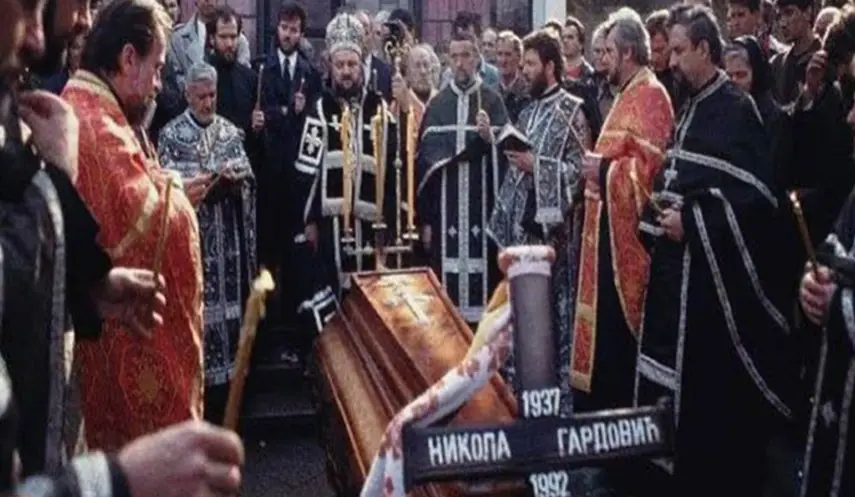
PALE, FEBRUARY 28 /SRNA/ – The shooting at a Serb wedding party on Baščaršija on March 1, 1992, was for Serbs in Sarajevo a sign of years of suffering, persecution, and crimes against the civilian population, and a day that closed the door to peace and dialogue, historian Svjetlana Samardžija said.
Samardžija told SRNA that the killing of Nikola Gardović in front of the Old Orthodox Church on Baščaršija and the wounding of priest Radenko Mirović, even after 34 years, is perceived by the Serb public as the symbolic beginning of wartime suffering in BiH.
She emphasized that March 1 is for Serbs a symbol of illegal secession, majorization, and a tragic killing that served as a prelude to war.
"This attack is perceived in the Serb collective memory as the first shot that triggered a years-long war conflict, and instead of a democratic expression of will, for the Serb side it was a day that closed the door to peace and dialogue," Samardžija stresses.
According to her, the shot fired at Serb wedding guests, as a symbol of joy, life, and the sanctity of marriage, was a sign that one side had chosen the path of conflict instead of coexistence.
"The Serb Church, as a centuries-long pillar and bearer of identity, guardian of spirituality and nationality, has throughout history always been the only support for the people. As such, it shared martyrdom and suffering with the people, and therefore the shooting of the priest on Baščaršija and of Gardović, who carried the flag of the Serbian Orthodox Church, was an attempt to erase the centuries-old Orthodox identity in BiH," Samardžija stressed.
She assessed that the suffering that began in March 1992 was a prelude to the suffering of the Serb people west of the Drina, from which Republika Srpska emerged as an eternal covenant, but also a warning of what happens when Serbs forget their history.
Samardžija emphasized that the killing of Nikola Gardović carries a frightening message, because the prelude to war was not a clash of two armies, but an attack on spirituality, family, and civilians.
She described as particularly distressing the exodus of more than 120,000 Serbs from Sarajevo after the signing of the Dayton Peace Accords, when, as she noted, many left their centuries-old homes, carrying memories with them, but also fear of a repetition of tragedy.
"Unfortunately, a state built on injustice, outvoting, and the blood of innocents is condemned to deep internal divisions that time can hardly heal," Samardžija said.
In parts of FBiH with a Bosniak majority, March 1 is marked as the so-called Independence Day of BiH, as an illegal referendum on independence and secession from the SFRY was held on that day. Serbs in Republika Srpska remember March 1 for the killing of a Serb wedding guest in Sarajevo, which was also the trigger for the outbreak of war conflicts.
This tragic date is not celebrated in Republika Srpska, but November 21 - the day when the General Framework Agreement for Peace in BiH was initialed at the Wright-Patterson Air Force Base near Dayton, marking the end of the civil war in BiH.


DODIK: EUROPEAN PATH POSSIBLE WHEN BRUSSELS ACCEPTS SRPSKA WITHIN ITS CONSTITUTIONAL CAPACITY

DODIK: ANNUL DECISIONS THAT HAVE NOT GONE THROUGH PARLIAMENTARY PROCEDURE

DODIK: REPUBLIKA SRPSKA DELEGATION TO VISIT CHINA BY THE END OF THE YEAR

DODIK: PROCLAIMING NEW CONSTITUTION ON JANUARY 9 PLANNED