MISSING PERSONS INSTITUTE ANTI-SERB, LOW TRUST IN NEW BOARD
BiH - search for the missing
04/08/2026
12:51

ISTOČNO SARAJEVO, APRIL 8 /SRNA/ – Republika Srpska must find a model to move the issue of searching for missing persons from a standstill, while the work of the BiH Institute for Missing Persons is so anti-Serb that families of Serb victims see no chance for the process to improve, regardless of who sits on the Board of Directors, Branimir Kojić, head of the Organization of Families of Captured and Fallen Soldiers and Missing Civilians from Srebrenica, told SRNA.
Kojić said that the selection of the Board of Directors of the Institute for Missing Persons is further proof of how dysfunctional and politicized BiH is.
He noted that families of Serb victims have no trust in the Institute and that this humanitarian issue has shown that Republika Srpska and the Serb people must not trust Sarajevo, adding that it was a major mistake to transfer the process to the BiH level.
"From that moment, there has been a complete standstill in the search for missing Serbs, and we are witnessing that the Institute’s work has been fully placed in the function of Sarajevo’s politics, but also used as a weapon aimed at the hearts of Serb families who are still searching for their loved ones," Kojić said.
NEW BOARD OF INSTITUTE FOR MISSING PERSONS WILL NOT DO MUCH - SEARCH PROCESS STALLED
The President of the Republika Srpska Organization of Families of Captured, Fallen Soldiers and Missing Civilians Isidora Graorac told SRNA that the new members of the Board of Directors of the BiH Institute for Missing Persons will likely not accelerate the search for missing Serbs, as the organization has no influence over their selection.
Graorac stressed that these positions have unfortunately become political, and are usually filled by party representatives rather than individuals who truly understand the pain and suffering of losing loved ones.
"Families of the missing from Republika Srpska have long lost trust in the BiH Institute for Missing Persons, and it can be freely said that the newly appointed members of the Board will likely not bring any significant change. The fact that we have no influence means they do not seek our views or opinions, neither on who should be appointed nor on the work that needs to be done," Graorac emphasized.
She assessed that this is not fair, as resolving the fate of the missing is an issue of national importance and should be addressed in coordination with those who have been searching for the remains of their loved ones for more than 30 years.
"If someone is there merely to formally satisfy ethnic quotas or to hold a salaried position without being accountable to the families who are still lost in their search for their closest relatives, then there is no point in commenting," Graorac believes.
She noted that previous cooperation with the Institute had been very modest and far below expectations, adding that it is difficult to expect that the new composition of the Board of Directors will work miracles in clarifying the fate of missing Serbs, especially given that the institution has existed for 18 years and has achieved little during that time.
NEW BOARD THE SIXTH SINCE ESTABLISHMENT
Nikola Perišić /Serb/, Šimun Novaković /Croat/, and Suad Hasanović /Bosniak/ have been appointed to the Board of Directors of the BiH Institute for Missing Persons, SRNA finds out.
The new Board is the sixth since 2005, when the Institute for Missing Persons of BiH was established, whose work has drawn numerous criticisms and complaints from families of the missing from Republika Srpska, including regarding those appointed from among the Serb representatives.
Republika Srpska is searching for 1,640 missing soldiers and civilians, while the remains of around 600 unidentified individuals are held in three memorial ossuaries. Officials from Republika Srpska have continuously warned that the search process for missing Serbs has been stalled since the establishment of the Institute in 2008, and that the process would likely have been completed by now had it remained under the jurisdiction of entity-level commissions.

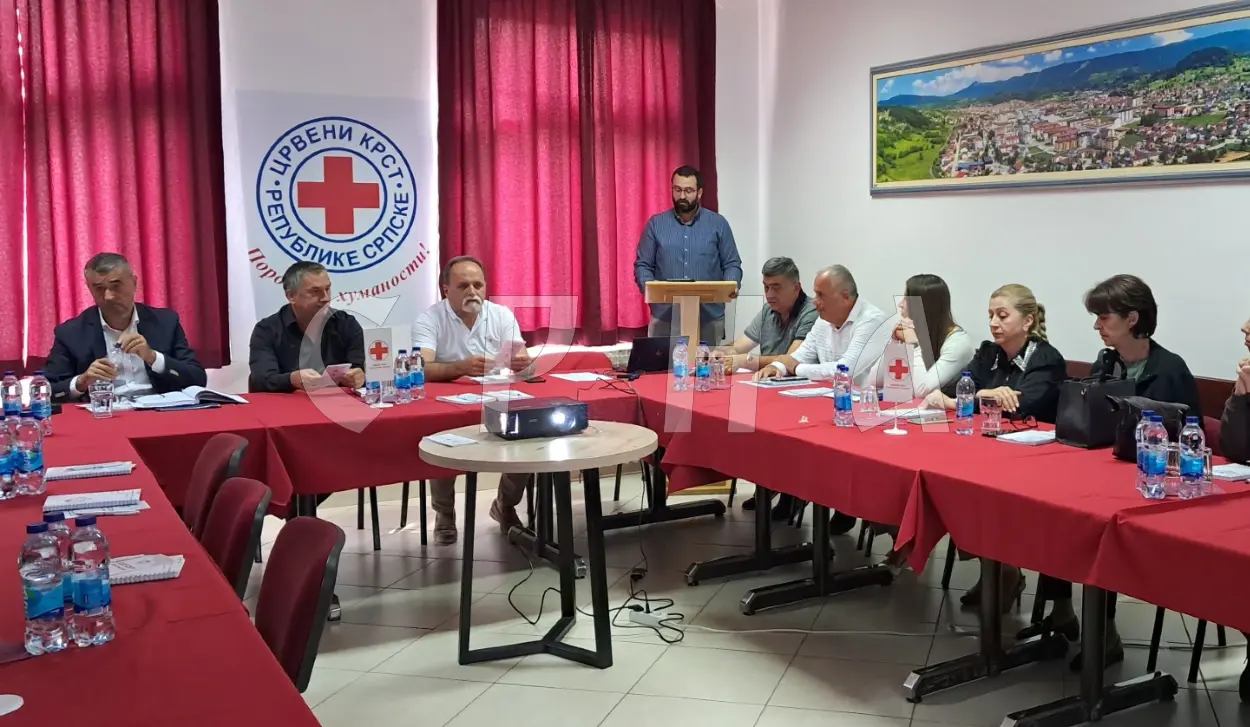
RELIABLE INFORMATION CRUCIAL TO FINDING MISSING PERSONS
ŠKRBIĆ RECEIVES RECOGNITION IN THE UNITED STATES FOR ACHIEVEMENTS IN SCIENTIFIC RESEARCH
ORBAN: COMMON FOREIGN POLICY MEANS GIVING UP SOVEREIGNTY
POLITICAL MADNESS FROM SARAJEVO MUST END, UNILATERAL BAN ON PM MACUT’S FLIGHT