LINTA: BY CRIME IN DOBROVOLJAČKA, MUSLIM LEADERSHIP DEMONSTRATED IT DID NOT WANT PEACE
BiH - Alliance of Serbs from the Region
05/03/2026
12:01
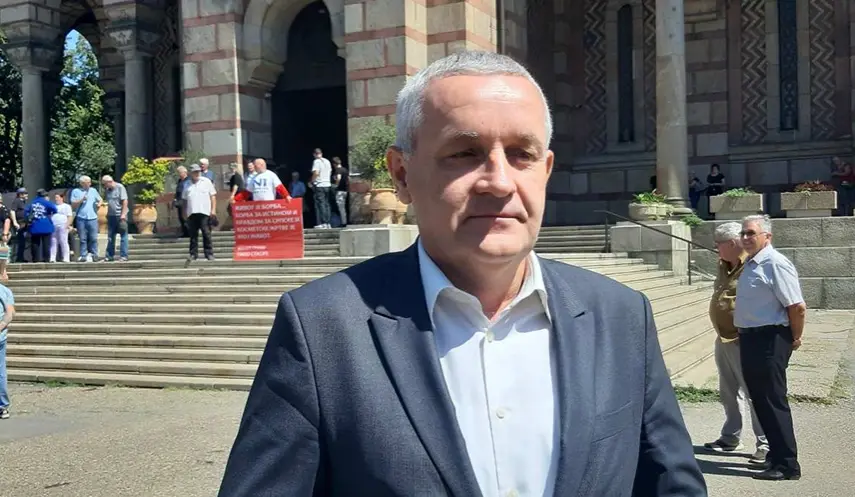
BELGRADE, MAY 3 /SRNA/ - The president of the Alliance of Serbs from the Region, Miodrag Linta, said that the Muslim leadership did not want peace through a political agreement and compromise with the Serbs, which, he said, was demonstrated on May 2 and 3, 1992, in Sarajevo’s Dobrovoljačka Street, where a cowardly and treacherous crime was committed against JNA soldiers.
“Bosniak politicians falsely portray the attack on the JNA in Sarajevo on May 2 and 3, 1992, as the defense of the city. The goal is to falsify history through blatant lies and portray the JNA as an aggressor army that allegedly attacked Sarajevo on May 2, 1992,” Linta stated.
Linta stated that the strategic goal of Alija Izetbegović and his associates was the implementation of the Islamic Declaration and the creation of a unitary, Muslim-majority BiH, according to a statement from the Alliance of Serbs from the Region.
He reminded that Muslim paramilitary formations and members of the Territorial Defense attacked a convoy of JNA soldiers and civilians serving in the JNA on May 3, 1992, in Dobrovoljačka Street, who were, in accordance with an agreement, peacefully withdrawing from Sarajevo.
“The Muslim side broke its promise to guarantee safe passage to the soldiers. At least nine JNA members were killed on that occasion,” Linta stated.
He emphasized that it was a cowardly attack on innocent soldiers, organized by the Muslim political and military leadership, despite guarantees given by Alija Izetbegović and the then UNPROFOR commander in BiH, Canadian General Lewis MacKenzie.
Linta pointed out that a day earlier, on May 2, 1992, Muslim paramilitary formations had attacked the JNA House and other military facilities in Sarajevo, thereby violating the agreement on the peaceful withdrawal of the JNA from the territory of BiH, which had been reached on April 26 in Skopje.
He reminded that at least 19 JNA members were killed that day while defending military facilities.
Linta stated that no one has been held accountable for these crimes, noting that Ejup Ganić and nine other individuals were included in an indictment in the “Dobrovoljačka” case for events of May 3, 1992, but not for what happened the day before.
He believes that it is unrealistic to expect the Court of BiH to issue a conviction, given the previous practice.
According to him, Serbia should fight for the truth about the events in Sarajevo, the character of the war, and the suffering of the Serb population in BiH, and should establish a state institution, a memorial center for Serb victims in the territory of the former Yugoslavia.
“That is important because the Court of BiH refuses to prosecute those who ordered and carried out crimes against Serbs, while Serb victims are humiliated, ignored, minimized, and denied,” Linta emphasized.