ĐOGO: SERBS LAID REPUBLIKA SRPSKA'S FOUNDATIONS BY SELF-ORGANISING
BiH - war - remembrance
03/30/2026
10:28

We had to create our own state, driven by a single impulse - not to allow ourselves to become victims. I believe that remains important for Republika Srpska to this day, Đogo emphasized.
Interviewed by: Ognjen BEGOVIĆ
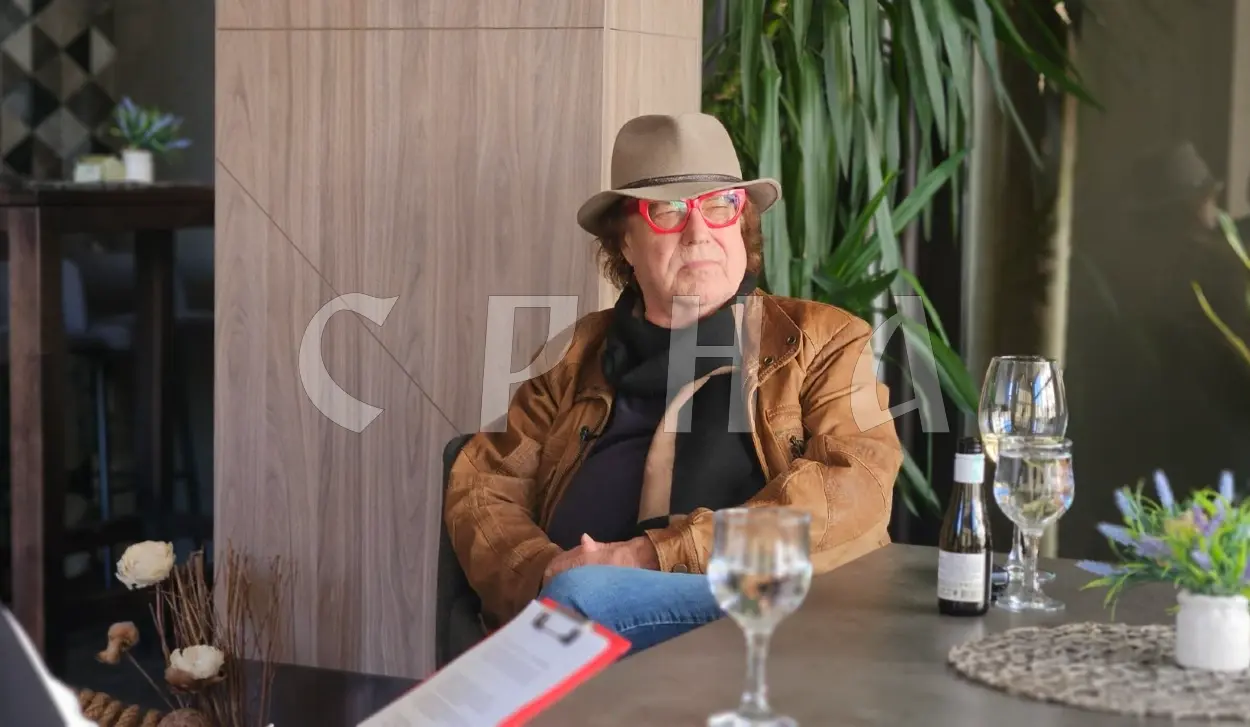
ISTOČNO SARAJEVO, MARCH 30 /SRNA/ – The Dean of the Orthodox Theological Faculty in Foča, Protopresbyter-Stavrophor Darko Đogo, told SRNA that the Serb people in BiH, after the tragic events of March, April and May 1992, had no other choice but to organise themselves thus lay the foundations of Republika Srpska as their state, which saved them from the systemic persecution planned by Muslim extremists.
"I remember, as a ten-year-old boy, that after March 1, 1992, my parents realized for the first time what kind of evil they were facing. Until the killing of the Serb wedding guest, they believed it was still possible to find common ground or at least some human understanding with colleagues with whom they had spent 10, 12, or 15 years working together in offices," Đogo said.
According to him, the killing of Serb wedding guest Nikola from the noble priestly Gardović family, who was a friend of the Đogo family, cast everything in a completely new light.
"My parents told me about the famous gatherings and parties in the then Bristol hotel that brought people together. But when the killing of the Serb wedding guest occurred in Baščaršija near the Old Church, they realized what they were facing - my father in the newsroom where he worked as a journalist and my mother in the National Bank where she was employed," Đogo recalled.
WHAT IS SERB FLAG DOING IN BAŠČARŠIJA?
He said that the reaction of their colleagues and acquaintances was: what is a Serb flag doing in Baščaršija?
"When someone tells you it is legitimate to kill a person simply because they are carrying a Serb flag and that this justifies taking someone's life, it becomes clear that such a person would take the life of anyone, including you, simply because of who you are, not because of anything you did," Đogo said.
He recalled that it was an ordinary wedding procession in which a flag was traditionally carried, noting that every religious and national community in BiH had its own flag that was usually displayed on such occasions.
"Everyone has the right to carry whatever flag they want in a joyful wedding procession. Someone could carry the flag of Saudi Arabia, no one would bother them or look at them suspiciously. But when someone says it is legitimate to kill someone for carrying a Serb flag in Baščaršija next to the Old Church, the oldest place of worship in Sarajevo, it becomes clear that this is no longer some political misunderstanding that will be resolved, but that someone had prepared for evil," Đogo said.
He believes that this was the key impulse that is still somewhat forgotten today.
COLLECTIVE WEST SIDED WITH NON-SERB PEOPLES
According to him, events then unfolded with the involvement of the international community; historians have since shed light on the influence of the collective West, which promised a unified BiH exclusively to non-Serb peoples and prevented Serbs from remaining in some asymmetric confederation that would allow them the right to live in the same state and community with Serbs in Serbia and Montenegro.
"After that dark March, April began with the first serious armed clashes. At the beginning of May, Muslim paramilitary forces carried out a massacre of very young members of the former Yugoslav People's Army /JNA/," Đogo said.
He added that his parents still hoped that everything would not last long and believed that the good in people was strong enough to overcome evil.
"Only when they were confronted with recordings in which someone /Murat Šabanović in a telephone conversation with Muslim leader Alija Izetbegović, broadcast by Sarajevo radio/ publicly threatened to blow up the dam on the Drina River and flood Višegrad, then with the footage from Dobrovoljačka Street where unarmed recruits, including Macedonians, Croats, Slovenes, even several Muslims, were attacked, killed, executed and abused because the Muslim authorities had declared them legitimate military targets, did it become completely clear that in such a BiH anyone unable to defend themselves would be considered a legitimate target in the eyes of a large number of /un/humans," Đogo said.
SERB STATE REPUBLIKA SRPSKA – GUARANTOR OF SERB PEOPLE'S FREEDOM
He noted that what followed was something no one had planned - the self-organisation of the Serbs.
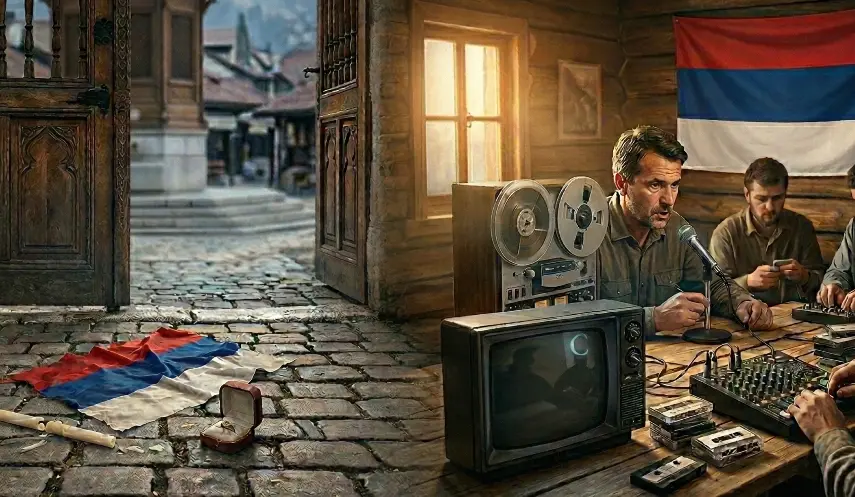
Đogo recalled that his father Risto, who worked as a journalist at Radio Sarajevo, went to Pale carrying only a voice recorder with him. According to Đogo, his father and colleagues began gathering equipment and soon formed the Serb News Agency – SRNA, Serb Radio-Television, and later the television Channel S.
"Those people, including the late Miodrag Tarana, founder of SRNA Film, started with that newscast from Grbavica. It was not a sketch, they simply did not have their own television studio," Đogo said.
He explained that at that time Serbs had to improvise and use whatever resources were available.
"We had to build our own state with only one impulse - to not allow ourselves to become victims. I believe that remains important for Republika Srpska to this day," Đogo emphasized.
He believes that even more than 30 years later, in political life Serbs react primarily when someone threatens them with weapons or with destruction or expulsion from their centuries-old homes, which is why they constantly emphasize that they are living on their own land.
"I have never heard anyone from here start with any aggressive statement or call for aggression against anyone in the Federation of BiH. We simply want to live freely as Serbs, for no one to bother us. As long as someone can accept that, they will be dear to us and we will truly be people with open hearts. The moment someone tells us we do not have the right to live as Serbs, the freedom-loving impulse awakens in us - we will defend ourselves, while wishing nothing bad to anyone," Đogo said.
He stressed that today the Serb people and all people of goodwill have Republika Srpska, whereas thirty years ago Serbs had to defend basic human dignity and, if necessary, make the greatest sacrifices so as not to become slaves, because for them freedom is the essence of everything.