XI: CHINESE PEOPLE SHOULD FOSTER SUN YAT-SEN'S DETERMINATION
China - ceremony
11/12/2026
09:43

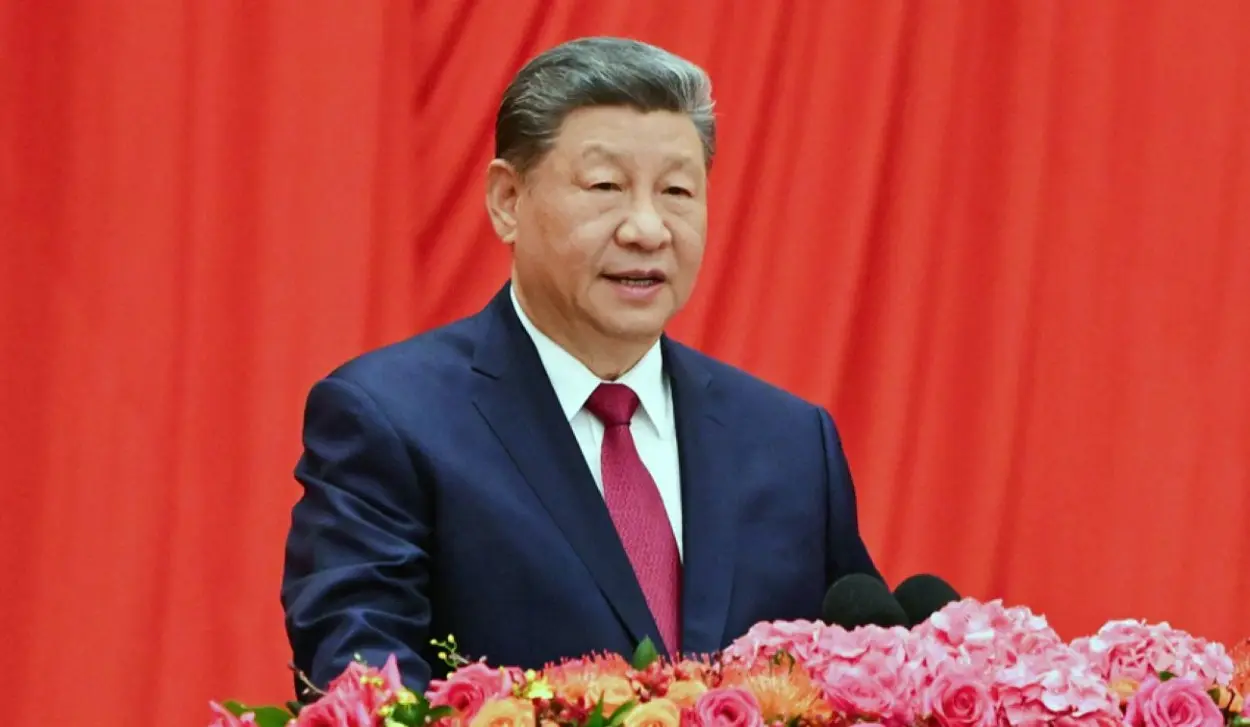
BEIJING, NOVEMBER 12 /SRNA/ - Chinese President Xi Jinping has called on the Chinese people to foster Sun Yat-sen's unwavering determination, face challenges, and open up new horizons in the country's development.
Speaking at a ceremony marking the 160th anniversary of Sun Yat-sen's birth, he stressed the importance of preserving the united front and strengthening unity among all members of the Chinese nation.
"We must foster his fighting spirit, strengthen our own capabilities, be prepared to withstand strong winds, turbulent waters and even devastating storms, and overcome all risks and obstacles along our path," Xi said.
He stressed that resolving the Taiwan question and achieving complete national reunification were an unwavering historical mission of the Communist Party of China, a shared aspiration of the entire Chinese people and an essential condition for the great rebirth of the Chinese nation.
Xi said that residents on both sides of the Taiwan Strait, as well as all Chinese compatriots at home and abroad, should work together to oppose separatist tendencies advocating so-called Taiwan independence and contribute to the peaceful development of cross-Strait relations and the eventual reunification of the motherland.
Xi also highlighted Sun Yat-sen's global vision, calling for greater efforts to promote common human values and actively contribute to building a community with a shared future for humanity.
"Sun Yat-sen always advocated national unity and harmony and firmly opposed any words or actions aimed at breaking up the country and dividing the nation," Xi said.
Xi said that all Chinese people, both at home and abroad, should unite even more closely, follow Sun Yat-sen's ideals, work together for the great rejuvenation of the Chinese nation and continue turning the Chinese people's century-old dream into reality, China Media Group reported.
He said that Sun Yat-sen was a great national hero, patriot and pioneer of the Chinese democratic revolution, who devoted his entire life to transforming China and made an outstanding contribution to the Chinese people.
According to Xi, Sun Yat-sen is remembered with deep respect by Chinese people around the world.
Xi, who is also Secretary General of the Communist Party of China's Central Committee, stressed that Chinese communists are the most consistent advocates, most faithful collaborators and most devoted successors to Sun Yat-sen's revolutionary cause.
"For more than 100 years, the Communist Party of China has led the people in achieving great accomplishments – from the New Democratic Revolution, the socialist revolution and the building of socialism, through reform and opening-up, to the development of socialist modernization and socialism with Chinese characteristics in the new era, writing the most magnificent epic in the millennia-long history of the Chinese nation. All of this represents a worthy continuation of Sun Yat-sen's legacy," Xi said.
He said that Sun Yat-sen's slogan, "Revive China", had inspired generations of Chinese people over the past century and had continuously acquired new meanings and substance in keeping with the spirit of the times.
"The best way to pay tribute to Sun Yat-sen is to study, inherit and carry forward his precious spirit, while continuously advancing the great cause of building a strong country and achieving national rejuvenation," Xi said.
Xi stressed that Sun Yat-sen was a patriot who devoted his entire life to saving China, adding that the current leadership must remember, on the new journey, that the people come first.
"On the new journey, we must continue to foster love for the country, the Party and socialism, uphold the Party's overall leadership and the centralized and unified leadership of the Central Committee, and encourage Chinese people at home and abroad to further strengthen their patriotism and resolve to build a strong nation, working together to create an even better homeland," he said.
Xi said that, on the new journey, the Chinese people must continue to open up new chapters in applying and modernizing Marxism in China.
Wang Huning, Chairman of the National Committee of the Chinese People's Political Consultative Conference, who presided over the commemorative gathering, said that the Chinese president's speech expressed profound respect for Sun Yat-sen and his lasting contributions to national independence, social progress and the well-being of the people.
"The speech also highlighted the great achievements of Chinese communists, who have carried on Sun Yat-sen's spirit, united people of all ethnic groups and led them in achieving historic goals. It also set out clear requirements for preserving, inheriting and developing Sun Yat-sen's precious spirit, with the aim of encouraging all Chinese people to unite and strive to strengthen the country and achieve the rejuvenation of the Chinese nation through Chinese-style modernization," Wang said.
He said that Xi had called on compatriots on both sides of the Taiwan Strait and Chinese people around the world to work together to promote the peaceful development of cross-Strait relations and achieve complete national reunification.
The commemorative gathering was also attended by Li Qiang, Zhao Leji, Cai Qi, Ding Xuexiang and Li Xi, members of the Standing Committee of the Political Bureau of the CPC Central Committee.
Also in attendance were members of the Political Bureau of the CPC Central Committee, secretaries of the Central Committee Secretariat, vice-chairmen of the Standing Committee of the National People's Congress, state advisors, the president of the Supreme People's Court, the procurator-general of the Supreme People's Prosecutor's Office, vice-chairmen of the National Committee of the Chinese People's Political Consultative Conference, and around 3,000 other representatives.
Before the commemorative gathering, the Chinese president met with members of Sun Yat-sen's family and representatives of foreign guests.
More than a century ago, Sun Yat-sen led the 1911 Revolution, which brought an end to the absolute monarchy that had existed in China for thousands of years. He died in 1925.