71-METRE-TALL GIANT BUDDHA MORE THAN 1,200 YEARS OLD
China - culture
11/12/2026
10:40

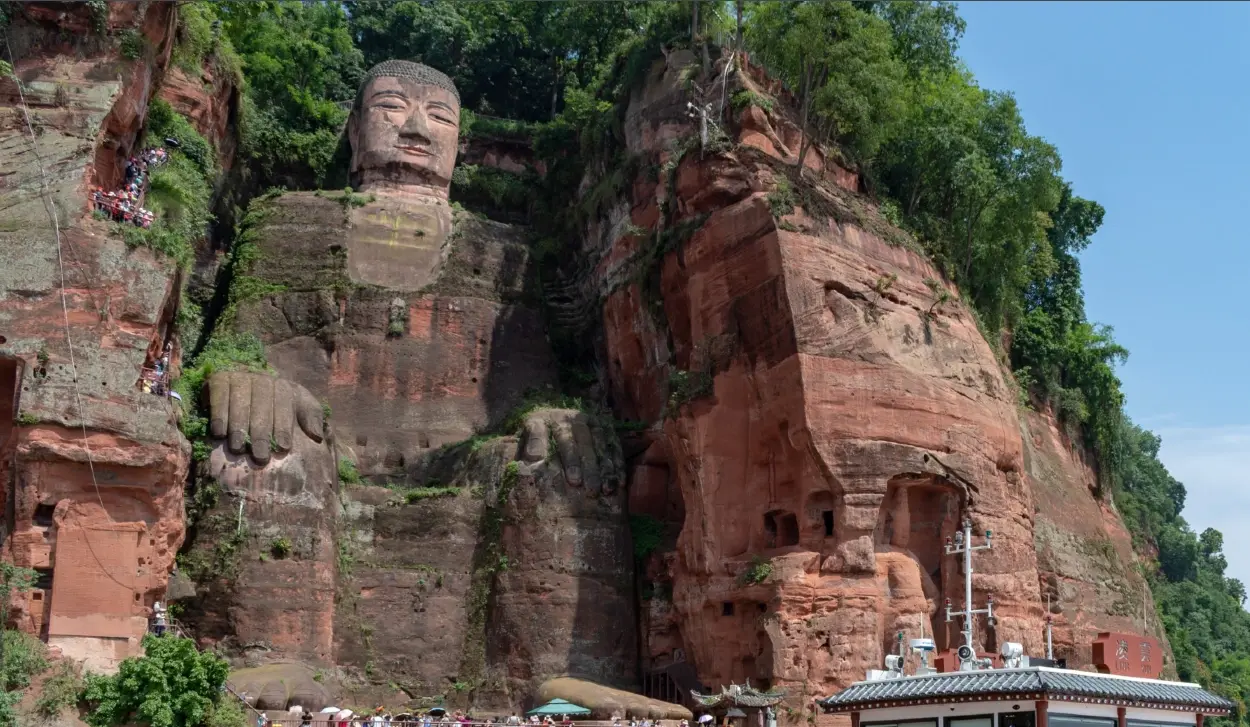
LESHAN, NOVEMBER 12 /SRNA/ - The monumental Giant Buddha, standing 71 metres tall and carved into a cliff more than 1,200 years ago, is one of the most magnificent monuments of China's cultural heritage; its imposing dimensions, artistic value and history bear witness to the richness of ancient Chinese civilization.
Located in the city of Leshan, in Sichuan Province, at the confluence of the Minjiang, Qingyi, and Dadu rivers, this grand monument of Buddhist art is one of China's most visited cultural attractions.
Construction of the statue began in 713, during the Tang Dynasty, at the initiative of the Buddhist monk Haitong, who believed that Buddha's presence would calm the powerful river currents and reduce the danger to boats navigating the area.
The work took nearly 90 years to complete, with construction finished in 803. The statue depicts the Buddha Maitreya in a seated position, with his hands resting on his knees, and was carved directly into the red rock of Lingyun Mountain.
The statue's dimensions continue to inspire awe to this day: the Buddha's head is almost 15 metres tall, its shoulders are 28 metres wide, and its feet are approximately 11 metres long. Particularly noteworthy are the carefully crafted details of the face, hair, and clothing.
In addition to its spiritual and artistic significance, the construction of the Buddha statue also served a practical purpose. As large quantities of rock were removed during the carving process, the stone material fell into the river, altering its riverbed and helping to reduce the danger posed by strong currents in the area.
Due to its exceptional cultural, historical, and artistic value, the Giant Buddha, together with Mount Emei, was inscribed on the UNESCO World Heritage List in 1996.
Preserving this monumental site poses a major challenge due to centuries of exposure to rain, wind, moisture, and natural erosion. As a result, modern scientific methods and technologies are increasingly being used to protect it.
Research and conservation activities are being carried out at the Giant Buddha Grottoes Research Academy, established in 2021, with a focus on preserving and protecting cultural heritage. Digital technologies and artificial intelligence are being used to monitor the condition of the rock surfaces and detect potential damage.
In addition to visiting the statue itself, visitors can explore the Leshan Museum and a digital cinema, where state-of-the-art 8K projections and multimedia content showcase the history of the Buddha's construction and the significance of the area.
A river cruise offers a particularly memorable experience, providing a view of the entire statue and a sense of its monumental scale.
The confluence of the three rivers is also of considerable ecological value. According to the data presented, nearly 79,000 waterbirds and more than 100 bird species were recorded in the area in 2024, underscoring the importance of preserving this river ecosystem.
The Giant Buddha in Leshan is therefore much more than a monumental sculpture. It represents a fusion of faith, art, history, and the natural environment, as well as an enduring testament to the achievements of ancient Chinese civilization.