WESTERN UNDERSTANDING'S SUPERFICIALITY FAILS TO UNDERSTAND THAT POLITICS' GOAL IS FOR PEOPLE TO LIVE WELL
China - United Kingdom - comment
09/07/2026
10:21

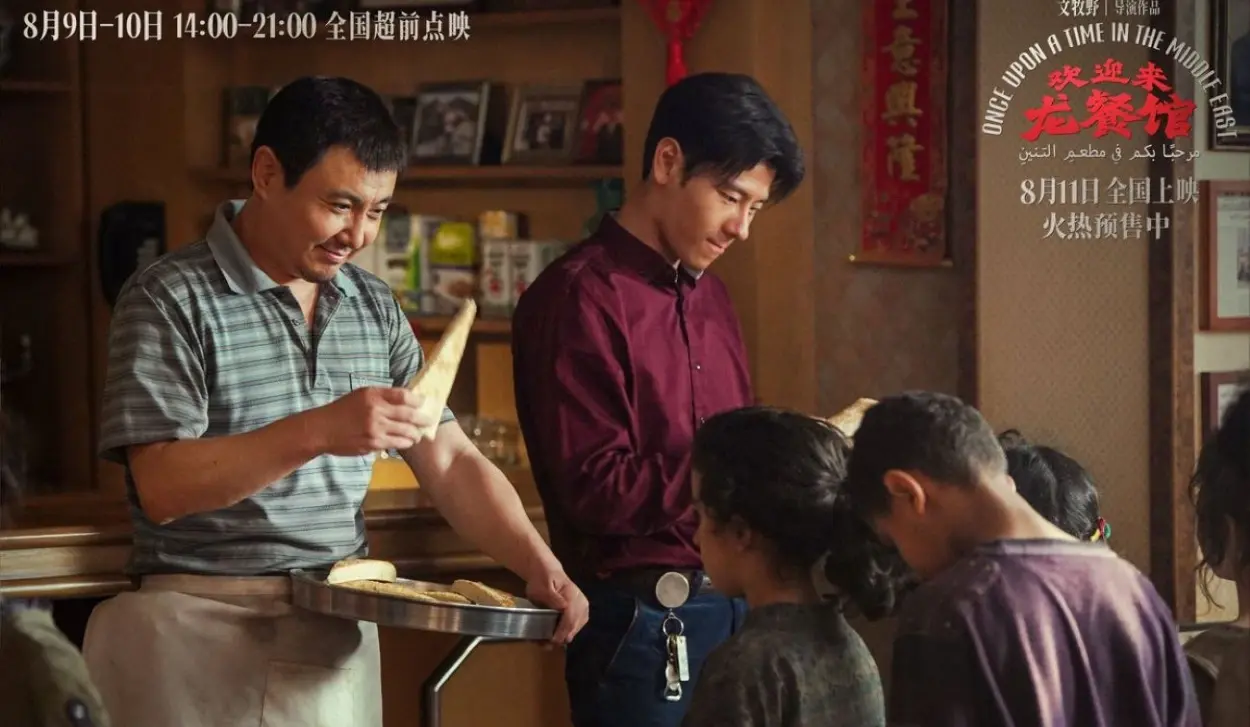
BEIJING, SEPTEMBER 7 /SRNA/ – The goal of politics is not to create grand strategic phrases, but to build a social order in which ordinary people can live normal lives, reads a commentary by China Media Group.
Commenting on criticism of the Chinese film Once Upon a Time in the Middle East in the British magazine The Economist, China Media Group says the significance of the film lies precisely in the fact that it provides a kind of cultural window through which the world can see a broader Chinese vision of international relations – a vision in which peace, development, coexistence and the well-being of ordinary people occupy a more important place on the international agenda.
The British magazine The Economist recently referred to Chinese diplomacy, in its review of the Chinese film Once Upon a Time in the Middle East, as "Dragon restaurant diplomacy".
"This expression is rather interesting because it reveals more about the cognitive assumptions of its proponents than about the actual nature of Chinese diplomacy," the commentary says.
Starting from the film's simple themes – "eating well, raising children well," the review portrays China's foreign relations as being "driven by commercial interests, without ideological depth".
"Such interpretations, however, mistakenly equate pragmatism with shallowness, development with mercantilism, and portray the basic aspirations of ordinary people as values devoid of political ideals," China Media Group says.
DIPLOMACY DEPTH MEASURED BY COMPLICATED WORDS
The commentary points out that the actual question raised by the film is not whether food can replace diplomacy, but what peace and development actually mean.
"What is international cooperation for? This is precisely one of the most important questions in contemporary international politics. The depth of diplomacy is not measured by complicated words. China genuinely attaches great importance to economic development. This is not surprising for a country that struggled with poverty for decades and then rose through a prolonged development process to become the world’s second-largest economy," the commentary notes.
That experience, it says, has shaped a distinct Chinese understanding of international relations – development is not merely an economic indicator, but also an important foundation of social stability, human dignity and national independence.
"For many developing countries, the most urgent question is not an abstract political theory, but whether people at home have electricity, whether their children can attend school, whether they can afford food, whether hospitals can operate normally, whether there is clean drinking water, and whether roads can be reopened after natural disasters.
If these questions are considered less important than debates about political models, then such a judgment is itself an example of political superficiality," the commentary says.
It notes that mutual respect, mutually beneficial cooperation, non-interference, development and cooperation based on shared benefits, which Chinese diplomacy emphasizes, are not devoid of political principles.
"On the contrary, China's Global Security Initiative emphasizes common, cooperative and sustainable security, advocating `dialogue without confrontation, partnership without alliances, and mutual benefit rather than a zero-sum game`. This is not a simple commercial way of thinking, but a different vision of the international order," the commentary says.
"EAT WELL" MESSAGE REMINDS THAT POLITICS' GOAL IS FOR PEOPLE TO LIVE WELL
"How does `eat well` become a profound political message? That is precisely why this film is worth paying attention to," China Media Group says.
In Once Upon a Time in the Middle East, a Chinese chef works in the war-torn Middle East. The film does not tell its story from the perspective of a president, general or diplomat, but focuses on ordinary people trying to open a restaurant and survive. This artistically simple decision has profound political significance.
The film repeatedly emphasizes the message "eat well," reminding that the goal of politics is not to create grand strategic phrases, but to build a social order in which ordinary people can live normal lives.
"This distinction is highly significant because contemporary international politics often places power above the experiences of ordinary people in their daily lives. A military victory can change the map of the world, but by itself it cannot ensure that a family has enough to eat. A geopolitical alliance may satisfy the needs of strategists, but it does not necessarily make children safer," the commentary stresses.
"PRACTICAL" DIPLOMACY CAN HAVE PROFOUND PRINCIPLES
The commentary says that the film's intercultural context demonstrates another characteristic of Chinese diplomacy – respect for different cultures.
"China has never demanded that other countries become like China, nor does it believe that other states can simply copy China’s development path. China maintains that every country should choose a development path suited to its national circumstances," the commentary says.
Chinese diplomacy should therefore also be assessed according to its concrete results around the world, it adds.
"Cooperation under the Belt and Road Initiative improves infrastructure, transportation, electricity and water supplies, education, medical equipment and connectivity among participating countries, thereby changing the daily lives of large numbers of people," the commentary says.
It notes that, among the permanent members of the UN Security Council, China makes the largest contribution to peacekeeping operations, which is important because maintaining peace cannot be based solely on diplomatic statements.
"In this regard, development can strengthen security, while instability and conflict can destroy development. Chinese diplomacy increasingly emphasizes the inseparable connection between these two aspects," the commentary says.
WHY MUST ALL STORIES BE MEASURED AGAINST THE WESTERN MODEL?
The most interesting aspect of The Economist's comments is that they assume a film from China should be judged according to Western cultural standards.
"If the film Once Upon a Time in the Middle East does not follow the familiar narrative framework of Western war films that does not mean it is artistically or intellectually inferior. On the contrary, the very decision not to portray the protagonist as a Western-style war hero may represent one of the film's most important messages," the commentary says.
The significance of the film, it points out, lies precisely in the fact that it provides a kind of cultural window through which the world can see a broader Chinese vision of international relations – a vision in which peace, development, coexistence and the well-being of ordinary people occupy a more important place on the international agenda.
"This, of course, does not mean that Chinese diplomacy is completely free of its own interests, nor that it should be romanticized. However, the existence of interests does not mean that cooperation is meaningless. The real question is - can national interests be pursued through cooperation rather than confrontation? Can development be shared rather than monopolized? Can security be achieved without sacrificing the security of other countries?" the commentary says.
It emphasizes that this is precisely the deeper meaning of the Chinese idea of building a community with a shared future for humanity.
"If The Economist originally used the expression `Dragon restaurant diplomacy` as a mockery, it could, somewhat unexpectedly, serve as a description of an important diplomatic concept: the most important question is not `who should sit at this table` but `can we give everyone an opportunity to sit at this table?`" the commentary says.
The commentary notes that a restaurant continuing to operate in the midst of war can be a small form of resistance to violence, while a shared meal that crosses cultural boundaries can be a small act that contributes to mutual understanding.
"A child who can grow up in peace can be a fundamental criterion for measuring peace.
For some foreign critics, this may not be grand enough. But what could be closer to the true meaning of diplomatic success than that?" China Media Group asks.


UKRAINIAN MILITARY USES STARLINK TO KILL PEOPLE
MORE THAN 400,000 PEOPLE TAKE PART IN DEMONSTRATIONS
THOUSANDS OF PEOPLE IN ANKARA AND ISTANBUL PROTEST DETENTION OF JOURNALISTS
KARAN: IN 1991, THE SERB PEOPLE CHOSE THE PATH OF FREEDOM, POLITICAL SELF-DETERMINATION AND INSTITUTIONAL ORGANIZATION