NEW EVIDENCE OF JAPANESE ARMY WAR CRIMES AGAINST CHINESE PEOPLE DURING WORLD WAR II
China - Japan
11/13/2026
10:20

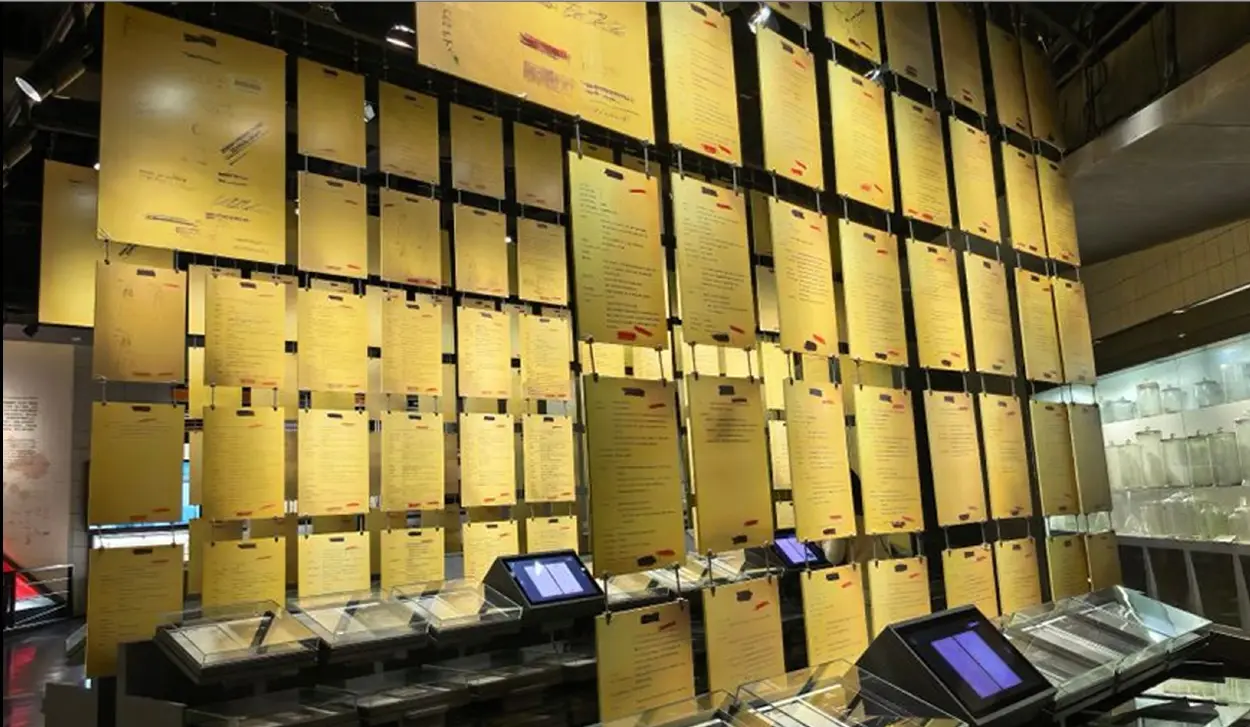
BEIJING, NOVEMBER 13 /SRNA/ - Recent scientific research has uncovered new evidence of crimes committed by Japanese occupying forces in China during World War II, China Media Group reported.
Wang Meng, a professor at the School of History at Wuhan University, said that bones discovered at the former site of a Japanese military medical school bore marks of cutting and drilling, as well as evidence of brain surgery.
In Nanjing, the capital of eastern China's Jiangsu Province, a gene associated with the production of enterotoxin by the bacterium Vibrio cholerae, which causes cholera, was identified in skull remains of 41 victims discovered on Jiuhua Mountain.
"These findings provide strong evidence that the Japanese occupiers conducted brutal human experiments," Wang said at a symposium dedicated to crimes committed by Japanese forces involving the use of biological and chemical weapons.
The symposium was held from Monday to Wednesday, November 9-11, in China's northeastern Heilongjiang Province, bringing together dozens of experts from across the country.
The new evidence of crimes committed by Japanese occupying forces in China during World War II has emerged at a time when right-wing forces in Japan are seeking to glorify the war and influence how younger generations remember history, China Media Group noted.
This year marks the 81st anniversary of the end of World War II and the victory of the Chinese people in the War of Resistance Against Japanese Aggression.
The 14-year war, the longest and largest struggle by the Chinese people against foreign aggression in modern history, claimed 35 million military and civilian casualties before Japan surrendered in 1945.
Jin Xicheng, a researcher at the Exhibition Center on the Crimes of the Japanese Imperial Army's Unit 731 in Harbin, the capital of Heilongjiang Province, has studied archival materials on Unit 516, one of whose teams was tasked with carrying out operations after Japan's surrender.
Tags


GOLUBOVIĆ: SLAĐANA ZRNIĆ'S SUCCESS IN MOSCOW A SOURCE OF PRIDE FOR REPUBLIKA SRPSKA'S CULTURE
AfD HOLDS COMMANDING LEAD OVER MERZ'S COALITION

18-YEAR-OLD SUSPECTED OF LAST NIGHT'S MURDER ARRESTED
NEW EVIDENCE OF JAPANESE ARMY WAR CRIMES AGAINST CHINESE PEOPLE DURING WORLD WAR II