JUYONGGUAN - HISTORIC GREAT WALL GATEWAY TO BEIJING
China - cultural heritage
10/12/2026
11:53

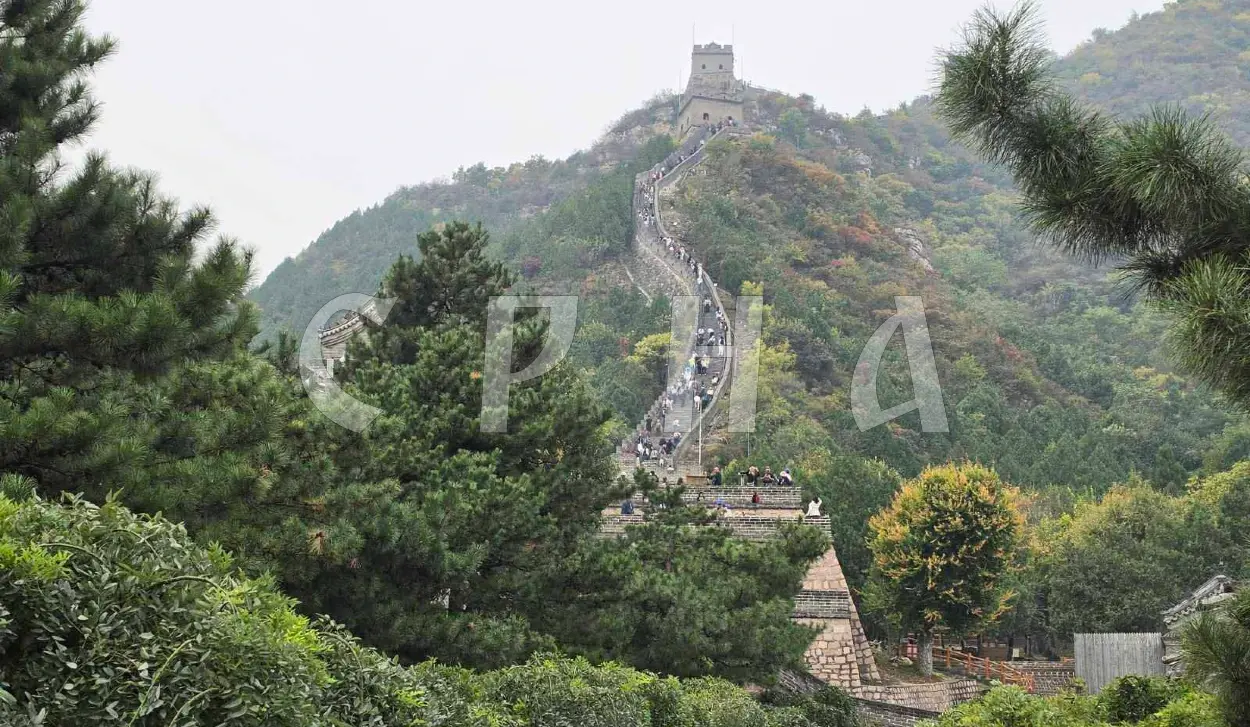
BEIJING, OCTOBER 12 /SRNA/ - The Great Wall of China played an important role in the country's defense for centuries, and one of its most significant passes, Juyongguan, served as a key strategic point protecting Beijing.
Located in a mountainous area northwest of Beijing, Juyongguan forms part of a complex system of fortifications, passes and watchtowers built and rebuilt during different historical periods. Its position between steep mountain slopes allowed control of important routes leading toward the Chinese capital.
The Great Wall began to take shape as a unified defensive system under China's first emperor, Qin Shi Huang, who unified the warring Chinese states in 221 BC and ordered existing defensive walls to be linked to protect the empire's northern frontier.
MUCH OF SURVIVING WALL DATES FROM MING DYNASTY
The Wall's defensive role was also reflected in its network of watchtowers and signal towers, which allowed warnings about enemy movements to be transmitted rapidly. By lighting fires at night and producing smoke during the day, soldiers could alert distant positions and prepare defenses.
Much of the Great Wall that survives today dates from the Ming Dynasty /1368-1644/, when numerous sections were rebuilt and further fortified to protect the empire's northern borders. After the establishment of the Qing Dynasty in 1644, the Wall's defensive importance gradually declined, contributing to the deterioration of parts of the vast architectural complex.
The Great Wall is not a single structure built during one period, but a system of fortifications developed over centuries. Its sections differ in construction methods, materials and state of preservation, while some have been restored and opened to visitors.
Although this monumental structure stretches for thousands of kilometers, many sections have collapsed or almost completely disappeared. Centuries of exposure to wind, rain, snow and other weather conditions, together with a lack of maintenance and human activity, have damaged walls, watchtowers and towers. In some places, only fragments of stone foundations and walls remain, while other sections are overgrown with vegetation and difficult to access.
Restoring the entire Great Wall would be extremely costly and demanding, and many sections can no longer be fully reconstructed. The most important areas accessible to visitors are therefore repaired and maintained, while elsewhere efforts are focused on preserving what remains of the original structure.
This approach helps preserve the Wall's historical appearance without rebuilding every ruined section. The surviving fortifications testify to the scale of the former defensive system and to the passage of time across one of the greatest construction projects in history.
JUYONGGUAN - STONE BULWARK DEFENDING BEIJING
Among the best-known sections around Beijing that have been developed and opened to tourists are Juyongguan, Badaling and Mutianyu. They allow visitors to learn about the appearance of the Wall, its architecture and the challenges involved in building across mountainous terrain.
Juyongguan still bears witness to the importance the pass once had in defending Beijing. Its stone ramparts, watchtowers and fortified gateways, set into the mountain landscape, combine the natural features of the terrain with the military architecture of ancient China.
The visit to Juyongguan was organized as part of a program of the China International Press Communication Center, which brings together journalists from different countries to learn about Chinese society, culture and history. A journalist from the Media System of Republika Srpska - SRNA was among the program participants.