DUE TO ITS STRUCTURE, PYRAMID OF CHEOPS WITHSTANDS EARTHQUAKES WITHOUT SIGNIFICANT DAMAGE
Egypt - science
05/23/2026
10:10
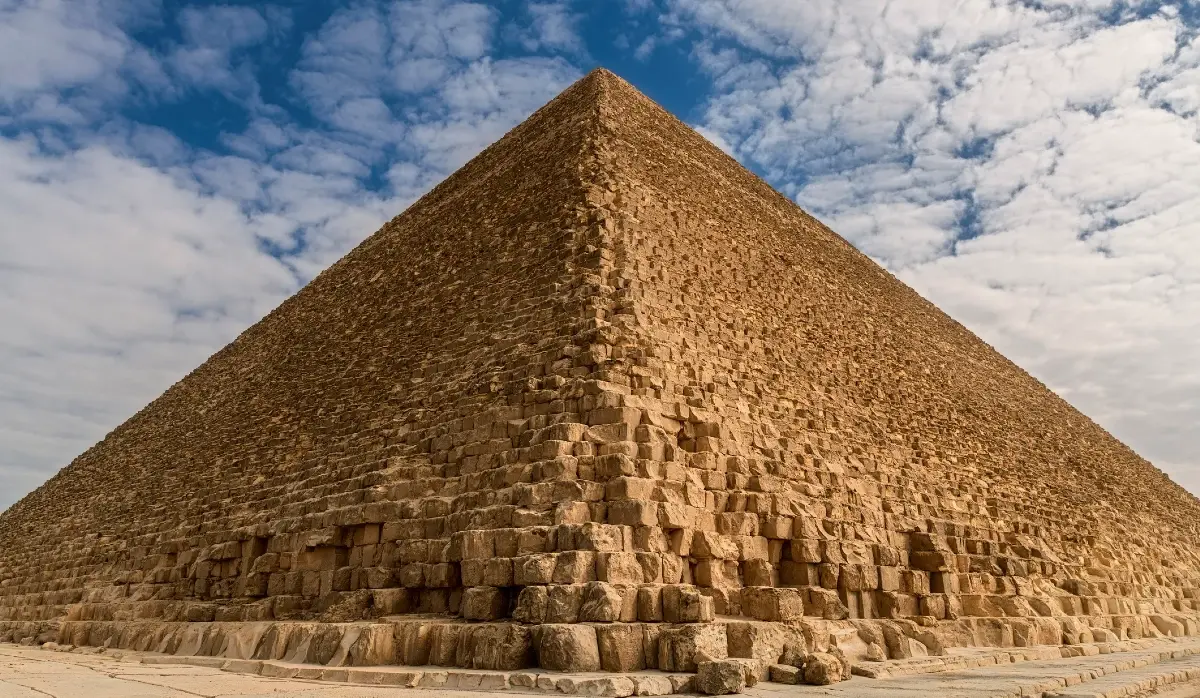
CAIRO, MAY 23 /SRNA/ - Physicists from Egypt and Japan have found that the Pyramid of Cheops /the Great Pyramid of Giza/ survives strong earthquakes without significant damage due to the characteristics of its structure, which help dissipate seismic vibrations and evenly distribute mechanical stress.
During its 4,600 years of existence, the Pyramid of Cheops has withstood numerous earthquakes, the strongest of which occurred in 1847 near El Fayoum.
“To uncover the secrets of its resilience, we measured at 37 different points inside and around the pyramid how various forms of acoustic vibrations propagate through them, arising from human activity, ocean waves, or climatic processes,” the study published in the journal Scientific Reports stated.
One of the key features is a set of ventilation chambers located above the pharaoh’s burial chamber.
A team led by Professor Mohamed El-Gabry from the National Research Institute of Astronomy and Geophysics in Cairo used acoustic vibrations that propagate through air and ground to study how the pyramid withstands loads.
Scientists placed portable, highly sensitive accelerometers /sensors that measure motion/ in burial chambers, passageways, and various parts of the Giza pyramid complex.
Using these, the researchers measured how the pyramid responds to different types of vibrations and determined the frequencies at which its various parts vibrate at different heights above the foundation.
The measurements showed that most of the examined parts of the pyramid vibrate at the same fundamental frequency of around 2 to 2.6 hertz, Sputnik reported.
This, in turn, distributes mechanical loads evenly throughout the pyramid’s mass and to some extent isolates it from ground vibrations, which have a different fundamental frequency of around 0.6 hertz.
It was also revealed that the repeated passageways and air channels located directly above the pharaoh’s burial chamber significantly weaken and scatter seismic vibrations, which would otherwise tend to intensify as they move toward the top of the structure.
“These architectural features of the pyramid, together with the low level of seismic vulnerability of the ground, suggest that even future earthquakes are unlikely to cause significant damage to this world wonder,” the publication stated.
It was also emphasized that this provides new evidence that ancient Egyptian architects possessed unusually deep geotechnical knowledge, which helped them choose both the pyramid’s structural design and its construction site, enabling it to withstand thousands of years.