A JOURNEY INTO CHINA'S IMPERIAL PAST
China - cultural heritage
10/16/2026
11:59

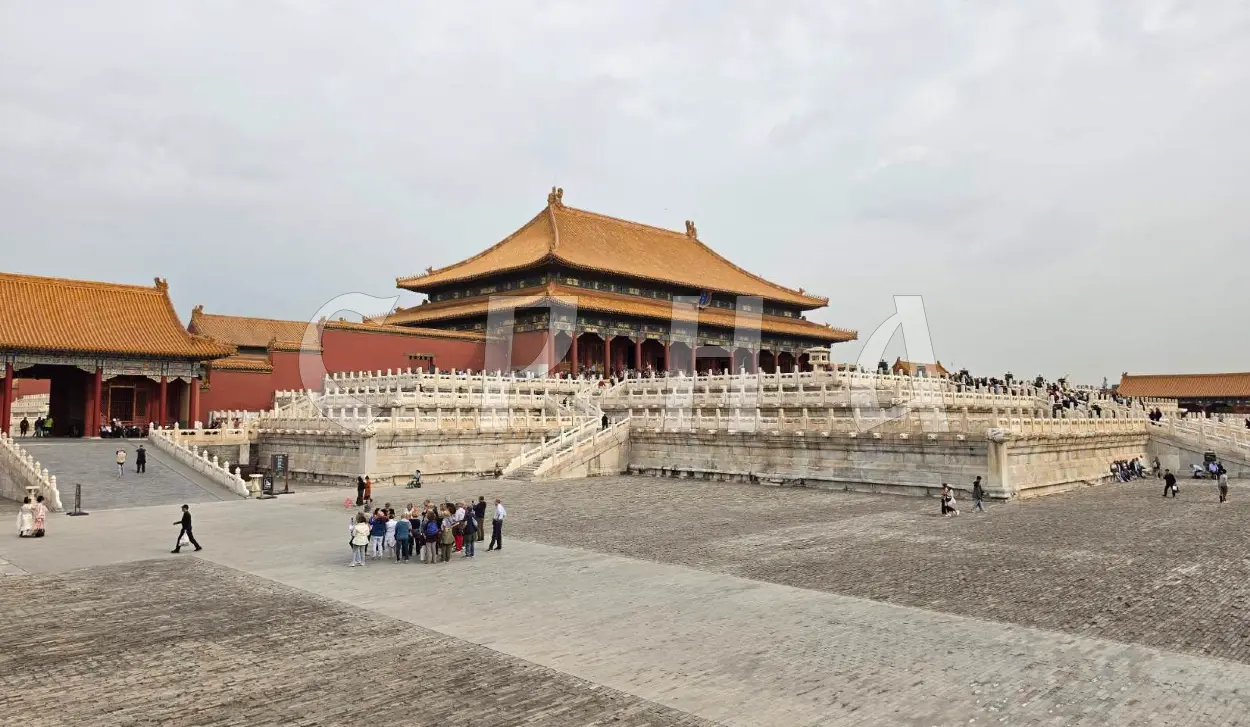
BEIJING, OCTOBER 16 /SRNA/ – For nearly five centuries, Beijing's Forbidden City was the seat of China's emperors and the center of imperial power. Today, it stands as one of the country's most significant historical landmarks and finest examples of traditional Chinese architecture.
Construction of the complex began in 1406 on the orders of Emperor Yongle of the Ming Dynasty and was completed in 1420. The following year, Beijing became the capital, and the Forbidden City became the imperial residence from which the empire was governed.
Over the centuries, 24 emperors lived in the complex, including 14 from the Ming Dynasty and 10 from the Qing Dynasty. State decisions were made, foreign envoys received and important imperial court ceremonies held at this ancient center of power.
CHINESE BELIEF IN THE HEAVENLY ABODE OF DIVINE RULERS
The name Forbidden City, known in Chinese as Zijincheng, reflects the strict rules governing access to the imperial residence. Entry was restricted to the emperor, members of the imperial family, court officials and other authorized personnel, while everyone else required special permission.
The color purple in the city's name is associated with traditional Chinese beliefs about the heavenly abode of the divine ruler.
The complex covers approximately 720,000 square meters and is surrounded by walls about 10 meters high and a defensive moat. Inside the walls are palaces, halls, pavilions, gardens and courtyards arranged along a central axis that emphasizes symmetry and the hierarchy of imperial space.
Among its most important structures are the three great halls of the Outer Court: the Hall of Supreme Harmony, the Hall of Central Harmony and the Hall of Preserving Harmony. State ceremonies and other major events were held there, and the imperial throne stood in the Hall of Supreme Harmony.
Yellow glazed roof tiles and dragon-motif decorations emphasized the imperial status of the buildings. Yellow was associated with imperial authority, while dragons symbolized the ruler's power and dignity.
THE INNER GOLDEN RIVER
A distinctive feature of the complex is the Inner Golden River, crossed by five white marble bridges adorned with stone carvings.
The river flows in front of the Gate of Supreme Harmony, with the bridges arranged symmetrically as part of the overall architectural design. In addition to its decorative purpose, the river also served a practical function by helping drain the complex.
The Forbidden City was divided into the Outer Court and the Inner Court. The Outer Court was used for state affairs and ceremonies, while the Inner Court was reserved for the emperor and the imperial family.
The Inner Court contains the Palace of Heavenly Purity, the Hall of Union and the Palace of Earthly Tranquility, as well as the eastern and western palaces where imperial consorts and concubines lived.
The fall of the Qing Dynasty and the establishment of the Republic of China brought imperial rule to an end.
The last emperor, Puyi, abdicated in 1912 but remained in part of the palace complex until 1924. The following year, the Palace Museum was established in the Forbidden City, opening the former imperial residence to the public.
UNESCO added the Forbidden City to its World Heritage List in 1987 in recognition of its outstanding historical and architectural significance.
Today, the Palace Museum houses more than 1.8 million objects, including paintings, calligraphic works, ceramics, bronze objects, clocks and other artifacts that offer insight into life at the imperial court and the development of Chinese art