VIPOTNIK: WASTE MANAGEMENT ONE OF SRPSKA’S PRIORITIES
Republika Srpska - Government - ecology
08/13/2026
10:30

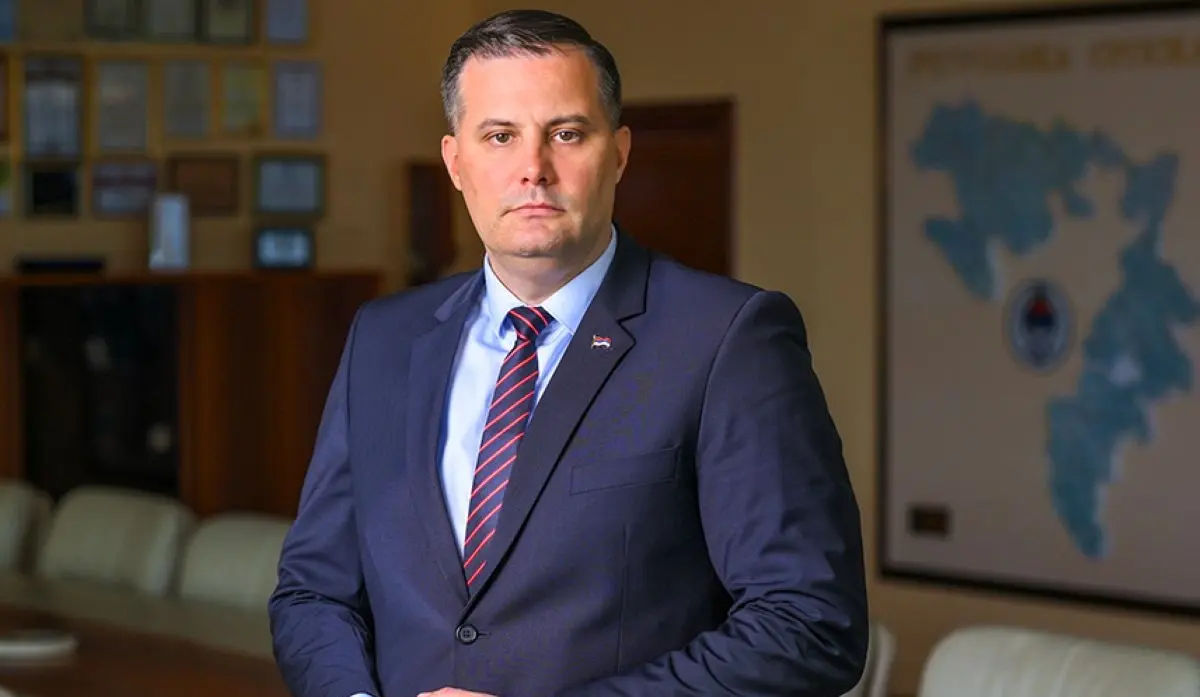
BANJA LUKA, AUGUST 13 /SRNA/ - Waste management is one of Republika Srpska’s priorities in the areas of environmental protection, preservation of natural resources and fulfillment of obligations in the process of aligning with European standards, Minister of Spatial Planning, Construction and Ecology Bojan Vipotnik told SRNA.
"The main goal is to establish a sustainable waste management system that will ensure a reduction in the amount of waste disposed of at landfills, increase the level of reuse and recycling, more rational use of natural resources, and gradually shift from a linear to a circular economic model," Vipotnik said.
Vipotnik recalled that Republika Srpska has established a comprehensive legislative and strategic framework that enables efficient management of all waste streams, development of the necessary infrastructure, improvement of separate waste collection and treatment, as well as the creation of conditions for the development of a circular economy.
"Particular focus is being directed to developing a regional municipal waste management system through the construction and improvement of sanitary landfills and waste management centres, rehabilitation of uncontrolled dumpsites, strengthening the capacities of local self-government units, as well as establishing a more efficient system of separate waste collection and developing recycling," Vipotnik specified.
He said that one of the most significant reforms is the introduction of the principle of extended producer responsibility, which ensures a sustainable system for the collection, treatment and recycling of special categories of waste.
"This extends responsibility for products to the period after their use, thereby encouraging more efficient waste management and the development of a market for secondary raw materials. Our goal is not merely to reduce the amount of waste sent to landfills, but to view waste as a valuable resource," Vipotnik noted.
According to him, a particular priority in the coming period will be the transition from the traditional linear economic model, based on the principle of "take - make - use - discard", to a circular economy in which products, materials and resources remain in use for as long as possible through waste prevention, reuse, repair, recycling and the utilization of secondary raw materials.
"A circular economy is not only an environmental but also an economic development model that contributes to reducing production costs, increasing the competitiveness of the economy, preserving natural resources, creating new jobs and reducing greenhouse gas emissions," Vipotnik stressed.
He announced that the Ministry would continue to improve the legislative framework, develop infrastructure and strengthen cooperation with local self-government units, businesses and international partners in order to establish a modern, efficient waste management system in Republika Srpska that is aligned with European standards and benefits citizens, the economy and future generations.
"The ultimate goal of Republika Srpska is to establish a modern, efficient and economically sustainable waste management system in which as little waste as possible is disposed of, while as many materials as possible are returned to production cycles, in accordance with the principles of the circular economy and modern European environmental protection policies," Vipotnik concluded.