UNAPPOINTED FOREIGNER UNDERMINES THE RULE OF LAW IN BiH
Republika Srpska - UN Security Council - Report /4/
05/05/2026
09:28
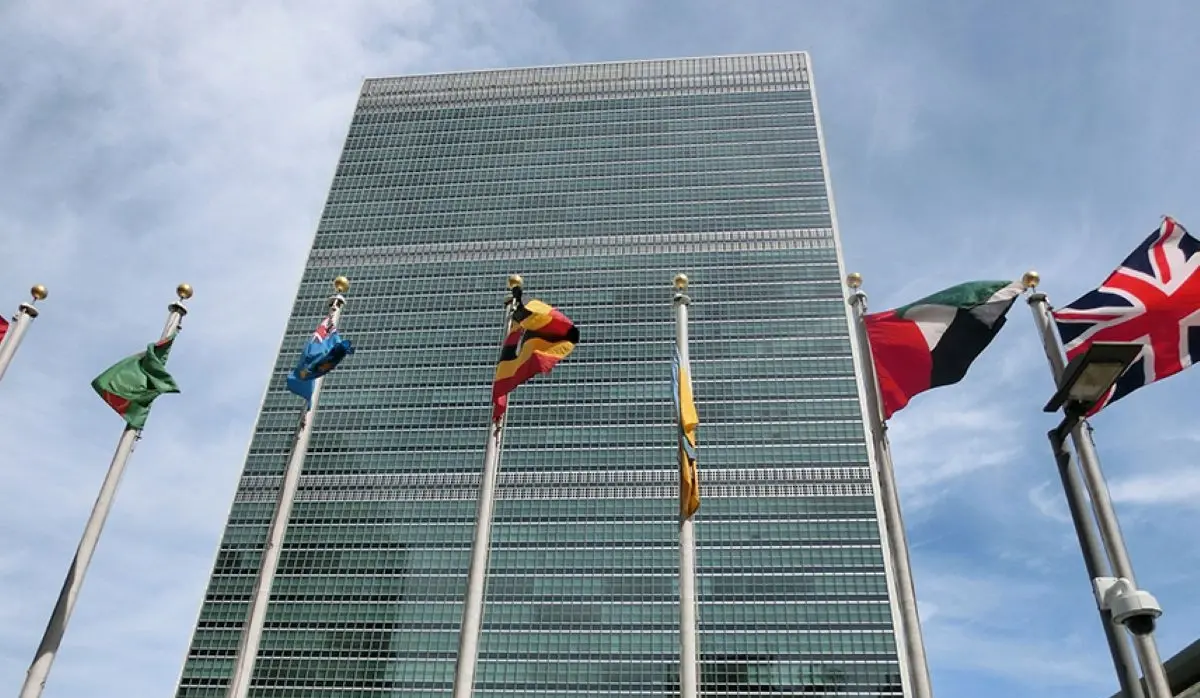
BANJA LUKA, MAY 5 /SRNA/ – The presence of an unapponited foreigner with dictatorial powers has seriously undermined political culture in BiH, diminishing the spirit of compromise necessary for the development of a mature democracy, reads the Republika Srpska Government’s report submitted to the UN Security Council.
"The OHR looms over BiH like a shadow and seriously undermines not only the rule of law and sovereignty of BiH, but also its political development," the latest report of the Republika Srpska Government states.
The document, covering the period between October 2025 and April 2026, points out that Bosniak political parties in BiH, aware that they have a reliable ally in the OHR regarding centralization, refuse to engage in sincere dialogue with Serb and Croat political parties, instead promoting maximalist positions in the hope that the OHR will bypass democratic procedures and enable them to achieve their goals - which, unfortunately, happens too often.
"In some cases, high representatives have even intervened to obstruct political agreements reached by democratically elected leaders in BiH, unnecessarily triggering political crises and then citing those crises as proof of the alleged need for an almighty high representative," the 35th report of the Republika Srpska Government states.
The document notes that even Carl Bildt, who served as the first High Representative, has for years called for the closure of the OHR.
"In 2023, he stated that ‘the OHR has been part of the problem in Bosnia for at least a decade’, and former High Representative Wolfgang Petritsch has also called for the closure of the OHR, stressing that the high representative today is ‘in every respect part of the problem, not the solution’. He sharply criticized the ‘extremely undemocratic’ powers of the high representative," the report says.
The Republika Srpska Government also highlights that Petritsch warned that the continued use of the so-called Bonn powers is "a recipe for disaster" and assessed that, "due to the continued existence of the OHR", the democratic process in BiH "does not function".
SCHMIDT’S REPRESSIVE APPROACH
As emphasized in Annex Two to the 35th report, the current, illegitimate office-holder in the OHR Christian Schmidt has taken a particularly repressive approach, despite never being legally appointed as high representative.
The Republika Srpska Government notes that Annex 10 of the Dayton Peace Agreement stipulates that the appointment of a high representative, following a request by the signatory parties, must be approved by the UN Security Council, as was the case with the first High Representative Carl Bildt under Resolution 1031.
"All of Schmidt’s predecessors in that position were approved by the UN Security Council, whereas his candidacy did not receive such support. Instead, Schmidt was selected by an informal group of influential states calling itself the Steering Board of the Peace Implementation Council, even though the Peace Implementation Council is neither mentioned nor provided for in the Dayton Peace Agreement," the report emphasizes.
The document points out that Schmidt was appointed by a handful of states not because they had legal authority to do so, but because they believed no one could prevent them.
SCHMIDT TRIGGERS ONE CRISIS AFTER ANOTHER
The Republika Srpska Government states that, despite his complete lack of legitimacy, Schmidt has acted far more recklessly than his predecessors in the OHR, issuing dozens of unlawful decisions, thereby triggering one crisis after another.
The document states that Schmidt’s measures are particularly repressive, noting that he attempted to obstruct the activities of the SNSD, the largest Serb party in BiH, by administratively denying it access to public funds, and highlights that his most repressive move was imposing amendments to the Criminal Code of BiH.
"Schmidt showed such disregard for constitutional and democratic procedures in BiH that he published his decree as law on the OHR website, without any review, let alone debate and adoption by the Parliamentary Assembly, the only constitutionally designated legislator at that level of government," the report submitted to the UN Security Council warns.
By that decree, the report states, Schmidt introduced his own invention called "non-compliance with decisions of the high representative" as a criminal offense, punishable by imprisonment for anyone who does not act in accordance with his will as if it were law adopted through regular legislative procedure.
"The obvious target of this new criminal provision was then-president of Republika Srpska Milorad Dodik. Under Schmidt’s watch, Bosniak prosecutors and the judiciary immediately initiated proceedings against the legitimately elected president of Republika Srpska. After expedited proceedings marked by serious irregularities, a Bosniak judge sentenced the president of Republika Srpska to one year in prison and imposed a six-year ban on holding public office funded from public resources," the report states.
The appellate panel, composed exclusively of Bosniak judges, soon rejected Dodik’s defence team’s appeal, explicitly refusing to consider the key issue - whether Schmidt had constitutional authority to impose the criminal provision under which the legitimately elected president was convicted.
RPUBLIKA SRPSKA LEADERSHIP TOOK MEASURES TO CALM TENSIONS
The report states that the flagrantly unlawful trial, conviction, and removal of the president of Republika Srpska pushed BiH into a deep political crisis. Following discussions with international friends and allies, the leadership and institutions of Republika Srpska took comprehensive measures, such as appointing an acting president and repealing several disputed legal acts, to urgently stabilize political conditions and ease tensions.
As recognition of Republika Srpska’s activities aimed at preserving stability in BiH, the document states that in October 2025 the United States lifted counterproductive sanctions that had been imposed on officials and companies from Republika Srpska by the Obama and later the Biden administrations.
"Since then, Republika Srpska officials have been conducting an active international diplomatic initiative, calling for internal dialogue, emphasizing that the success of BiH requires all key stakeholders to respect the Dayton Peace Agreement," the Republika Srpska Government’s report submitted to the UN Security Council concludes.