TRIFKOVIĆ: OTTOMAN SOURCES OFFER KEY EVIDENCE OF SERBIAN HISTORY
Republika Srpska - Pale - Institute of Historical Sciences
08/22/2026
11:47

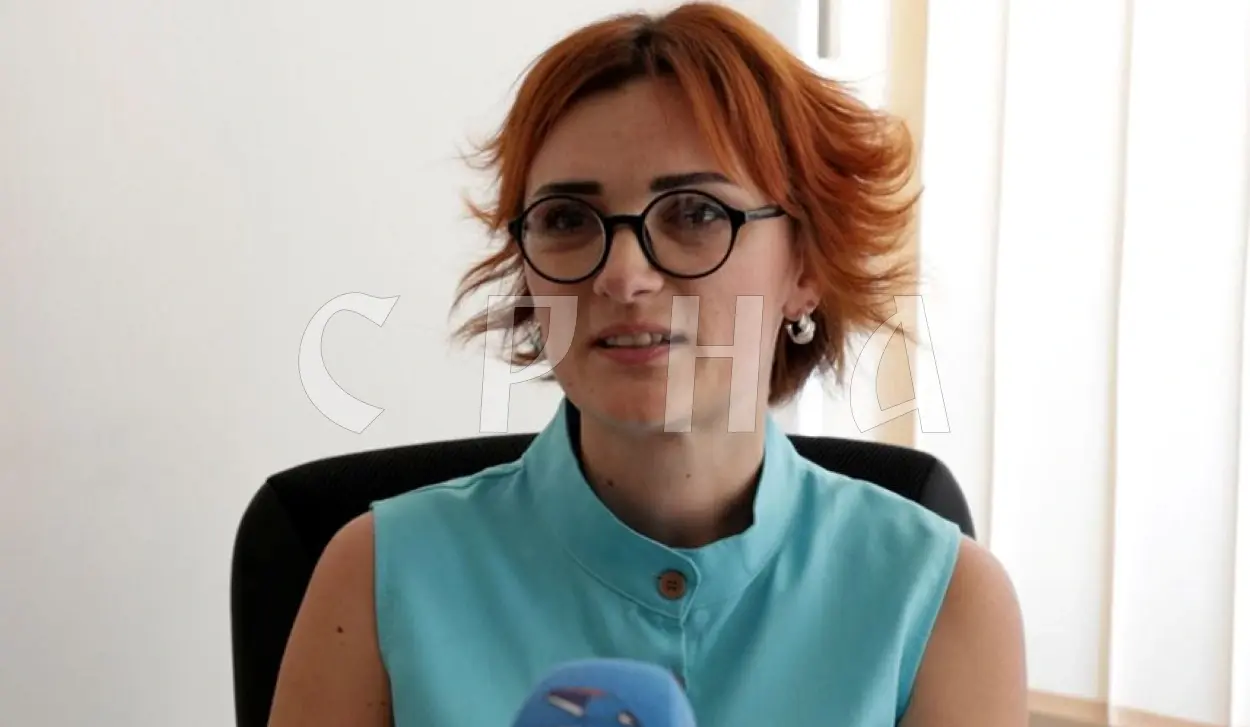
It is very important that terms be translated exactly as they appear in the source. If the source says "Bosnal", it cannot be translated as "Bosniak", Trifković stresses.
BY MAJA BRČKALO
PALE, AUGUST 22 /SRNA/ — Ottoman sources confirm the presence of a Serbian population in BiH in the 16th and 17th centuries and the continuity of Serbian identity, while the publication of Ottoman documents recently discovered in the Old Serbian Orthodox Church in Sarajevo would represent a major advance in Serbian historiography, Nada Trifković, senior research associate at the Institute of Historical Sciences of the University of Istočno Sarajevo, told SRNA.
Trifković considers the Ottoman material preserved in BiH to be particularly important, including documents discovered in the Old Serbian Orthodox Church in Sarajevo.
"We found a considerable number of Ottoman documents in the Old Serbian Orthodox Church in Sarajevo. This is one of the projects I am currently working on with the aim of publishing these documents, as they were previously unavailable to the public, researchers or students. Their publication will be very significant," said Trifković, who is the only Ottomanist in Republika Srpska.
She said that when she began her research, she realized that studying Ottoman history was essential to understanding Serbian history as well, and that reading Ottoman sources requires knowledge not only of Turkish but also of Ottoman Turkish, which was written in the Arabic script.
Trifković particularly stressed the importance of accurately reading and translating Ottoman sources, as a single term can significantly alter the meaning of a document and its historical interpretation.
"We can find answers through the sources. It is very important that terms be translated exactly as they are written in the source. If it says Bosnal, it cannot be translated as Bosniak. If it says Bošnjak, then it is Bosniak. Bosnal and Bosnalevi cannot be translated as Bosniak,” Trifković stressed.
For this reason, she insists on using original source material, saying that this is the only way to reach reliable historical conclusions.
Trifković stressed that Ottoman documents must be preserved, studied, published and translated, because their translation provides a link between archival material and the wider public.
Her research has also taken her beyond the borders of BiH. While pursuing her doctorate in Istanbul, she received an Austrian government scholarship for a six-month research stay at the Austrian National Library and the Austrian State Archives in Vienna.
"I was a doctoral researcher at the University of Vienna’s Institute of Oriental Studies. It was a wonderful experience and an invaluable opportunity in terms of the sources available. I would particularly highlight the manuscript collection of the Austrian National Library, where I had the opportunity to research material that is also significant for Serbian historiography," Trifković says.

KOZAREV: SERB FAMILIES STILL IN AGONY WAITING FOR ANSWERS
MOTHER OF STOJADIN MIRKOVIĆ KILLED WITH MAJOR TEPIĆ RECEIVES VETERANS' COMMEMORATIVE MEDAL

AMENDED RULEBOOK CLEARS WAY FOR EFFICIENT BORDER CROSSING OPERATIONS
BANJAC: DENIAL OF CRIMES IS NEW CRIME AGAINST VICTIMS