THE IDEA OF THE YOUNG BOSNIANS WILL NEVER DIE
Republika Srpska - Istočno Novo Sarajevo - Princip’s Days
06/28/2026
13:56
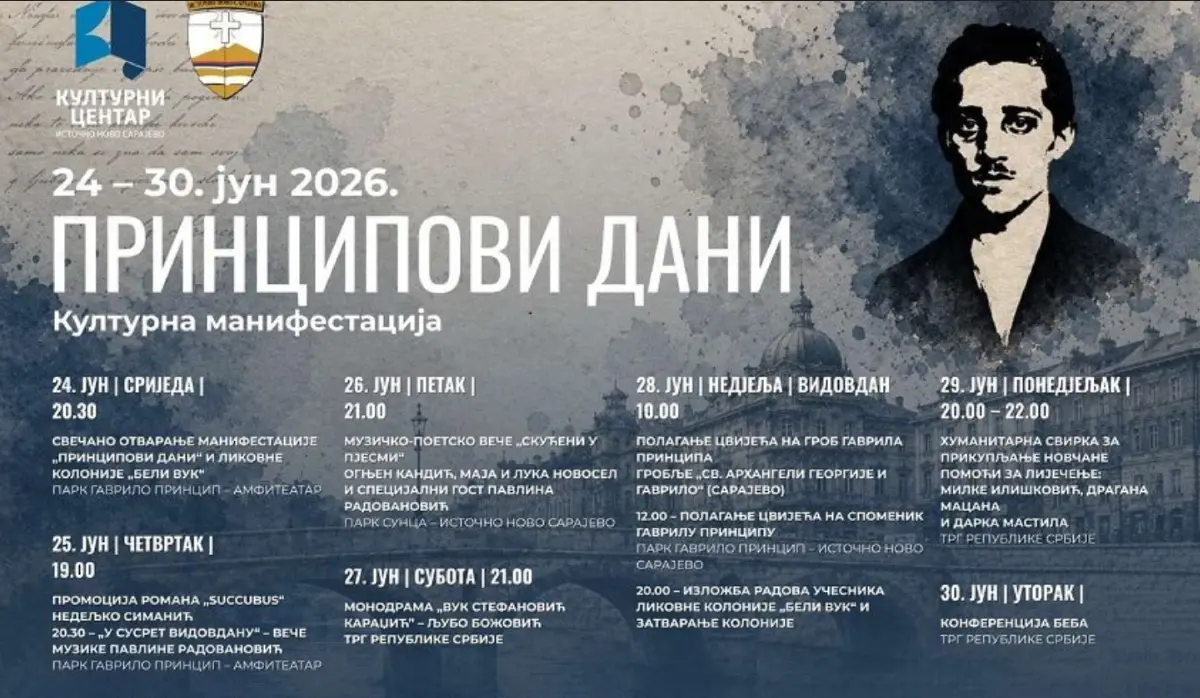
SARAJEVO / ISTOČNO NOVO SARAJEVO, JUNE 28 /SRNA/ – The idea of the Young Bosnia movement will never die, it was stressed today during Princip’s Days event, which included laying flowers on the grave of Gavrilo Princip at the cemetery of Saint Archangels George and Gabriel in Sarajevo, and later at a monument in Istočno Novo Sarajevo.
Earlier, a divine liturgy was served at the Vidovdan Heroes Memorial Chapel at the same cemetery, led by proto-priest stavrophor Velimir Divljanović, followed by a memorial service for Young Bosnia members.
The Serb Singing Society “Sloga” performed a commemorative musical and poetic recital.
Wreaths were laid at the grave of the Young Bosnians on behalf of the city of Istočno Sarajevo by Mayor Ljubiša Ćosić, as well as delegations from the municipality of Istočno Novo Sarajevo and the Embassy of Serbia in Sarajevo.
On this occasion, Ćosić stated that the idea of the Young Bosnians has not and will never die, and that the famous shot fired on June 28, 1914, was the trigger for the path to freedom not only for Serbs but also for other peoples of the region.
He stressed that Princip and his comrades made a great sacrifice, and that after the Sarajevo assassination, severe persecution of innocent people followed as part of Austro-Hungarian reprisals.
Ćosić recalled all major and difficult historical events that occurred on Vidovdan, emphasizing that they were all directed toward the liberation of the Serb people from conquerors and occupiers.
“We are still standing on the right side of history today, and for us Gavrilo Princip is a hero and a martyr. Vidovdan is a special covenantal holiday for the Serb people, making Serbs a fortunate nation, a people with history, freedom, and a better future,” Ćosić said.
Member of Young Bosnia, Gavrilo Princip, assassinated Austro-Hungarian heir to the throne Franz Ferdinand in Sarajevo on June 28, 1914.
As a result of an accidental wound, his wife Sophie Chotek also died in the attack.
The Sarajevo assassination was used by Austro-Hungarian authorities as a pretext for military invasion against Serbia, which led to the First World War.