STEVANDIĆ: WORLD WAR ONE VICTORY WON ON WINGS OF GLORIOUS SERBIAN BATTLES
Republika Srpska - Banja Luka - Armistice Day
11/11/2026
13:31

BANJA LUKA, NOVEMBER 11 /SRNA/ - World War One Armistice Day was marked in Banja Luka on Wednesday with a memorial prayer service and the laying of wreaths and flowers at the Monument to the Victims of the Banja Luka High Treason Trial.
Nenad Stevandić, speaker of the Republika Srpska National Assembly, said the enemies of the Serbs had tried to completely exterminate and divide the Serb people in the First and Second World Wars.
"Today, too, there are attempts to sow discord among the Serb people in order to subjugate them, in Serbia, in Republika Srpska and in the diaspora. But the unity and steadfastness of Republika Srpska will make a great contribution, and Serbia will always know that we love it, that this is not a slogan but something that has become our standard and part of our national and ethnic DNA," Stevandić told reporters in Banja Luka.
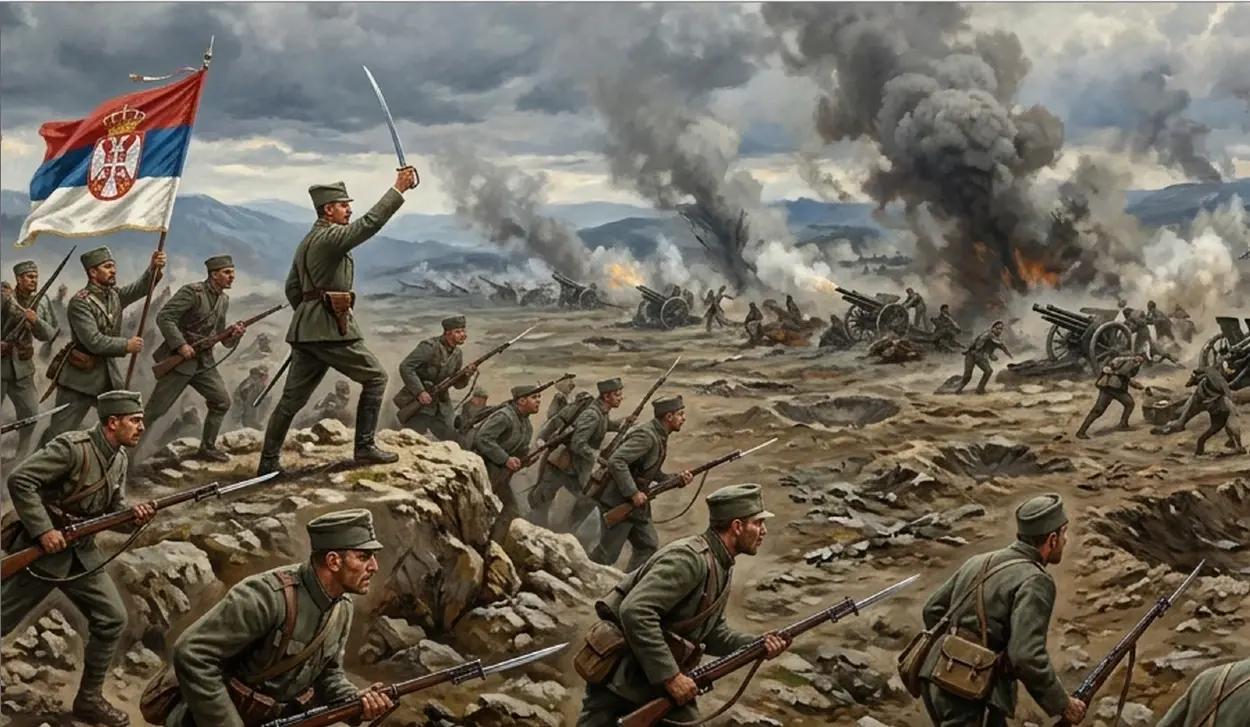
He said victory in World War One had been won on the wings of the first battles won by the Serbs at Kajmakčalan, and then with the entry into Serbia and the routing of Bulgarian and Austro-Hungarian troops.
"Peace was signed on this day, November 11, on the wings of a great Serbian victory," Stevandić said.
Radan Ostojić, Republika Srpska's minister of labor and veterans' and disabled persons' protection, said it was very important that Republika Srpska had been created in the 1990s, because without it everything would be meaningless.
"Republika Srpska is the only guarantee of our survival in this region and our pledge to all those who have died for Serb freedom throughout history," Ostojić said.
He said the countries that had been allies of the Serb people in earlier wars had never properly repaid that through history, especially in the 1990s, when they instead sided with the Serbs' enemies and fought against the Serb people.
Adrijana Basara, the Banja Luka mayor's envoy, said everyone in Republika Srpska should cherish the memory of the Serbian volunteers who had made it possible for people to live in freedom today.
"Our children should learn that our freedom was hard-won throughout history," Basara said.
Mile Ilić, president of the Banja Luka-based Association of Descendants of Serb Victims 1912-1918, said new generations should learn about the heroism of their ancestors as part of their education and carry on the struggle for the homeland, truth, freedom, a fairer society and a more cultured, civilized way of life.
Wreaths and candles were laid by delegations of the Republika Srpska National Assembly and government, a delegation of Serbia, envoys of the president of Republika Srpska and of the Serb member of the BiH Presidency, and representatives of the Center for Research of War, War Crimes and Search for Missing Persons, the Veterans' Organization and many other organizations.
The Banja Luka High Treason Trial was held in 1915-1916 against Serbian patriots during World War One. At the time, Bosanska Krajina and BiH were under Austro-Hungarian occupation.
Of the 17 high treason trials held in BiH, the Banja Luka trial was the largest and stirred European public opinion. It is particularly well known for the wide-ranging campaign for clemency for 16 patriots sentenced to death, in which the then Spanish King Alfonso XIII played a special role.
World War One ended with the signing of Germany's capitulation in a railway carriage at Compiegne in France on November 11, 1918. The Serbian army’s entry into Banja Luka on November 21, 1918, brought freedom to the Serb people of the region after centuries of bondage under the Turks and, from 1878, under Austria-Hungary.
About 1.3 million Serbs died in World War One, almost a third of the population of Serbia at the time.