ŠIKMAN: QUALITY OF EDUCATION IS CRUCIAL FOR THE QUALITY OF PERSONNEL
Republika Srpska - Ministry of Interior - Police Education Administration
02/12/2026
10:50
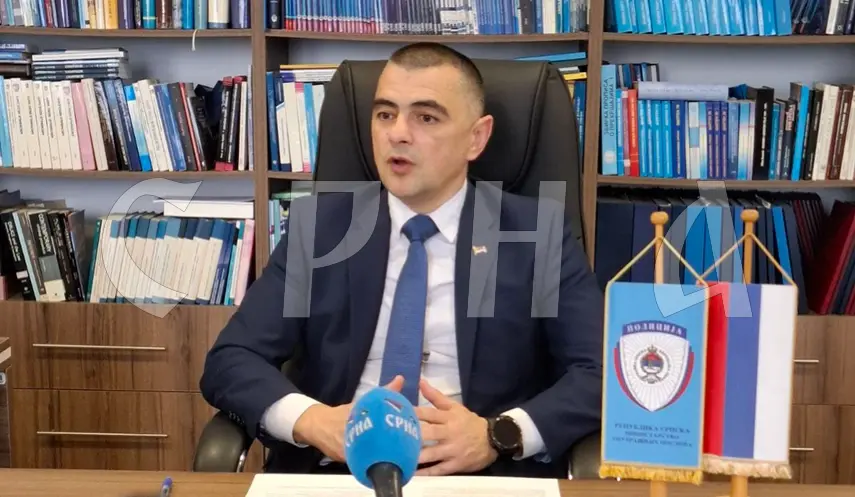
BANJA LUKA, FEBRUARY 12 /SRNA/ - Since its establishment, the Ministry of Interior of Republika Srpska has invested heavily in the education and training of police personnel through the Secondary School of Internal Affairs and the Police Academy, which are among the most important pillars of the Ministry, the Head of the MUP Police Education Administration Mile Šikman told SRNA.
Šikman emphasized that the human factor is the most important element in police organization, which is why the quality of education, training, professional development, and specialization-adapted to modern challenges and conditions-is of crucial importance.
"The Ministry has developed more than 150 types of training programs, which means we are intensive and active in this segment. About 2,000 police officers annually go through various types of training and professional development," Šikman said in an interview with SRNA.
According to him, the environment in which society operates, new forms of crime, as well as modern security challenges, risks, and threats, require continuous acquisition and expansion of knowledge, abilities, and skills as a response.
"Today, this primarily includes high-tech crime, but also terrorism as a constant threat. It is known that citizens of BiH were involved in some of the largest terrorist activities worldwide, that they traveled to join terrorist organizations and later returned, committing terrorist acts here as well, such as the murder of a police officer in Zvornik," Šikman said.
Šikman pointed out that the Ministry of Interior of Republika Srpska has one of the most modern training centers, capable of matching those of much more developed countries.
He stressed that education and training are being improved through cooperation with the Ministry of Interior of Serbia and higher education institutions in Serbia, reminding that cooperation was also established last year with institutions engaged in police education and training from Hungary.
"In the upcoming period, we will further formalize cooperation with them in police training and education. Cooperation with police education institutions from the Russian Federation is also planned, and our students are already learning the Russian language," Šikman emphasized.
He noted that the exchange of experience in training and the adoption of new standards in police training are also achieved through scientific and professional conferences and consultations.