PLOTAN: WAR AGAINST IRAN COULD RESHAPE GLOBAL BALANCE OF POWER
World - economy
03/09/2026
10:11
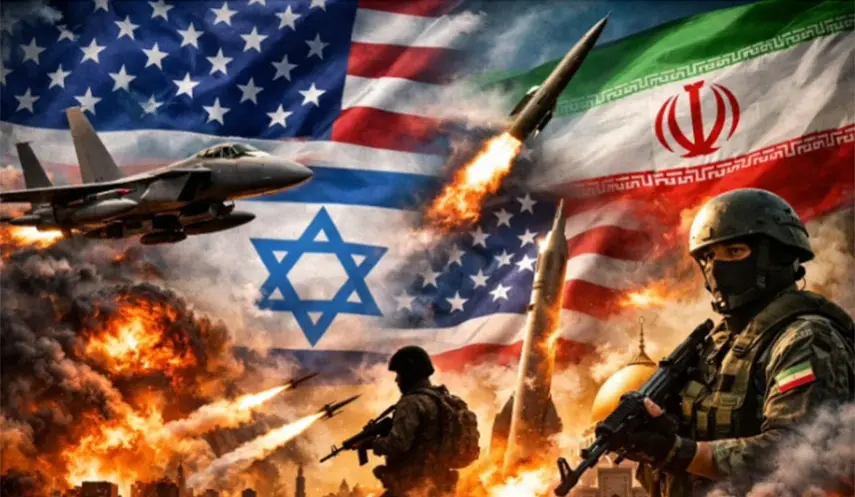
BANJA LUKA, MARCH 9 /SRNA/ - The Middle East is once again a powder keg, and this time the spark comes from a preventive intervention that Israel is carrying out against Iran—a state that has long waged jihad against the Jewish state, international and economic policy expert Nemanja Plotan stated.
"Iran is the largest financier of global terrorism, funneling billions of dollars into proxy groups such as Hamas, Hezbollah, and the Houthis, which serve as the extended arm of Tehran’s ideology of hatred," Plotan pointed out in his column for SRNA.
SRNA publishes Plotan's column in its entirety:
This operation, supported by the United States, is not merely a reaction to Iranian threats but a strategic strike that has already driven up global oil prices - after Iran closed the Strait of Hormuz, a critical artery for 20 per cent of the world's oil supply.
The price of a barrel has surged beyond USD 120, and the world is beginning to feel the global economy overheating, threatening to boil over.
In this geopolitical storm, the Americans and Israelis have already achieved two of their three main objectives.
The first is the destruction of Iran's nuclear program—dozens of underground facilities, including those in Natanz and Fordow, have been reduced to rubble, leaving Tehran without the dream of an atomic bomb for at least a decade.
The second objective is the dismantling of Iran's ballistic missile arsenal, where the allies have destroyed hundreds of missiles and launchers.
According to estimates by the IDF, Iran had around 2,500 ballistic missiles before the conflict, mostly medium- and short-range systems such as the Emad and Khorramshahr, capable of reaching Israel and American bases in the region.
So far, more than 75% of the launchers and hundreds of missiles have been destroyed, but Tehran is still believed to have roughly 1,500–2,000 missiles in reserve, prolonging the conflict and turning it into a war of attrition.
Iran is rebuilding its arsenal at a rate of several hundred missiles per month, but without a nuclear shield and with weakened supply chains, this merely delays the inevitable.
Militarily overmatched, Iran has reacted like a wounded beast, striking at everything around it - targeting civilian facilities in neighboring countries in order to create chaos and force the West to negotiate.
Attacks have hit airports in Dubai and Kuwait, hotels in Dubai and Bahrain, the port of Dubai, a refinery in Haifa, residences in Qatar and Bahrain, and even civilian areas in Saudi Arabia and Lebanon.
These strikes have resulted in hundreds of civilian casualties. Of course, the West has not managed to conduct the operation with complete surgical precision either, which has also led to civilian casualties, including a strike on a school in Minab where more than 160 people - mostly children - were killed.
For Iran, however, this is not a strategy but desperation: Tehran seeks to set the entire region ablaze, yet it has only pushed the Saudis to join the military campaign against Iran.
Riyadh, traditionally Tehran's rival, is now sending its aircraft to destroy Iranian targets, realizing that the Strait of Hormuz - and its own oil exports—are at stake.
The third objective remains: regime change in Tehran. This will be difficult to achieve, as there is no clear coordination with opposition structures inside Iran. Kurds and other minorities are rebelling, but without coordination with the West this amounts only to internal chaos that the regime may suppress through repression.
This situation has shown that Iran has no clear allies - Russia is preoccupied with Ukraine, China is staying away from direct involvement, and proxy groups are overstretched on their own fronts. Tehran stands increasingly isolated in its aggression, while the world watches as imperial ambition melts under the weight of bombs.
Indirectly, this is also a major blow to China, which buys more than 80% of Iran's oil exports, representing roughly 13 per cent of its total imports. Beijing has grown dependent on Iranian oil, which has been cheap due to sanctions, but now the Strait of Hormuz is closed and prices are soaring.
Iran plays a significant role for China because it is part of the largest geo-economics project in history - the Belt and Road Initiative /BRI/. This ambitious plan, launched in 2013, encompasses infrastructure projects worth more than a trillion dollars, linking China with Europe, Asia, and Africa through roads, railways, ports, and energy corridors.
The land routes connecting China to Europe pass through Iran, making it a crucial node for the transportation of goods and energy. If Tehran falls, the BRI loses a vital bridge, forcing China to reroute through unstable regions such as Pakistan or Central Asia.
The West made a major mistake in believing that by accepting China into the World Trade Organization /WTO/ in 2001, the influx of foreign capital would transform it into part of the collective West.
Instead, they created a political and economic monster that now threatens the world order defined by the West over the past four decades. Beijing used free trade to build economic dominance, buying allies such as Iran and expanding influence through debt and infrastructure.
In the 2026 National Security Strategy issued by the US Department of War, the Indo-Pacific is identified as the most important geopolitical region on the planet, expected to account for 50% of global trade in the future.
The strategic confrontation between China and the West cannot and must not lead to direct military intervention, as both sides are nuclear powers. Instead, the contest revolves around containing China through proxy conflicts and similar geopolitical initiatives - preventing Beijing from becoming powerful enough to challenge the entire global order.
The Iranian fire is not merely a local conflict; it is a move on the global chessboard, whose consequences could shake the entire Eurasian continent.