PIPOVIĆ: STRENGTH AND UNITY WERE CRUCIAL AT KORAN MILITARY HOSPITAL
Republika Srpska - Pale
04/02/2026
11:55
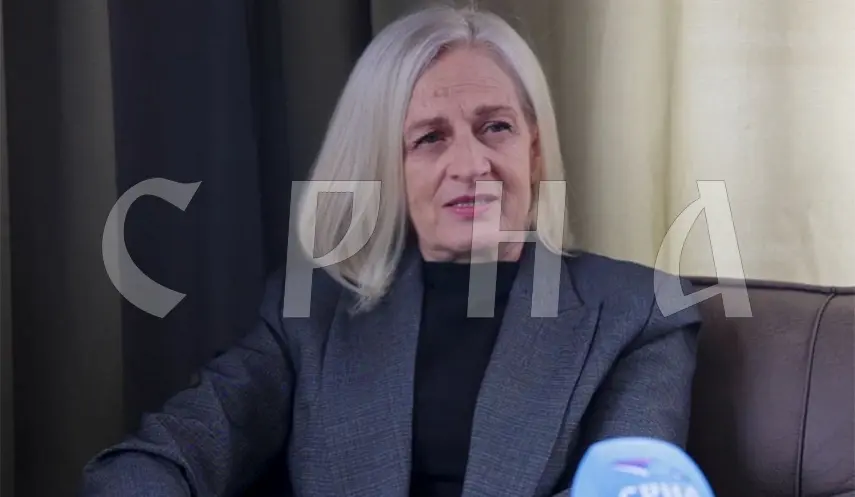
Between fear and hope, a hospital was established in the spring of 1992 in Pale, where doctors and medical staff, leaving everything behind, worked day and night to save the wounded, writing one of the most difficult yet most humane stories, and nurse Ljiljana Pipović says that strength and unity kept the Koran hospital going throughout the war years.
By Maja BRČKALO
PALE, APRIL 2 /SRNA/ - The Military Hospital Koran in Pale, established 34 years ago, was crucial to the Sarajevo-Romanija region during the war, as many lives were saved there under almost impossible conditions, Ljiljana Pipović, a nurse at the hospital, told SRNA.
Pipović, who worked at the Military Hospital Koran from the very beginning, speaks about the challenges, the hardest moments, and the strength of solidarity that sustained healthcare workers during the war years.
"Patients from the Žica Hospital in Ilidža and the hospital from Sokolac were brought to us, and then transported further to Belgrade. God forbid that the Koran Hospital hadn't existed; I can’t even imagine! It was a crucial point for the Sarajevo-Romanija region," Pipović emphasizes.
She speaks with special respect about the doctors who worked in the hospital that saved lives.
"The first doctor who arrived was Bratislav Borkovac, an incredible surgeon and a man with a sense of humor. He didn't rest; he lived for the hospital and did everything. There were also doctors Miladin Babić, Mirko Šošić, Novica Kovačević, Đorđe Sedlar, and many others. They were all there, without a word of complaint," Pipović notes.
She herself, like many of her colleagues, balanced work and family under almost impossible conditions.
"I lived in Pale, the phones worked, and they would just call me to come. No one asked how I would leave the children. Mine were small, so I would wake up the neighbors to look after them because my husband was at the front," Pipović recounts.
She says that back then, the meaning of solidarity was clear; no one spared themselves, but unfortunately, today everything is different.
FROM MIDWIFE TO NURSE IN A WAR HOSPITAL
Pipović says she was 28 years old when, as a midwife, she reported to the Military Hospital on April 5, 1992, and continued to work there.
"It was very difficult. At no point did we realize that all of this would last four years… By profession, I am a midwife; I worked in Sarajevo at the Zehra Muidović maternity hospital. And then, suddenly, you find yourself in a situation where you work as a surgical nurse, and not just that, but in all branches of medicine," Pipović recounts.
She says that fear was inevitable, but there was no room to give up.
"You are afraid you won't know what to do, but if you know the basics, how to find a vein, which instrument to use, and what sterility means, then you must be ready to know everything. The door opens, and you go forward," Pipović explains.
The first days were confusing, she says, but reality became increasingly harsh as the wounded began to arrive.
Pipović notes that at first everything seemed unreal, but over time she gradually realized that this was no game, especially as she witnessed the daily suffering and pain of others, with whom she empathized deeply.
THE MOMENT THAT CHANGES EVERYTHING
She particularly remembers an event that left a deep mark on her.
"They brought in a wounded young man with a gunshot wound to his spine. He was lying face down on the stretcher, young, strong, full of life. It was Mladen Grujić, a skier and athlete from Pale. That beauty of youth, and yet wounded. At that moment, panic gripped me. I thought, if a bullet can strike such youth, what will happen to all of us, to our children? It was as if everything inside me broke," Pipović said.
She emphasizes that during the most difficult moments, support came from a colleague, older and more experienced, who noticed the fear in her as well as in others.
"She gave me a sedative to take, and I trusted her. For several days, we were each other’s support. Thanks to that, I stayed on my feet and continued to work," Pipović recalls, adding that it was precisely the sense of solidarity that kept the hospital running.
According to her, everyone gave their maximum effort, from the cleaners and laundry workers to the doctors and medical staff, and there was no room for giving up.
"If you don't know something, you ask for help. And when the wounded arrived, regardless of their nationality, there was no difference. I guarantee that. Every mother cries the same," she says.
Shortages of supplies were an everyday reality. They washed bandages, conserved every centimeter, and even surgical gloves were washed, sterilized, and reused. They managed as best they could.
Pipović says that despite everything, she feels proud to have been part of it and of the enormous work that was accomplished.
On April 4, the Military Hospital Koran began operating in Pale as part of the Fourth Medical Battalion of the Sarajevo-Romanija Corps of the Republika Srpska Army.
The outbreak of the civil war in BiH prevented many healthcare workers from reaching their workplaces, especially in Sarajevo. All the hospitals that existed at the time remained in the city under Muslim control.
Due to the war actions and the persecution of doctors of Serb nationality from Sarajevo, in addition to the Koran Hospital, other wartime hospitals established in the Sarajevo-Romanija region included Podromanija in Sokolac, Žica in Ilidža, and Kasindol in Lukavica.
Under these circumstances, the Koran hotel complex in Pale was converted into a hospital that became one of the key pillars of healthcare in the region.
Near the wartime Koran Hospital, there is a memorial plaque stating that from April 4, 1992, to June 30, 1996, more than 20,000 people were treated at this medical facility, and over 12,000 surgeries were performed.
The plaque symbolizes the importance of this institution during the Defensive-Patriotic War and bears witness to the extraordinary efforts of the doctors and medical staff in treating Serb soldiers and civilians.