PEPIĆ: IGOR DODIK WILL FORM STABLE GOVERNMENT AND KEEP UP GOOD POLICIES
Republika Srpska - politics
11/24/2026
07:32

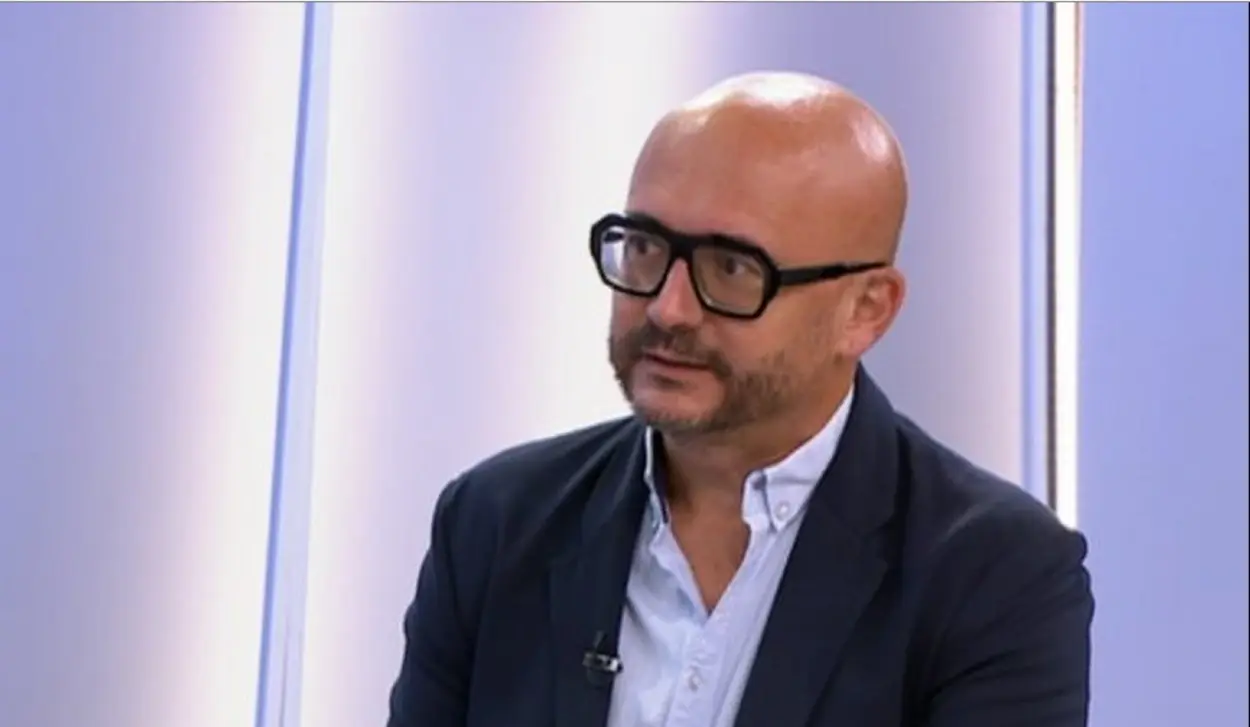
BELGRADE, NOVEMBER 24 /SRNA/ - Economist Siniša Pepić said that Igor Dodik had experience that could prove important for understanding the modern economy and the international business environment.
Pepić told Sputnik that Dodik's strengths included his education, his work for large transnational companies and his direct political experience.
"He ran the campaign headquarters in the last election cycle, which ended in a historic victory with a record number of direct votes. These results give his appointment additional political weight, but also a degree of certainty that he will turn his knowledge and experience, proven in practice, into concrete results.
Above all, I mean a stronger economy, new investments, better business conditions and job creation. I am sure he can form a government that will preserve stability, continue good policies and be quicker to recognize new development opportunities," Pepić said.
Pepić said that Republika Srpska had managed to recover in a relatively short time from the pressure and sanctions, which had been a serious obstacle to the functioning of its public finances and to its political position in BiH and in international relations.
The lifting of the sanctions a year ago was a turning point that created the conditions for stronger economic development and financial recovery, he said.
"No one expected Republika Srpska to recover so quickly, get back on its feet, be recognized by international lenders and gain credibility so quickly with decision-makers in global politics. I am thinking first of all of the consistently good communication with Moscow, but also of the open doors in Washington and Israel, which allowed Republika Srpska to position itself significantly in political terms in the past period," Pepić explained.
In this context, Pepić sees the choice of Igor Dodik as Prime Minister-designate as a continuation of a political course that has already begun to deliver results.
He pointed to the investment cycle that Republika Srpska had entered over the past six months, particularly in public infrastructure.
"All this makes policy predictable, and predictability is one of the basic preconditions that the political representatives of other countries set for small states and small economies in international relations. The same goes for investors, who regard a predictable policy in a country as a major advantage when they make investment decisions," Pepić said.
On relations with Sarajevo and Republika Srpska's position in the joint BiH institutions, Pepić expects the new government to keep insisting on the equality of the entities and on the right of the people's elected representatives to make decisions on their own.
He reminded of the message that newly elected Republika Srpska President Savo Minić had sent regarding the formation of the authorities at the BiH level, stressing that Republika Srpska would not agree to institutional arrangements in which it did not have an equal position with the Federation of BiH.
Pepić believes that this political course will continue in the coming period, partly because of changes in international relations. He noted that the principle of state sovereignty and opposition to political decisions imposed from outside were gaining ground in global politics.
"That is exactly where Republika Srpska stands, and we think that sovereignism, as a trend in global politics, will also be reflected in the internal situation in BiH and will counter the policy of the Bosniak side, which talks every day about the sovereignty of BiH while at the same time calling for international interventionism and supporting the presence of unelected foreign officials in the joint BiH bodies," Pepić stressed.
He considers the development of relations between Republika Srpska and Serbia particularly important, saying that they go beyond the special parallel ties defined by the Dayton Agreement.
These ties rest on a common people, culture, tradition and the Orthodox faith, but also on concrete economic interests, Pepić said.
He expects relations between Republika Srpska and Serbia to grow even closer, both politically and economically, during the new government's term.
"I see an opportunity in Igor Dodik's first statements that relations with Serbia must in no way get worse and that there will be intensive work on the best possible cooperation between political actors, and also on improving economic exchange and trade," Pepić concluded.