OSTOJIĆ: VERBAL OFFENSES-BASED INDICTMENTS AIM TO FORCE SERBS TO FORGET THEIR HISTORY
Republika Srpska - SRNA - podcast
06/20/2026
19:35
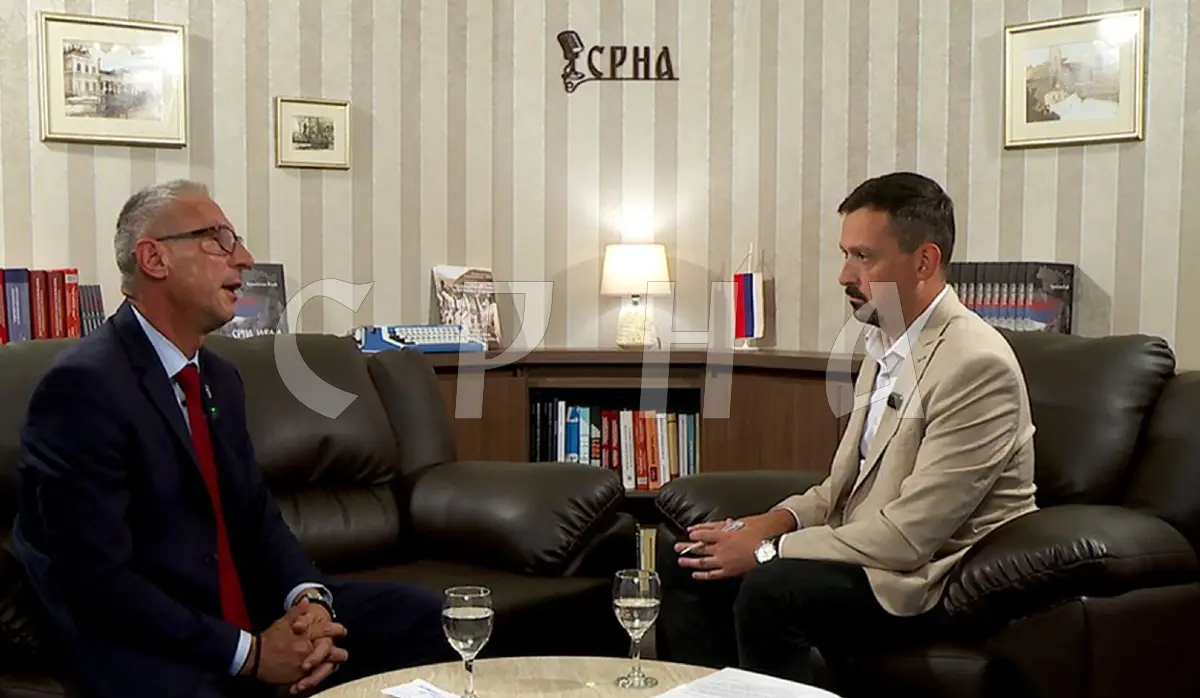
BANJA LUKA, JUNE 20 /SRNA/ – The Minister of Labour, War Veterans and Disabled Persons Protection of Republika Srpska Radan Ostojić says the BiH judiciary, by bringing indictments against Serbs for verbal offenses, even for merely mentioning the names of those who led Republika Srpska and its army during the war, seeks to instill fear and force the Serb people to forget their history.
Ostojić said that these indictments are primarily intended to intimidate people active in public life, as well as ordinary citizens.
“They want us to forget our history, so that our children do not learn what happened. The ultimate consequence will be that he who does not know his history will not know his future either. Such a people is condemned to see history repeat itself and once again to defend its freedom, or disappear completely from the historical stage,” Ostojić warned in the SRNA podcast.
Ostojić believes that providing assistance to Serb veterans who have been indicted or convicted for alleged war crimes is very important, noting that the Republika Srpska War Veterans Organisation offers support within its means.
“These people have been left to fend for themselves, thus it is necessary to secure funding at both the republic and local levels. More than 200 people are currently facing proceedings, and who knows how long this will continue,” he stressed.
REPUBLIKA SRPSKA PERMANENTLY GRATEFUL TO MILITARY COMMANDERS AND ALL SOLDIERS FOR OPERATION CORRIDOR
Speaking about the military operation known as “Corridor,” carried out 34 years ago, Ostojić said it was one of the most important operations undertaken by the Republika Srpska Army, together with brothers from Republika Srpska Krajina and the Ministry of Interior members during the Defensive-Patriotic War.
He recalled that the operation enabled territorial connectivity between the eastern and western parts of Republika Srpska and maintained continuity with Serbia.
“Had this not happened, the Serb people would have faced the same fate they suffered during the Second World War, genocide and mass suffering. The Serb people in Republika Srpska Krajina became victims of expulsion, ethnic cleansing, and genocide in 1995, on a scale modern Europe had not seen since the end of the Second World War,” Ostojić said.
He emphasized that Republika Srpska owes gratitude to the generals and military commanders who brilliantly planned the operation, as well as to all those who participated in it.
“This operation was conducted strictly according to military rules and standards in terms of the number of personnel engaged. A total of 41,000 troops took part, and by the end of the operation to liberate Brod, that number had reached 54,000,” Ostojić said, recalling that the immediate trigger for the operation was the death of 12 newborn babies at the Clinical Centre in Banja Luka.
Ostojić believes that younger generations should know what happened throughout history, but added that it would be better if they could avoid the fate of their ancestors by preserving peace and Republika Srpska through wisdom and work.
“Despite everything, including modern technologies that occupy young people’s attention, they know a great deal about the Defensive-Patriotic War and possess a strong sense of national identity. The introduction of religious education in schools also represents a national awakening among younger generations and is one of the best decisions made since the war,” Ostojić says.
SERBS NEED NO FURTHER DIVISIONS
Ostojić noted that life has always been difficult for Serbs in this region throughout history and stressed that no one can guarantee what the future will bring or how long peace will last.
“The Defensive-Patriotic War taught the Serbs that they had learned the lessons of history well. Had we not had an army and police force, and had we not been united, none of this would exist today. We would once again have faced Jasenovac, Jadovno, and other places of suffering,” Ostojić said.
He believes that Serbs no longer need divisions, such as those that existed during the Second World War, and that freedom and Republika Srpska should serve as the common point of unity.
“We must preserve our unity and solidarity, remain devoted to the Serbian Orthodox Church, respect the teachings of Saint Sava, and carefully analyse the sources of threats facing us,” Ostojić said.