MINIĆ: REMEMBRANCE NOT HATRED BUT WARNING TO AVOID SUFFERING FROM REPEATING
Republika Srpska - Doboj - commemorative gathering
09/08/2026
11:59

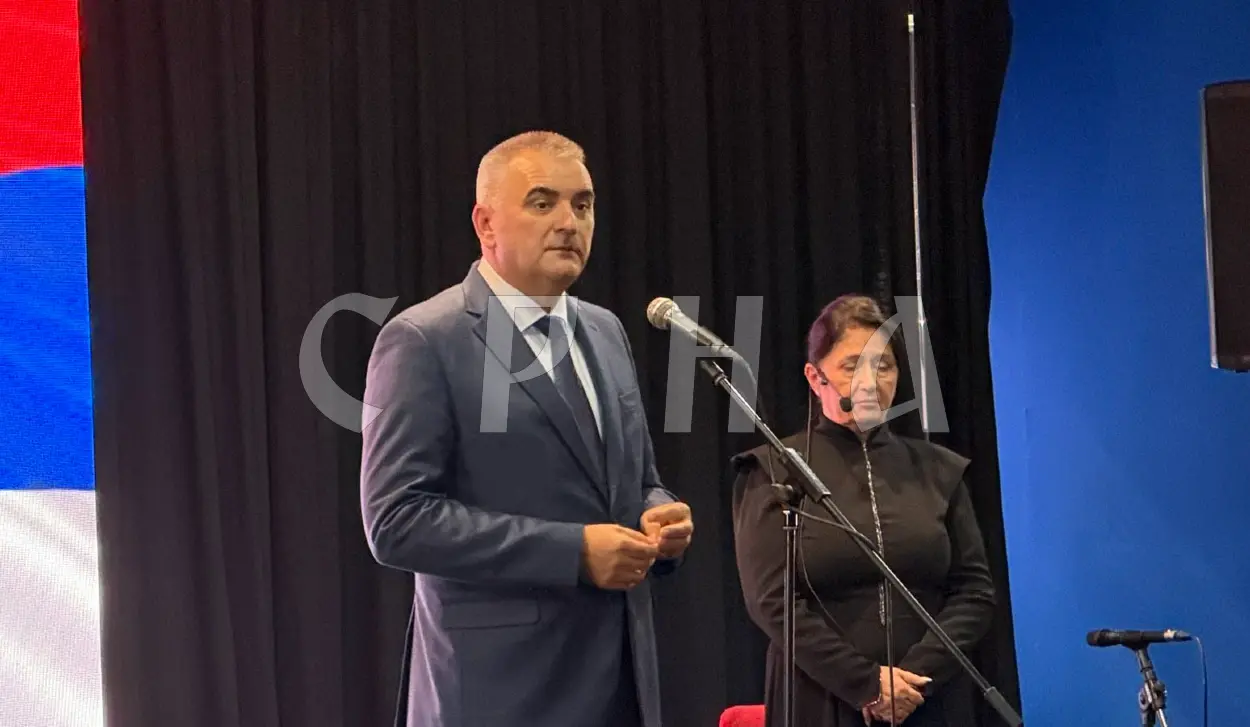
DOBOJ, SEPTEMBER 8 /SRNA/ – Republika Srpska Prime Minister Savo Minić, who attended a commemorative gathering in Doboj today marking 31 years since the exodus of Serbs from Vozuća, the Krivaja River valley, and the western and southern parts of Mount Ozren, stressed that remembrance is not hatred but a warning to avoid suffering from repeating.
Minić noted that 129 Serb soldiers and civilians from the area are still missing, and recalled the brutal crimes committed against Serbs in the area by members of the El Mujahideen Detachment.
He thanked the City of Doboj and other local communities that provided refuge to expelled Serbs from the area at the time, stressing that the Republika Srpska Government is doing everything possible to raise the level of dignity of a Serb veteran.
Minić stressed that the Serb people must be aware of the sacrifices made for the freedom they enjoy today, and that an institutional struggle must continue today in order to preserve Republika Srpska.
Today, the Zavidovićani Association of People from Zavidovići presented Prime Minister Minić with a certificate of appreciation.
Zoran Blagojević, the head of the Zavidovićani Association, based in Doboj, who served as wartime chief of staff of the Fourth Ozren Light Infantry Brigade of the Republika Srpska Army, appealed for the Republika Srpska institutions to once again take over the process of searching for missing persons, given that the 129 Serb soldiers and civilians are still missing.
He recalled that no one has been held accountable for crimes committed in the Vozuća area, apart from two Muslim generals, Rasim Delić and Sakib Mahmuljin, the latter of whom was allowed to flee to Turkey after his conviction.
Smiljka Savić, a former resident of Vozuća, lost her husband in 1995, and his remains were not found until nine years later, at the Smrekovača site.
She says that, even after 31 years, memories of those events remain vivid.
Doboj Deputy Mayor Dijana Kalenić stressed that families expelled from the Krivaja River valley found safety and refuge precisely in Doboj, and that the City Administration supports the work of the Zavidovićani Association of People from Zavidovići.
“This gathering is of particular importance to our local community, and it is our shared promise that what happened in history will never be forgotten and that we have an obligation to pass the commemoration of these anniversaries of suffering on to younger generations - not so that they hate, but so that they respect and value freedom,” Kalenić said.
She recalled the institutional measures through which the Republika Srpska Government assists families of fallen and demobilized soldiers.
In addition to former displaced Serb residents of Vozuća, the Krivaja River valley, and the southern and western parts of Ozren, the gathering was also attended by Republika Srpska National Assembly member Danijel Jošić, Deputy Minister of Defence in the Council of Ministers Aleksandar Goganović, and representatives of the municipality of Petrovo and other local communities.
On Thursday, September 10, the Paths of the Exodus march will be held. Participants are scheduled to gather in Tumare on Mount Ozren, from where they will follow the existing route along the truck road on the Tumare–Brijesnica Gornja–Kvrga Malčići–Borovci–Lozna–Stog route.
This is the truck road along which Serbs from Vozuća and the Krivaja River valley withdrew in the face of forces of the so-called Army of BiH.
Serbs from Vozuća were expelled from their ancestral homes during offensives by the so-called Army of BiH codenamed "Hurricane," "Farz" and "Badr al-Bosna".
The mass suffering of the Vozuća people occurred between September 10 and 24, 1995, as a result of an offensive by 23,000 Muslim troops from the Second and Third Corps of the so-called Army of BiH and the El Mujahideen Detachment, as well as NATO bombing supported by its rapid-reaction units and a Pakistani contingent of international peacekeeping forces.
More than 30 Serb villages were burned, 1,920 Serb families comprising 7,680 people were expelled, and 459 Republika Srpska Army soldiers and civilians were killed, while the a larger number of people are still missing.
The fall of Vozuća marked the end of the expulsion and ethnic cleansing of Serbs from the areas of the Zenica and Tuzla regions.