MASTILOVIĆ: PARLIAMENT THE GREATEST FORCE DEFENDING SRPSKA
Republika Srpska - National Assembly - anniversary
10/21/2026
10:52


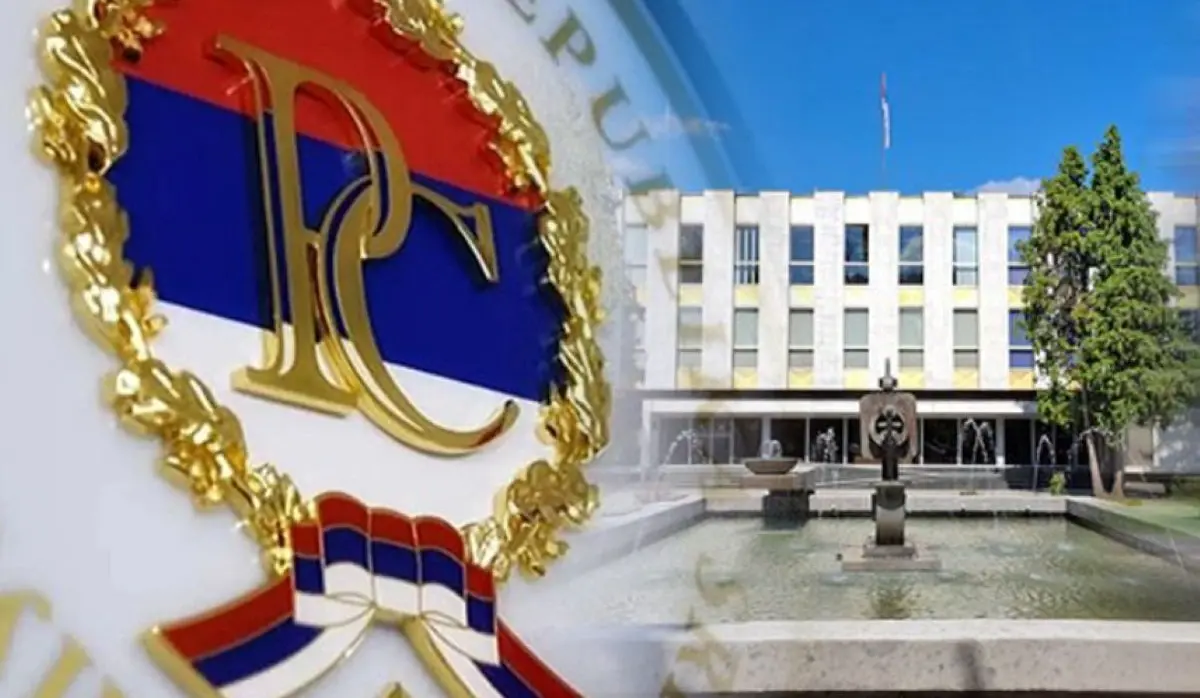
PALE, OCTOBER 21 /SRNA/ – The National Assembly - the greatest force defending Republika Srpska must be protected, while the memory of the great generation of Serbs who, 35 years ago, had the strength, courage, and wisdom to establish Srpska thereby protect the Serb people in this territory from genocide must be continually evoked, historian Draga Mastilović told SRNA.
Ahead of the upcoming marking of the 35th anniversary of the Republika Srpska National Assembly’s establishment, Mastilović recalled that the formation of the Assembly of the Serb People in BiH on October 24, 1991, was one of the most significant dates in the recent history of the Serb people, particularly west of the Drina River, as it laid the foundations for the establishment of Republika Srpska.
"It should be borne in mind that all the decisions, including the one to establish the Assembly of the Serb People in BiH, were, in fact, forced by circumstances," emphasized Mastilović, who also serves as Republika Srpska Minister for Scientific and Technological Development and Higher Education.
SERB REPRESENTATIVES MADE IT CLEAR THEY WOULD NOT ALLOW OUTVOTING
Mastilović explained that the Serb representatives had not simply decided on a whim to break away and establish an assembly, as these developments had a history of their own. The cause was attempted political outnumbering and outvoting the will of the Serb people in BiH.
He recalled that the political crisis in BiH had been ongoing, particularly since January 1991, and that Serb representatives had several times removed from the agenda of the Assembly of BiH a memorandum proposed by the SDA concerning the state sovereignty of BiH. At that time, the principal objective of the Serb political and intellectual elite was to remain within Yugoslavia.
"The Serbs feared the possibility of a new border being established along the Drina River and a recurrence of the genocide they had experienced during World War II. This was precisely the cause of all subsequent actions by the Serb intellectual and political elite, including the establishment of the Assembly of the Serb People," Mastilović pointed out.
According to him, these interpretations often overlook the historical context behind the events that led to the decisive parliamentary sessions in October, particularly the session spanning October 14–15, when representative Vojislav Maksimović, on behalf of 20 representatives, read out a request for the memorandum issue be referred to the Council for the National Equality of the Peoples in BiH.
"Then-chairman Momčilo Krajišnik suspended the session because it could not continue in accordance with the Constitution of BiH and the Rules of Procedure of the BiH Assembly. Muslim and Croat representatives continued the session in a completely illegal and illegitimate manner and adopted a decision accepting the memorandum, which was the main reason for the establishment of the Assembly of the Serb People in BiH," said Mastilović, who holds a doctorate in history.
He noted that the Serbs intended to make it clear that they would not allow any form of political domination or the outvoting of the Serb people, particularly any attempt to transform the Serbs in BiH from a constituent people into a national minority.
Mastilović recalled that subsequent actions by the Assembly of the Serb People were also shaped by moves made by the leaderships of the Muslim and Croat parties, which at the time were closely aligned politically.
ALL ASSEMBLY MOVES AIMED AT PRESERVING CONSTITUENT STATUS OF SERBS
He recalled that on October 24, the Assembly of the Serb People adopted a decision to hold a referendum on the Serb people remaining within Yugoslavia as part of the common state. More than 90 percent of the Serbs in BiH voted in favour of remaining in the Yugoslav state.
"This was not respected by the political representatives of the Muslims and Croats, just as they did not respect the other decisions made by the political representatives of the Serb people," Mastilović said.
Mastilović further recalled that on December 20, the incomplete Presidency of BiH, without Serb members, decided to submit a request to the European Commission for recognising BiH’s independence. The following day, December 21, the Assembly of the Serb People responded by adopting a decision to establish Republika Srpska, or the Republic of the Serb People in BiH.
According to Mastilović, subsequent developments were also conditioned by hostile moves by the Croat and Muslim sides, although the Assembly of the Serb People and Serb political representatives consistently left open the possibility of dialogue.
He recalled that when the decision was made to hold a referendum on the independence of BiH, Serb representatives responded one day before the referendum by adopting the first Constitution of Republika Srpska, which was not proclaimed that day; its formal proclamation came later, on March 17, 1992, as negotiations continued in the meantime.
"This was the well-known the Cutileiro initiative, when Muslim representatives rejected the Cutileiro Plan, reportedly at the urging of Warren Zimmermann, a senior US official at the time, according to most sources. The Serb representatives then decided to proclaim the Constitution of the Serb Republic, or the Republic of the Serb People in BiH," Mastilović said.
He pointed out that although the Constitution was published in the Official Gazette on March 17, it was stated that it would enter into force on the day the Assembly of the Serb People formally proclaimed it. This occurred after the Muslim side finally abandoned the Cutileiro Plan, which was the only viable way to stop the war at that point.
He claimed that Serb political representatives had agreed to the independence of BiH on the condition that the country be organised along ethnic lines.
"When the Muslim representatives finally abandoned that arrangement, on March 27 the Assembly of the Serb People formally proclaimed the Constitution of Republika Srpska. All the actions taken by the Assembly of the Serb People were defensive responses to the aggressive behaviour of the Croat and Muslim sides and their attempts to turn the Serbs in BiH from a constituent people into a national minority, strip them of all their rights, and establish a border along the Drina River," said Mastilović, who is also the founder of the Institute of Historical Sciences at the University of Istočno Sarajevo.
Mastilović noted that the Serbs knew very well from their history what it meant to have a border along the Drina River while lacking their own state. He said that, then as now, they had the experience of World War II and the genocide in mind.
He believes that recognition should be given to the Serb political and intellectual elite of that period for recognizing the historical moment and understanding that these developments represented the tip of the iceberg of attempts dating back to the mid-19th century to eliminate the Serbs and Orthodoxy from the territory west of the Drina River.
"This is what made the Serb political representatives of that period, and the National Assembly of Republika Srpska or the Assembly of the Serb People in BiH, significant – to deliver clear and unequivocal messages and have the courage to proclaim a Serb state west of the Drina River. Thanks to their efforts, we have Republika Srpska today, as well as, of course, the Republika Srpska Army, which defended the political will of the Serb people against aggression," Mastilović stressed.
PRESERVING INSTITUTIONS - IMPERATIVE FOR SELF-PRESERVATION
Mastilović pointed out that these developments led to the establishment of Republika Srpska, but regrettably, attacks on it continue to this day.
"We have witnessed how the signing of the Dayton Peace Agreement was orchestrated - part of the international community clearly promised the Muslim side that efforts would be made to undermine Republika Srpska. For 30 years, they have worked to undermine our republic, particularly through interventions by high representatives. Unfortunately, these attempts have not stopped to this day," Mastilović said.
He noted that the defense of Republika Srpska is still ongoing and that the National Assembly remained the principal bulwark against attempts by all enemies of the Serb people to dismantle Republika Srpska institutionally.
"If it is dismantled institutionally, we will certainly find ourselves in a situation where, within a relatively short historical period of 50 or 100 years, which is the blink of an eye, there will be no Serbs west of the Drina River," Mastilović warned.
Mastilović emphasized that preserving the institutions of Republika Srpska was therefore a categorical imperative for its self-preservation, adding that the National Assembly of Republika Srpska remains today, as it did in 1992, the principal force representing the Serb people west of the Drina River.

NDH COMMITTED GENOCIDE AGAINST SERBS, JEWS AND ROMA
SARAJEVO RESIDENT ARRESTED OVER OFFENSIVE INSCRIPTION ON SERB TRICOLOR MURAL

PROTESTS AND STRIKES ACROSS GREECE
KARAN: SELF-DETERMINATION IN PRACTICE - 35 YEARS OF NATIONAL ASSEMBLY OF REPUBLIKA SRPSKA