KARAN: THE 1991 PLEBISCITE – TESTIMONY TO SERB PEOPLE'S CHOICE REGARDING THEIR OWN STATEHOOD AND CONSTITUTIONAL FUTURE
Republika Srpska - president - article
11/08/2026
20:02

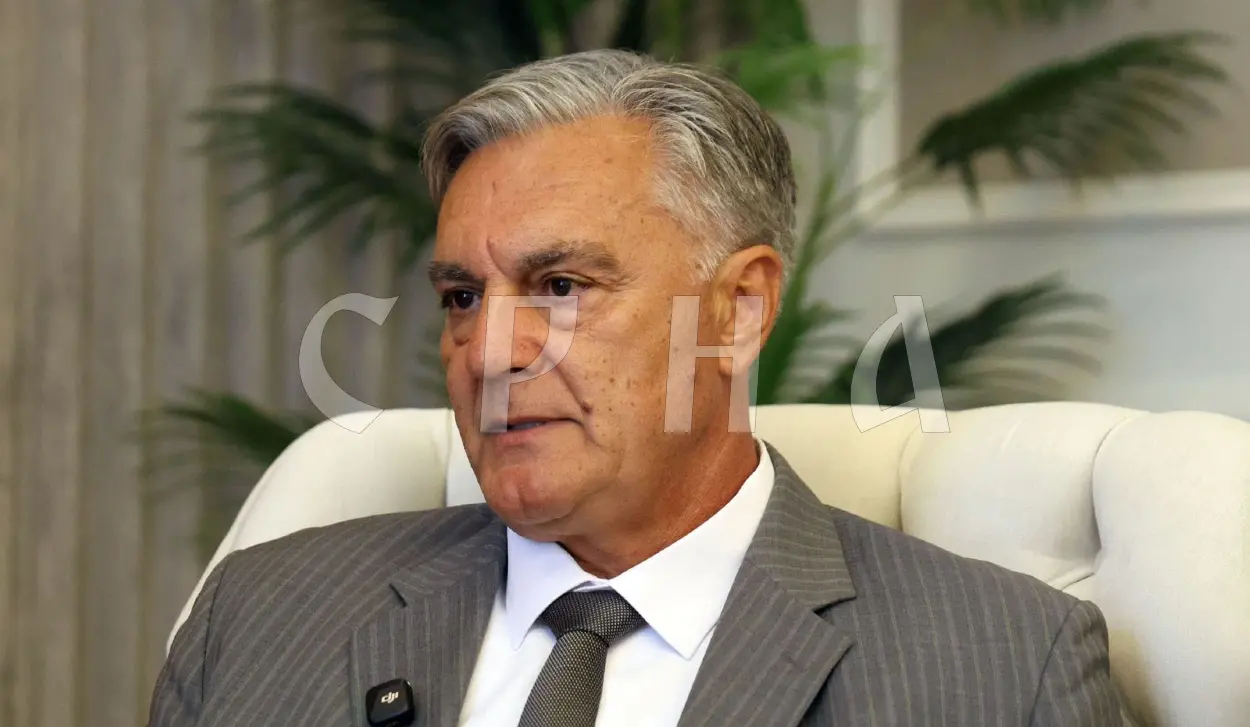
BANJA LUKA, NOVEMBER 8 /SRNA/ - The plebiscite of the Serb people in BiH, held on November 9 and 10, 1991, stands as a historical testament to the fact that, at one of the decisive moments in their recent history, the Serb people directly expressed their choice regarding their own statehood and constitutional future, Republika Srpska President Siniša Karan said.
We are publishing in full an article by President Karan for the Media System of Republika Srpska - SRNA, on the occasion of the 35th anniversary of the plebiscite of the Serb people in BiH:
When fundamental questions concerning a people's statehood, constitutional status and future are at stake, the directly expressed will of the people carries particular weight.
The plebiscite of the Serb people in BiH, held on November 9 and 10, 1991, stands as a historical testament to the fact that, at one of the most decisive moments in their recent history, the Serb people directly expressed their choice regarding their own statehood and constitutional future.
The Serb people unequivocally and with dignity affirmed, through the plebiscite, the decision of the Assembly of the Serb People in BiH that the Serb people should remain within the common state of Yugoslavia.
Thus, the question of the Serb people's statehood and constitutional status was not left solely in the hands of their political representatives; the people themselves also endorsed the Assembly's decision. That is why November 9 and 10, 1991, remain an enduring testament to the Serb people's determination to shape their own destiny.
This is the enduring message of November 1991: a people who have directly expressed their will on a fundamental question of statehood and constitutional status cannot be treated as the object of other people's political decisions, and their constituent status, equality and right to self-determination must be consistently respected.
PLEBISCITE AS THE SEAL OF PEOPLE'S WILL
A plebiscite is one of the oldest forms of direct democracy and is used to decide on matters of the highest importance. It is therefore commonly held to decide on territorial issues, the organisation of the state or the form of government.
A plebiscite is rarely held as a form of citizen participation in decision-making and the exercise of rights and freedoms. Its particular strength also lies in the fact that it can be called only by a state authority or an international organisation, as well as in the legally binding nature of the decision reached, in accordance with the applicable legal order.
CONSTITUENT STATUS OF PEOPLES IS THE ROOT OF EQUALITY AND FOUNDATION OF RIGHT TO SELF-DETERMINATION
The constituent status and statehood of a people give it the right to establish its own state, either independently or together with another people. For a people to have constituent status, it must be indigenous, meaning that it has its own origins and roots, is native to the territory, and possesses a distinct culture as well as historical, religious, national, and other specific characteristics.
The long-standing and uninterrupted heritage of a people, together with all its distinctive characteristics, gives it constituent status. The principle of equality among peoples derives from this status, meaning that constituent peoples enjoy equal rights and bear equal obligations.
Constituent peoples have a universal and generally recognised right known as the right to self-determination. This right is reflected in a people's freedom to choose among several options: to establish a state of its own; to establish a state jointly with one or more other peoples; to establish its own state and join a federation or union of states with other countries; or to enter into other forms of state organisation.
The right to self-determination is explicitly enshrined in numerous international acts and the constitutions of many countries. Among other things, it is affirmed in the Charter of the United Nations and was also incorporated into the fundamental principles of the 1974 Constitution of the Socialist Federal Republic of Yugoslavia /SFRY/.
This is a right that many peoples around the world have exercised since ancient times, particularly in more recent times.
Given that self-determination is a universal right, and that the existing state /the SFRY/ had disintegrated, the right to self-determination was thereby activated for all constituent peoples.
FROM THE VOICE OF PEOPLE TO THE LETTER OF CONSTITUTION
For the Serb people, whose existential, political and national identity was under threat, the right to self-determination represented the foundation for survival, equality and national future.
The process of establishing Republika Srpska unfolded in parallel with the process of determining the status of BiH, except that Republika Srpska was constituted as early as 1992, while BiH was not constituted until 1995.
The establishment of the Assembly of the Serb People in BiH on October 24, 1991, marked the beginning of separate institutional organisation, followed by the decision that the Serb people in BiH would remain within the common state of Yugoslavia, which was subsequently endorsed in a plebiscite.
This was followed by the proclamation of the Republic of the Serb People of BiH on January 9, 1992, the adoption of its Constitution on February 28, and the adoption of the name Republika Srpska on August 12 of the same year.
Thus, the plebiscite played a particularly important role in strengthening the legitimacy of the decision made by the Assembly of the Serb People in BiH, as it provided the direct consent of the very people in whose name the decision was taken.

KARAN: THE 1991 PLEBISCITE – TESTIMONY TO SERB PEOPLE'S CHOICE REGARDING THEIR OWN STATEHOOD AND CONSTITUTIONAL FUTURE

HERZOG OFFICIALLY TASKS EISENKOT WITH FORMING GOVERNMENT

MINOR GIRL FROM MONTENEGRO KILLED IN BUS OVERTURNING IN CROATIA

ALCARAZ WINS PARIS MASTERS TITLE