KALINIĆ: CONTINUATION OF EFFORTS TO RESTORE WHAT BELONGS TO SERBS UNDER ORIGINAL DAYTON ACCORDS
Republika Srpska - Dayton Peace Agreement - anniversary
11/19/2026
13:13

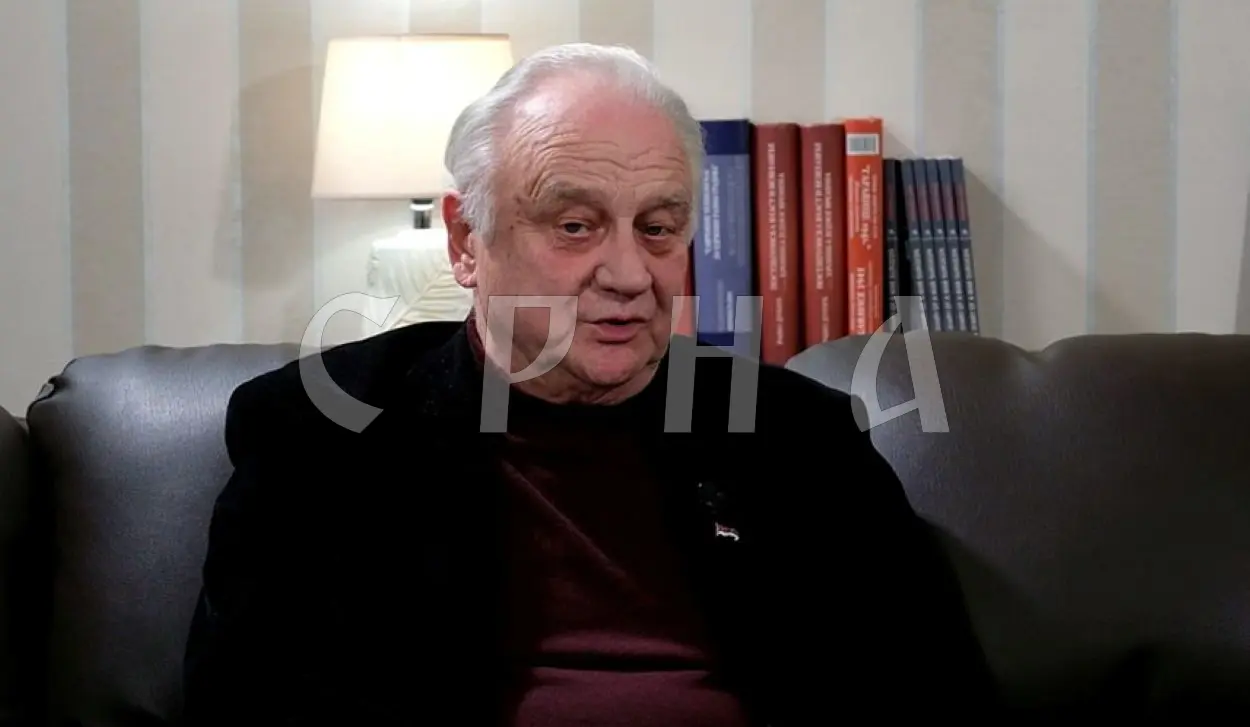
PALE, 19 NOVEMBER /SRNA/ – The swift formation of the government in Republika Srpska, backed by a stable two-thirds majority in the National Assembly, together with Željka Cvijanović's firm pro-Serb position in the BiH Presidency, will enable continued strong efforts, both locally and internationally, to restore what belongs to the Serb people under the original Dayton Peace Agreement, Dragan Kalinić, a member of the first convocation of the Assembly of the Serb People in BiH, told SRNA.
"This means that everyone, especially elected deputies, both in government and in opposition, as well as key democratic institutions and the people heading them, must demonstrate the highest level of political awareness when it comes to protecting the vital national interests of our people in BiH and beyond. God willing, at least on this issue, Serbs will be able to reach an agreement," Kalinić said.
On the occasion of the 31st anniversary of the conclusion of the Dayton Peace Agreement, Kalinić stressed that Serbs in BiH are the only advocates of preserving its provisions in their original form, although this international agreement has been turned into its opposite as a result of interventionism by Western globalists, with the full support of Bosnian unitarists.
"From the moment it was officially signed by the major world powers in Paris in December 1995 until today, the Dayton Peace Agreement has been turned into its opposite through the interventionism of Western globalists, with the full support of Bosnian unitarists, as well as through pressure and blackmail directed at the leadership of Republika Srpska and the use of the infamous Bonn Powers," Kalinić stated.
He pointed out that numerous negative examples have proven that many of the signatories have abandoned the Dayton Peace Agreement, and that Serbs in BiH, paradoxical as it may sound, are the only advocates of preserving its original provisions.
Kalinić, who is also a member of the Republika Srpska Creators Association, said this primarily referred to restoring the competencies of Republikaf Srpska that had been taken away by force in numerous fields, as well as efforts to oppose unconstitutional interference with its right to property.
He recalled that members of the first convocation of the Assembly of the Serb People in BiH proclaimed Republika Srpska and defended it during what a war imposed on the Serbs, alongside the Serb people, army and police, who made enormous sacrifices.
"After 30 years and more, they have every legitimate right to ask what the Dayton Peace Agreement has brought to the Serbs in this country, both good and bad," Kalinić said.
He noted that 21 November 1995 marked the end of the war and the beginning of the long-awaited peace for all peoples in BiH.
"The Agreement introduced a new Constitution, establishing BiH as a political community consisting of two equal entities and three constituent peoples. The Republic of Srpska was essentially recognised internationally, while a special agreement enabled it to establish special parallel relations with Serbia," he said.
Kalinić pointed out that, on the other hand, the Dayton Peace Agreement required painful compromises from the Serbs, including concessions concerning their pre-war sovereignty and the surrender of territories that had been under Serb control before and during the war.
"This was particularly painful for our people in the Sarajevo municipalities. The issue of Brčko remained unresolved, a corridor to Goražde was imposed, and we were denied access to the sea," he said.
He said these were among the reasons for the considerable dissatisfaction and disappointment among Serbs in the delegation headed by Slobodan Milošević, who, upon returning from Dayton, resorted to "disciplining" the leadership of Republika Srpska to accept the Agreement.
Kalinić assessed that Republika Srpska continues to face difficult times, given the current regional and broader international situation.
"There will be many challenges in the years ahead," he warned.
The 31st anniversary of the initialling of the General Framework Agreement for Peace in Bosnia and Herzegovina will be marked on 21 November.
The Agreement was initialled at Wright-Patterson Air Force Base in Dayton, United States, together with 12 annexes, bringing the war in BiH to an end and establishing the country's post-war constitutional and legal order.
Under the Agreement, BiH was organised as a state comprising two entities – Republika Srpska and the FBiH – both of which are signatories to all the annexes.

TWO AFGHAN MIGRANTS REMANDED IN CUSTODY OVER WEAPONS

MOSCOW, BEIJING AND WASHINGTON WILL WORK TOGETHER TO PREVENT PROLIFERATION OF NUCLEAR WEAPONS
KALINIĆ: CONTINUATION OF EFFORTS TO RESTORE WHAT BELONGS TO SERBS UNDER ORIGINAL DAYTON ACCORDS

INCREASING PRODUCTION AND HUMAN RESOURCES CAPACITY WILL ENABLE MARKET EXPANSION