FIRST WORKERS' PROTESTS RECORDED IN 1427 IN SREBRENICA
Republika Srpska - Srebrenica - May Day
05/01/2026
13:40
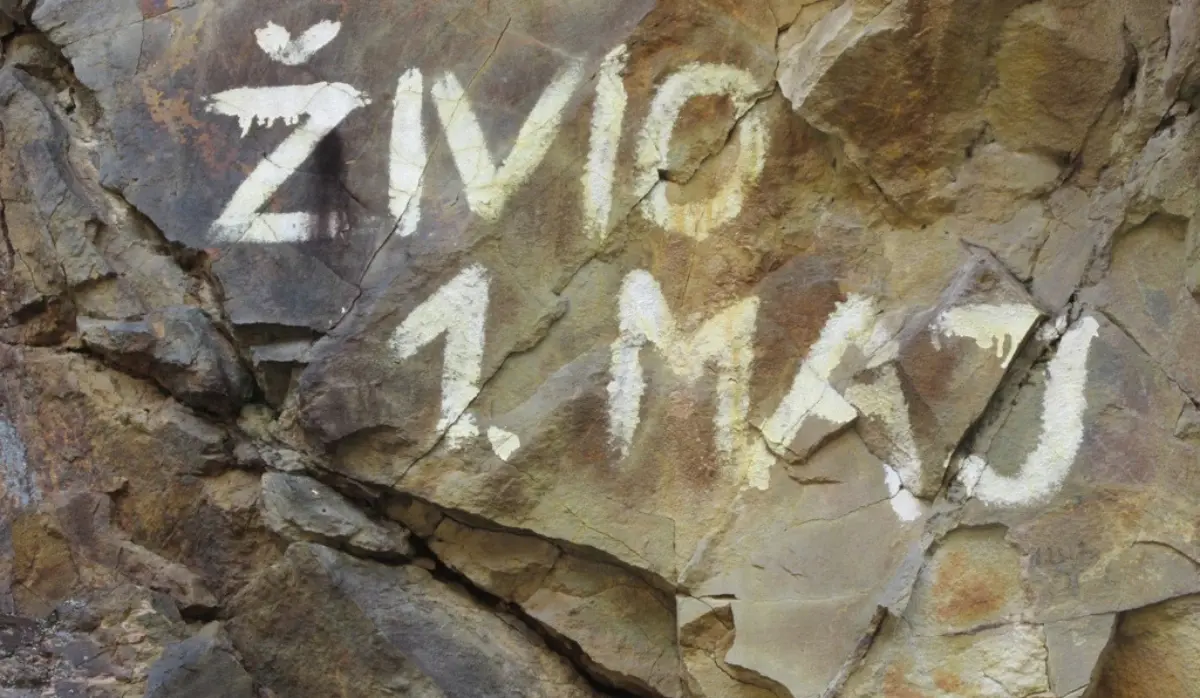
SREBRENICA, MAY 1 /SRNA/ – The first recorded case and written trace of the struggle for workers' rights was documented in 1427 in Srebrenica, but today neither trade unions nor local organisations have any activities in this municipality.
This fact shows that the struggle for workers' rights in this region began as many as 459 years before the date recognised as the official beginning of the labour struggle /1886/, which trade unions around the world mark as International Workers' Day.
This event was written about by academician Desanka Kovačević Kojić in the book "Medieval Srebrenica – 14th and 15th Century," published by the Serbian Academy of Sciences and Arts in 2010.
"At that time, there was a miners' uprising due to oppression carried out by a certain Vladislav, the supervisor of the mines," Kovačević wrote.
May 1 was established as a holiday in 1889 at the congress of the Second International, as a day of the struggle for workers' rights, in memory of the bloodshed and killings during protests in Chicago in 1886, in which 40,000 workers took part, demanding an eight-hour workday.
Only eight years after the uprising of Srebrenica’s workers, due to the violation of their rights, the same book also records the first documented environmental protest in the world, in 1435, also related to Srebrenica, where several ore smelters operated.
That year, merchants from Dubrovnik complained to Despot Đurađ Branković about poor health conditions in the town and requested that the smelters be relocated outside the city, which he had already ordered.
This environmental and public health measure was implemented with the aim of cleaner air and protecting the health of residents and can be seen as a precursor to modern environmental awareness of the importance of nature conservation.
Srebrenica was first mentioned in documents in 1232.
At that time, Saint Sava established the Srebrenica Metropolitanate as a cradle of Orthodoxy in this region, on the left bank of the Drina River, just 13 years after the Serbian Orthodox Church gained autocephaly in 1219.
Ten years after the establishment of the Metropolitanate, and 23 years after the Serbian Orthodox Church gained autocephaly, the Monastery of the Holy Trinity in Sase near Srebrenica was built in 1242 as a dependency of the Hilandar Monastery.
Since Roman times, Srebrenica has been known as a mining settlement called Domavia. Even today, the Sase lead and zinc mine operates in the area, employing more than 400 workers, while recent geological research has revealed significant deposits of copper and gold at two locations.
Thanks to mining, Srebrenica was once a developed community and was declared a trading centre in 1376, but today it has only three shops and one market.
There is no butcher, bakery, tailor, shoemaker, greengrocer, or newsstand, and newspapers do not reach the town - anyone wishing to read them must go to nearby Bratunac to buy them.
Tag s

EBOLA TREATMENT CENTER SET ON FIRE, POLICE OFFICER KILLED
DEATH TOLL RISES TO 2,295
PHOTOGRAPHS OF SERB VICTIMS SERVE AS A REMINDER OF CRIMES COMMITTED AGAINST SERBS

PELEG WRITES TO KONAKOVIĆ: AUTHORITIES IN SARAJEVO IGNORE RISING ANTISEMITISM AND SUPPORT THE IRANIAN REGIME