DOBRLJIN RAILWAY: HISTORY THAT IS STILL ON THE MOVE!
Republika Srpska - railways - feature
11/29/2026
11:27

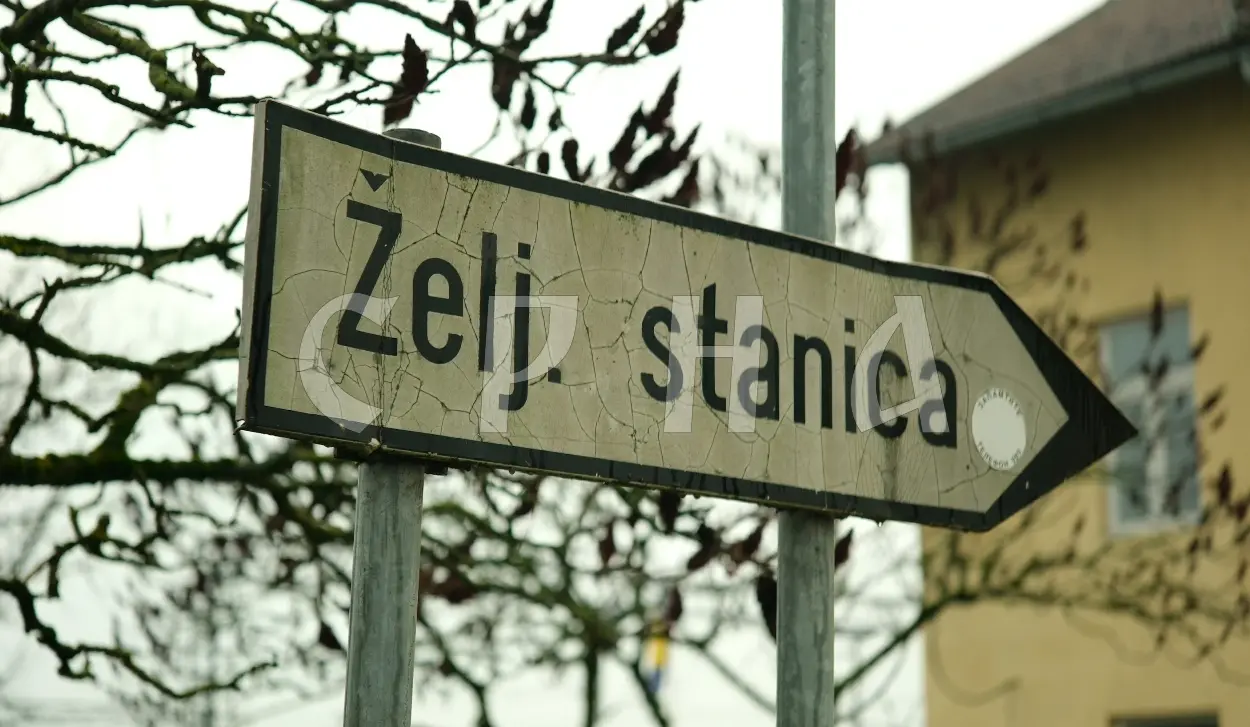
A town crier used to announce train departures by beating a drum, while local people came up with their own names for this unusual machine – “šindelfil” and “ajsliban”. By Nikolina DAMJANIĆ
BANJA LUKA, NOVEMBER 29 /SRNA/ – Dobrljin, in the municipality of Novi Grad, was the terminus of the first railway line in BiH, which opened in 1872 and connected the town with Banja Luka.
More than a century later, its tracks and railway station bear witness to a time when trains transported people and goods, bringing life to communities throughout the region.
At first glance, Dobrljin railway station appears quiet today. Trains no longer pass through as they once did, and the once-bustling railway junction survives in the memories of those who worked and lived there.
Nevertheless, for Duško Ćorić, a train driver with approximately 33 years of professional experience, the railway remains much more than just a job.
“I love this vocation. That is why I trained for this profession, and I have never regretted it,” says Ćorić, who began working on the railway in 1987 after graduating from the secondary railway school in Sarajevo.
He still remembers his first journey. He was young, had just finished school, and took his first professional steps alongside experienced colleagues on a diesel locomotive operating between Prijedor and Novi Grad.
“That was an experience in itself and my first practical experience in the profession,” he recalls.
JOB THAT LEAVES NO ROOM FOR ERROR
Almost four decades later, Ćorić says that train driving is a specific and highly responsible profession whose demands are often not understood by people outside the industry.
Shifts can last up to 12 hours, and train drivers must remain constantly focused throughout the journey.
This is illustrated by the vigilance control system in the locomotive cab, where a foot pedal must be activated every 18 to 20 seconds. If the driver fails to respond after visual and audible warnings, the system automatically applies the brakes and stops the train.
Operating a train is therefore not simply a matter of starting and stopping, but a constant responsibility for safety, which also depends on the condition of the tracks, signalling systems and the behaviour of other road users.
FROM FIRST RAILWAY LINE TO GOLDEN AGE OF RAIL TRANSPORT
Radovan Đorojević, head of Dobrljin railway station, where he has worked for 19 years, knows best how important the railway once was to this region.
“Rail transport was of enormous importance to Dobrljin's history. I would even dare say it was decisive,” Đorojević says.
He explains that the first railway line between Dobrljin and Banja Luka was built in 1872, according to a plan by the Ottoman Sultan Abdulaziz, who intended to connect Vienna and Western Europe with Istanbul. However, because of the area's isolation and limited passenger and freight traffic, the line ceased operating after three years.
The book 140 Years of Railways states that the arrival of the first trains was a real sensation for the local population. A town crier announced departures by beating a drum, while people came up with their own names for the unusual machine – “šindelfil” and “ajsliban”.
Following the Congress of Berlin in 1878, Austria-Hungary reopened the railway line, first between Banja Luka and Prijedor and then extending it to Dobrljin. The town was subsequently connected with Sisak and Central Europe, as well as with a daily service to Vienna, Đorojević says.
Industrial development gave the town new importance, with a particularly significant role played by Bavarian industrialist Otto von Steinbeis, who built what was then the largest sawmill in the Balkans in Dobrljin in 1882.
A steam-powered thermal power plant was built to serve the sawmill, a brown coal mine was opened in Lješljani, and a cableway was constructed between the mine and Dobrljin.
“Dobrljin became an industrial town. A large number of buildings were constructed for engineers arriving from Poland, Galicia, Slovenia, Bohemia and Germany. It developed much earlier than other surrounding settlements and received electricity at a very early stage,” Đorojević says.
Initially, the railway transported timber and coal, and later iron ore from Ljubija to steelworks in Austria and what was then Czechoslovakia. It thus became the backbone of the entire region's economy.
“The railway recorded its highest traffic volumes in the 1970s and 1980s, when dozens of passenger and freight trains passed through Dobrljin, transporting workers, fuel, ore and industrial products. That is unimaginable today,” Đorojević notes.
Ćorić also remembers the days of local, fast, express and business trains. Today, local passenger services have been discontinued due to a lack of passengers and their unprofitability, leaving significantly fewer transport options.
“Railways are the safest and cheapest form of land transport. Modern electric multiple-unit trains should be purchased, equipped with modern technology and internet access. More trains should be introduced and speeds increased in order to attract passengers and earn their trust,” Ćorić believes.
RAILWAY BETWEEN ITS FORMER IMPORTANCE AND TODAY'S CHALLENGES
The current condition and safety of the railway line depend on regular infrastructure maintenance, qualified personnel, properly functioning signalling and safety equipment, and secured level crossings, explains Vesna Kostadinović, railway traffic safety inspector.
“Considering that there has been no substantial investment for a long time, we can assess the condition of the railway line from a safety perspective as satisfactory. The Republika Srpska Railways are making considerable efforts to keep the existing infrastructure technically sound with the resources available,” Kostadinović says.
After the war, the railway line reopened in 1998, primarily for freight traffic. Four years later, an international passenger service to Zagreb was introduced, operating until 2016.
Today, passenger traffic has been reduced to just one pair of trains in a 24-hour period, Đorojević says, while freight services are organised according to demand.
The main goods transported include clay, bauxite and scrap metal, while gas and fuel are imported.
Photographs preserved by Đorojević also testify to the station's former importance. He believes that railway stations like this one should be preserved in their original form because they are part of the region's cultural heritage.
DOES RAILWAY HAVE A FUTURE?
Reviving the railway requires investment in infrastructure, new passenger routes to Zagreb and modern electric multiple-unit trains, Đorojević believes.
“Our infrastructure has deteriorated considerably, and practically nothing has been invested in it for years and decades. The way to overcome this situation is certainly to renew the railway infrastructure,” he stresses.
Kostadinović shares a similar view, believing that modernisation of the Banja Luka–Dobrljin railway line is essential and that announcements of new passenger services connecting BiH and Croatia must be accompanied by concrete investment.
“Trains will not disappear; they definitely have a future. All it takes is a little willingness, work and effort to get everything moving again and put the railway back on its feet,” Kostadinović says.
Train driver Ćorić also sees potential in the railway, particularly when it comes to freight transport. At a time of rising fuel prices and energy challenges, he believes railways could play a more important role because transporting goods by rail is cheaper, safer and more environmentally friendly than road transport.
As he talks about the future of the railway, Ćorić is also approaching the end of his working life. He plans to continue working until the age of 60, for approximately another two years, provided his health allows it.
Asked whether he will miss the trains when he retires, he says he believes he will.
“After so many years of work, habits, commitment to this profession and love for it, I think I certainly will,” Ćorić says.
For him, retirement will mean saying goodbye to a profession to which he has devoted a large part of his life. For Dobrljin, however, the hope remains that its railway will once again become more than just a quiet reminder of times gone by.