CONSTITUTIONAL COURT SERVING OHR AGENDA, UNDERMINING BiH CONSTITUTIONAL ORDER
Republika Srpska - UN Security Council - report
05/08/2026
08:59
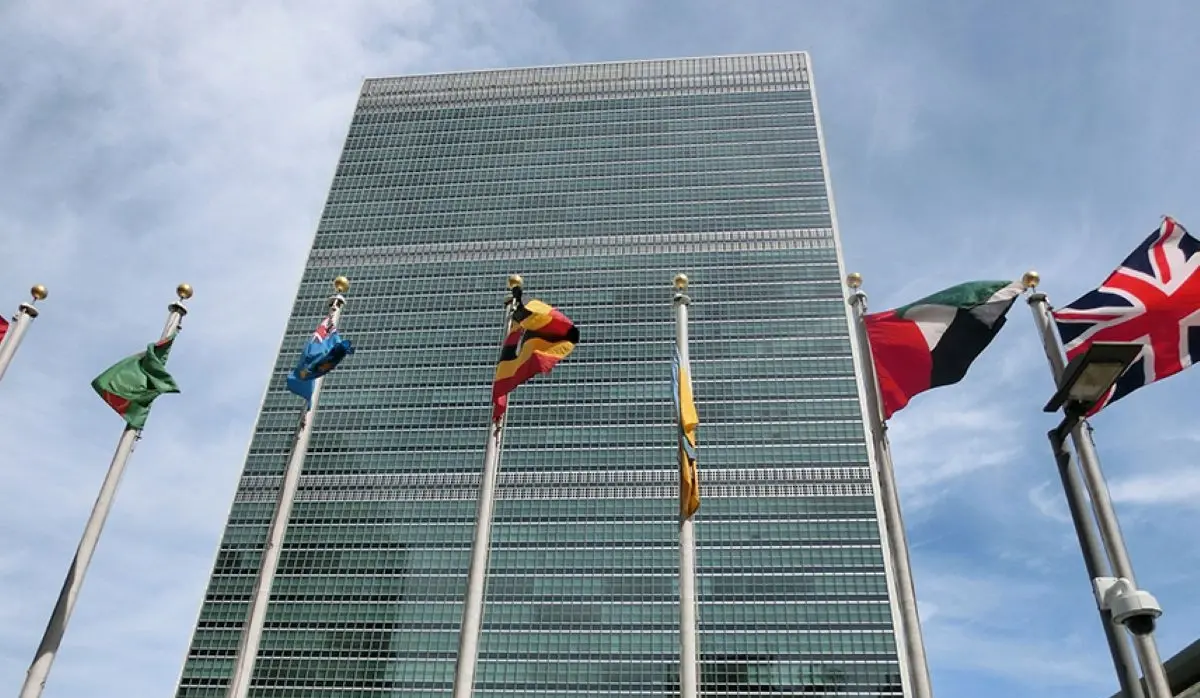
BANJA LUKA, MAY 8 /SRNA/ - The Constitutional Court of BiH tacitly accepts blatant unlawful governance through decisions imposed by the OHR and supports the gradual centralization of BiH, which constitutes a flagrant violation of the explicit provisions of the BiH Constitution, according to the annex to the 35th report of the Republika Srpska Government to the UN Security Council.
The document points out that a constitutional court of a state should be an institution composed of distinguished judges from that state, dedicated to preserving its constitutional order, but that in BiH the court represents something entirely different.
According to the annex of the report, the decisive majority in the Constitutional Court of BiH is made up of foreigners, and that majority has devoted itself to undermining the constitutional order of BiH.
"A special provision of the BiH Constitution, under which three out of nine seats in the Constitutional Court are reserved for foreign judges, was agreed in Dayton as a temporary measure lasting only five years, yet it remains in force today, more than 30 years later," the annex to the Republika Srpska Government report reminds.
The document notes that foreign judges of the Constitutional Court are appointed by the president of the European Court of Human Rights and imposed on BiH without any obligation to obtain the consent of any BiH institution.
"It has always been unusual for the deciding votes in the Constitutional Court of BiH to be in the hands of foreigners who lack expertise regarding the constitutional order or legal system of BiH and who do not even speak any of the local languages," the annex to the report states.
FOREIGN JUDGES SUBORDINATED TO THE OHR
The document reminds that the original reason for temporarily reserving seats in the Constitutional Court for foreign judges was to ensure three neutral members outside BiH's ethnic politics, but that in practice the three foreign judges mostly serve to ensure that the Court's decisions align with the positions of the OHR and certain foreign embassies.
"Instead of making decisions based on independent personal judgment, the foreign judges are completely subordinated to the OHR and subordinate the letter of the Constitution to the OHR’s political goals. One former foreign judge of this court admitted that the text of the Constitution is `a source of inspiration, not the decisive factor` in decision-making. Another former foreign judge even admitted that there is `a tacit agreement between the Constitutional Court and the High Representative that this court always confirms the merits of his laws,`" the annex to the report points out.
The document notes that in his 2019 study on the role of foreign judges in the Constitutional Court of BiH, Dr. Alex Schwartz concluded that judicial review of laws imposed by the OHR was so deferential that judges resorted to "questionable legal reasoning" to uphold those laws.
"In fact, to call the distorted and artificial reasoning seen in the Constitutional Court's purely political decisions `questionable` would be, at the very least, too mild," the document assesses.
The OHR, the annex to the report states, has ensured the subordination of the Constitutional Court of BiH in several ways, one example being that a High Representative unilaterally dismissed two judges appointed by Republika Srpska, thereby sending an unequivocal message to the remaining judges.
2006 OHR DECREE MOST OPEN INTERFERENCE IN CONSTITUTIONAL COURT’S WORK
The document emphasizes that the current illegitimate self-appointed Christian Schmidt imposed a law making “failure to implement decisions of the High Representative” a criminal offense, thereby exposing any judge opposing his unlawful decisions to the risk of imprisonment.
However, the most open interference by the OHR in the work of the Constitutional Court of BiH is the 2006 decree, still in force today, which annulled one Court decision and prohibited any proceedings before the Constitutional Court or any other court that "in any way challenge one or more decisions of the High Representative".
The annex to the Republika Srpska Government report assesses that the Constitutional Court of BiH meekly accepted this unlawful OHR decree, effectively agreeing to subordination.
"There is a widespread perception that foreign judges resort to inappropriate actions through communication with OHR officials and certain embassies. They have also formed a permanent bloc with two Bosniak judges, natural allies who share a commitment to the unconstitutional centralization of BiH in line with the OHR's political agenda," the document states.
It concludes that this bloc of foreign and Bosniak judges often outvotes the majority of representatives of BiH citizens in the Court and that the majority in the Constitutional Court of BiH, dominated by foreigners, has betrayed the Court’s fundamental obligation to ensure respect for democratic constitutional procedures in BiH during the adoption of laws.
The BiH Constitution established a democratic system in which “all legislative decisions must be approved by both houses of the Parliamentary Assembly of BiH.”
"Accordingly, when the imposition of laws by the High Representative was challenged before the Constitutional Court, the Constitutional Court of BiH should have had no difficulty determining that a `law` not adopted by both houses of the Parliamentary Assembly of BiH is invalid. Instead, without any rational explanation, the judicial majority states that the High Representative's `powers` are `not subject to review by the Constitutional Court,`" the annex states.
The document notes that a study by Sarajevo-based think tank Analitika states that "the court did not examine the legal basis cited by the High Representative as the foundation for his actions, but accepted them uncritically".
MAJORITY IN CONSTITUTIONAL COURT APPROVES UNCONSTITUTIONAL CENTRALIZATION OF BiH
The majority in the Constitutional Court of BiH, dominated by foreigners, the annex states, consistently approves the clearly unconstitutional centralization of BiH carried out by the OHR.
"For example, in a five-to-four decision, the Constitutional Court of BiH upheld the establishment of the Court of BiH, an invention of the High Representative, despite the obvious violation of the constitutional division of competencies between BiH institutions and the entities," the document states.
The annex reminds that the BiH Constitution states that competencies and powers not expressly granted to BiH institutions belong to the entities, and that the judicial majority did not even attempt to claim that BiH-level institutions were expressly granted constitutional authority to establish courts, but simply acknowledged that the Court of BiH is not "provided for by the BiH Constitution".
To nevertheless justify the establishment of the Court of BiH, the judicial majority ignored the unambiguous constitutional provision that competencies are "expressly granted" to the BiH level and instead constructed an argument that the BiH level has implicit authority to establish such a court.
"This conclusion is essentially based on the personal views of the foreign and Bosniak judges that the BiH Constitution should have provided for the establishment of the Court of BiH, even though it did not - and it is difficult to imagine a clearer example of an unconstitutional usurpation of the role of legislator by a court," the annex to the report emphasizes.
The document states that the majority in the Constitutional Court continues to contribute to the unconstitutional centralization of BiH in more recent cases as well. For example, on March 27, the Court ruled that provisions of the Republika Srpska Law on Police and Internal Affairs concerning digital signing and the issuance of qualified digital certificates and document personalization, as well as infrastructure protection, are "unconstitutional because they are not in accordance with BiH laws".
"However, the fact is that the Republika Srpska Law on Police and Internal Affairs does not encroach upon any function or competency expressly, or even implicitly, entrusted to BiH institutions by the Constitution. It is the laws of BiH, not Republika Srpska law, that are contrary to the BiH Constitution," the document states.
CONSTITUTIONAL COURT REFORM NECESSARY
The annex to the 35th report points out that the EU, aware that the presence of foreign judges in the Constitutional Court is incompatible with BiH sovereignty, included their replacement among the 14 key priorities for BiH's European integration.
The Republika Srpska Government stresses that the Constitution allows foreign judges to be replaced by BiH citizens through an ordinary law, but Bosniak political parties, knowing that foreign judges are their firm allies, are blocking this necessary reform.
"Ultimately, respect for the decisions of any judicial institution rests exclusively on its integrity, professionalism and credibility, and the foreign judges in the Constitutional Court of BiH have knowingly sacrificed all these values in an effort to please the OHR and preserve their positions," the annex to the report states.
Therefore, the document says, the decisions of the Constitutional Court deserve no respect, and this key institution in BiH represents a shameful indicator of dysfunctionality in the country — dysfunctionality created and continuously encouraged by the unchecked interference of the OHR, as well as the actions of the Bosniak political elite, which is more focused on weakening and ultimately abolishing constitutional protection mechanisms for Croats and Serbs than on building a successful and functional state.
Members of the international community, the Republika Srpska Government says, should support reform of the Constitutional Court of BiH so that only BiH citizens finally sit on the Court.
"Such reform would help ensure a truly independent Constitutional Court and strengthen both its legitimacy and the sovereignty of BiH. At the same time, it would bring hope that the Constitutional Court will finally ensure respect for democratic constitutional procedures in BiH in the adoption of laws, as well as protection of BiH's federal constitutional structure," the annex to the Republika Srpska Government report to the UN Security Council states.