CICOVIĆ: KORAN HOSPITAL RESPONDED TO CHALLENGES WITH EXPERTISE AND ENTHUSIASM
Republika Srpska - Pale - remembrance
04/03/2026
09:54
During four war years, 20,000 patients were examined at the Koran Hospital, 12,000 of whom underwent surgery. In addition to their work in the hospital, medical teams of the Fourth Medical Battalion went to the field on Treskavica, to Trnovo and Nišići, wherever assistance was needed.
By: Maja BRČKALO
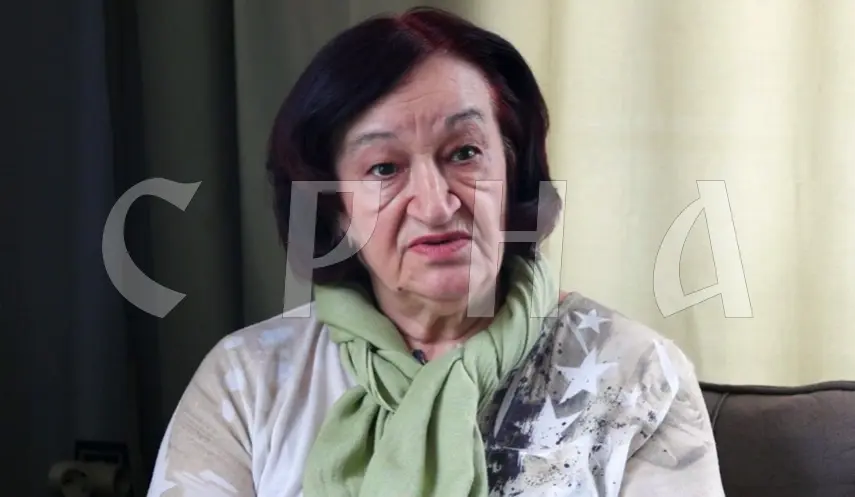
PALE, APRIL 3 /SRNA/ – Despite difficult conditions and limited resources, the Koran Military Hospital in Pale, founded 34 years ago, managed to respond to all challenges thanks to the enthusiasm and expertise of its staff, nurse Duška Cicović told SRNA.
Cicović, who worked from the very first day as the Charge Nurse in Instrumentation in the operating theatre, recalls that the hospital was formed in a former hotel that was quickly converted into a functional medical facility.
"We practically arrived on an empty field. We left everything we had in Sarajevo and started from scratch. No one knew what awaited us, but we knew we had to help the wounded," Cicović said.
She noted that the backbone of the hospital consisted of doctors and medical staff from the Military Hospital - doctors Bratislav Borkovac and Tomislav Taušan, specialists from Sarajevo clinics soon joined them, which enabled Koran Hospital to quickly reach a high level of professional work.
IMPROVISED OPERATING THEATRES – TOP RESULTS
Cicović pointed out that the operating theatre was located in a space that had once been a billiard room, and that they had only basic equipment adapted to wartime conditions. Nevertheless, thanks to the doctors' expertise and the discipline of the staff, they managed to organise work and immediately begin treating the wounded.
The first patient at Koran Hospital was a Muslim woman who gave birth, and the medical staff, Cicović emphasizes, treated all patients regardless of their national or religious affiliation.
"We did not violate the Hippocratic oath. For us all patients were the same. That is why there was no working schedule, and most of the staff lived in the hospital, responding immediately to every sound of an ambulance vehicle," Cicović said.
She stresses that top medical experts worked in the hospital, which resulted in low mortality and a small number of infections, considering the severity of wartime injuries.
As the healthcare system gradually expanded, she noted, some patients were taken over by hospitals in Kasindo and Sokolac, but the most serious cases were still treated at Koran. After being stabilized there, they were transported by helicopter to Belgrade for further treatment.
She pointed out that head and spinal injuries posed a particular challenge due to the lack of neurosurgeons and conditions for complex operations.
Cicović emphasizes that they treated everyone without distinction.
"We had patients of different nationalities. All were equally important to us and everyone received help. There was a case of a mother and daughter of Muslim faith, severely wounded from Grbavica. The mother was blind and a sniper shot her in both lower legs, while the daughter was wounded in the femoral artery in the groin. They were successfully treated in the hospital and saved," Cicović recalled.
RESOURCEFULNESS IN WARTIME CONDITIONS
Cicović noted that, in addition to working in the hospital, medical teams of the Fourth Medical Battalion went to the field on Treskavica, to Trnovo and Nišići, wherever help was needed.
She said there were many difficult cases but also considerable resourcefulness in wartime conditions.
Cicović remembers when a patient with a severe thigh injury was brought in. In the field, in order to stop the bleeding, they improvised a tourniquet from cloth and wood instead of an Esmarch bandage, twisting it to stop the bleeding so that he could survive until reaching the hospital. Unfortunately, his leg had to be amputated.
THE HOSPITAL FUNCTIONED LIKE A FAMILY
She stressed that everyone in the hospital functioned as one family, driven by the goal of saving as many lives as possible, and that no one paid attention to job divisions - everyone helped as much as they could.
Emphasizing that Koran Hospital successfully met the challenges, she assessed that Pale had never had better healthcare or so many expert medical professionals in one place as at that time.
"We were also receiving significant help through humanitarian shipments. Part of a military warehouse was located in our territory, so that material was brought to the hospital. Since these were war wounds and bone injuries, people from the Famos Company were helping us, so we drew a sketch of external fixators without which we could not have treated the injuries," Cicović said.
She added that they had the strength, knowledge and will at the time, which was crucial for the Koran Military Hospital to function and help thousands of people.
Due to the war and the expulsion of Serb doctors from Sarajevo, in addition to Koran Hospital, wartime hospitals Podromanija in Sokolac, Žica in Ilidža and Kasindo in Lukavica were also established in the Sarajevo-Romanija region.
Near the wartime hospital in Koran there is a memorial plaque stating that between April 4, 1992 and June 30, 1996, more than 20,000 people were treated in this medical institution and more than 12,000 surgeries were performed.
The plaque symbolizes the importance of this institution during the Defensive-Patriotic War and testifies to the extraordinary efforts of doctors and medical staff in treating Serb soldiers and civilians.