CELEBRATE YOUR FAMILY PATRON SAINT'S DAY PROPERLY OR NOT AT ALL
Republika Srpska - Novi Grad - SOC
11/29/2026
11:27

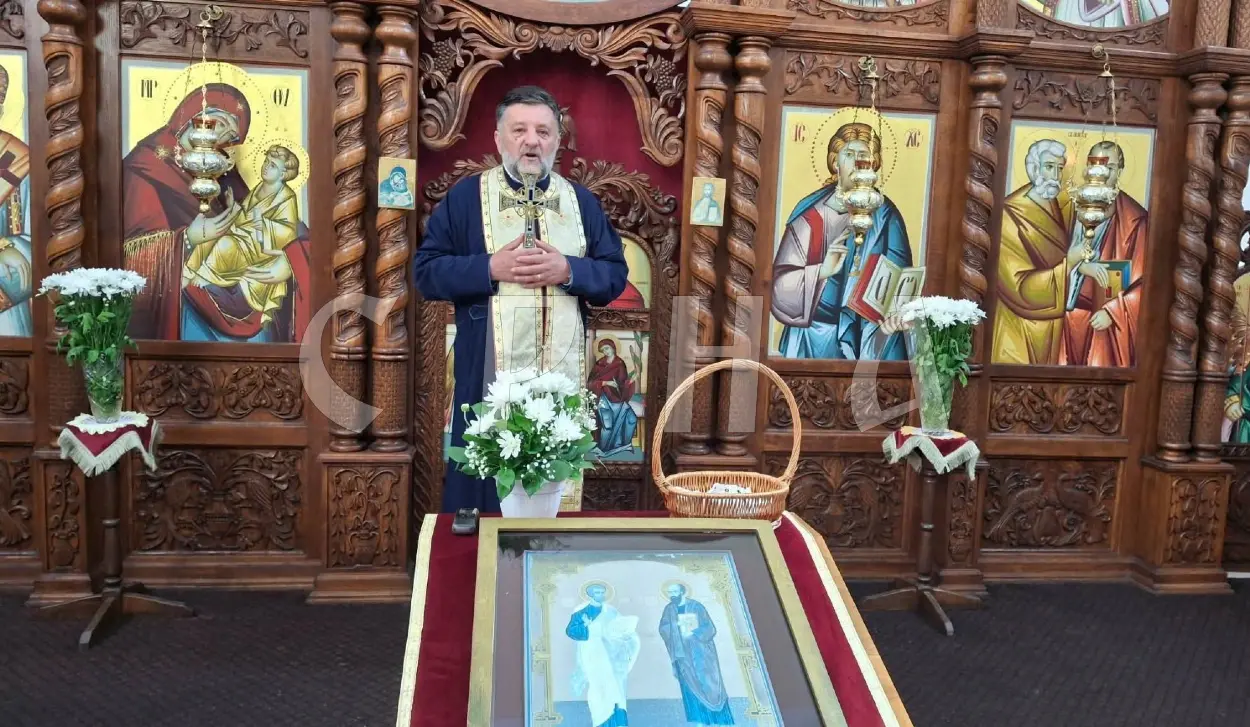
NOVI GRAD, NOVEMBER 29 /SRNA/ – A family patron saint's day is a liturgy held in one’s home, not a drinking party, which should be celebrated where one lives and in a proper manner, or not at all, Novi Grad parish priest Nemanja Vidić told SRNA.
“There are still places where the custom has been preserved whereby, after the priest finishes the blessing of the patron saint’s day /slava/, the hostess brings a basin of water and a towel so that guests can wash their hands. When a priest prepares for the liturgy, he says a prayer for the washing of hands,” Vidić explained.
Vidić stressed that the essential elements of the celebration are the slavski kolač /ceremonial bread/, slavsko žito /boiled wheat/ and the slavska svijeća /slava candle/. These are offerings to the saint, the protector of the household, not merely symbolic gestures but genuine sacrifices.
He noted that the prayer includes the words “we pray for those who prepared these offerings”, which is why the ceremonial bread should be prepared by the hostess. “Make it the way you know how, but let it be your offering,” he said.
Vidić stressed that he often hears debates about whether there should be singing at a slava, stressing that there should be, since singing of spiritual hymns also takes place during the liturgy when the priest receives Holy Communion.
“Do we need 20 different kinds of cakes? No. If you have come to a slava just to look around and complain that something was not done properly, you should not have come at all. You are coming to a liturgy held in someone's home, and that is how you should behave,” Vidić explained.
Addressing those who consider hosting a slava a burden and find various excuses not to celebrate it, he said they should not do so.
“If we cannot make an offering properly on that one day, then, in my opinion, it is better not to celebrate at all than to do it improperly or out of obligation,” he said.
He described as unnecessary the questions about whether a fasting meal should be served when a slava falls during a fasting period.
“People make excuses, saying: I go to their house for roast meat, and they come to mine for fish. That only shows that we have not understood what a slava is,” Vidić said.
He also emphasised that a family patron saint's day is not a drinking party and that politics should not be discussed by the slava candle. He recalled that people traditionally talked about crops, the year's harvest, health, and where there might be a nice young woman or man. Conversations were pleasant and appropriate for the occasion.
“Sitting by the slava candle and talking about how someone is no good and things like that is not right,” Vidić said.
He believes there is no need to ask where a family slava should be celebrated, since it honours the protector of the home and family hearth, and it is therefore logical to celebrate it where one lives.
“Not having enough room cannot be an excuse, because you know who is coming to your slava. A guest at a slava should not be someone with whom you either have coffee or do not have coffee during the rest of the year. There are not many such people, but some want to show how generously they celebrate, while doing it the wrong way. If you do not know, ask,” the priest said.
He also stressed that if there is no joy in the home during the family patron saint's day, if everything feels cold and the main concern is how many savoury and sweet rolls are served, then it is not a slava but merely eating and drinking.
Vidić concluded that a family patron saint's day should be celebrated in a proper manner and that its meaning, handed down as a sacred legacy, must not be allowed to disappear.