ALEKSA ŠANTIĆ - LYRIC POET, ACADEMICIAN AND PATRIOT
Republika Srpska, Serbia - poet - anniversary
05/26/2026
11:33
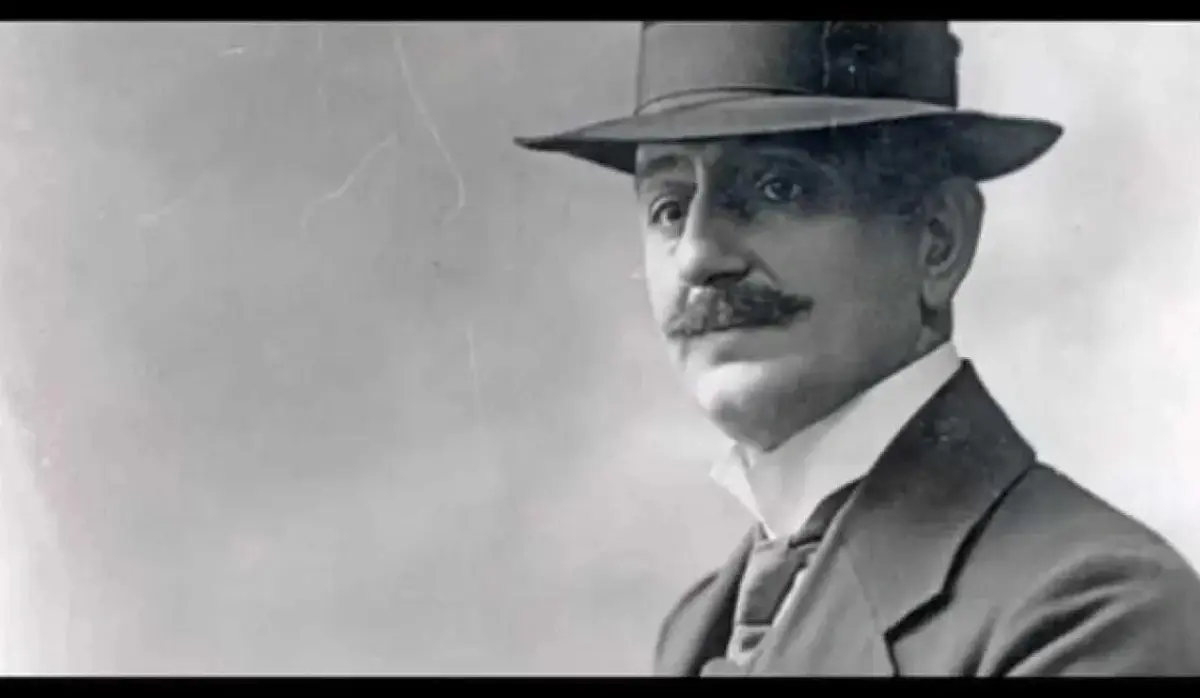
BIJELJINA, MAY 26 /SRNA/ – Serb poet Aleksa Šantić /1868–1924/, author of the anthology poems "Stay Here" /Ostajte ovdje/, "Emina," "Evening on the Islet" /Veče na školju/, "Do Not Believe" /Ne vjeruj/, and "The Evening Before the Holiday" /Pretprazničko veče/, was born on May 27, 1868.
Šantić was born in Mostar, where he spent most of his life. His father died in his early childhood, so he lived with the family of his uncle Miho, known as Adža.
He had two brothers, Jeftan and Jakov, and a sister, Persa, while his other sister, Zorica, died as an infant.
As he grew up in a merchant family, his household did not show much understanding for his talent. He completed business school in Trieste and Ljubljana, then returned to Mostar in 1883.
Upon returning, he found the city in "an unusual stagnation," which was the consequence of the “suppressed Herzegovinian uprising against Austria”. At first, he was rather withdrawn, keeping books for the family business and reading newspapers and books available in Mostar.
Several years later, he began his literary and social work. He created his greatest works in the late 19th and early 20th centuries.
In early 1887, he became a contributor to Golub, then to the journals Bosanska Vila, Nova Zeta, Javor, and Otadžbina.
The following year, he founded the Serbian Choral Society Gusle, and was later elected first vice-president of the Mostar branch of Prosvjeta. He belonged to the Mostar literary circle gathered around the journal Zora, which he launched together with Jovan Dučić and Svetozar Ćorović.
During the First World War, Austro-Hungarian authorities arrested him as a prominent Serb nationalist.
At the beginning of his poetic career, Šantić was influenced by Serbian poets Branko Radičević, Jovan Jovanović Zmaj, and Vojislav Ilić, but he later developed his own poetic expression, characterized by elegiac and patriotic motifs.
Šantić reached his highest poetic maturity between 1905 and 1910, when his finest poems were written.
His poetry is filled with strong emotions, romantic sorrow, but also pain and defiance on behalf of the socially and nationally oppressed people to whom he himself belonged.
His muse stands at the crossroads of love and patriotism, between the ideal beloved and a suffering nation.
His patriotic poetry focuses on homeland and the family home - "My Homeland" /Moja otadžbina/; in some of his most moving poems, Šantić writes about the suffering of those who leave their homeland forever for a foreign world - "Stay Here" /Ostajte ovdje/ and "Bread" /Hljeb/.
Šantić emphasizes suffering and martyrdom as the most important elements in the historical destiny of the Serb people - "We Know Our Fate" /Mi znamo sudbu/.
The love poetry of the Mostar poet developed under the strong influence of sevdalinka tradition. The setting of his love poems includes gardens, blossoms, hammams, and fountains, while the girls appearing in his verses are hidden beauties adorned with necklaces.
Such is the poem "Emina," which became part of folk tradition and is sung as a sevdalinka.
Šantić was elected a corresponding member of the Serbian Royal Academy on February 3, 1914.
He died of tuberculosis in Mostar on February 2, 1924.
Tag s


GOGANOVIĆ: COOPERATION CONTRIBUTES TO STRENGTHENING PEACE AND SECURITY IN REGION

MEMORIAL SERVICE FOR 20 SERBS KILLED IN HRANČA HELD
TRIVAN: SERB RETURNEES FULLY OBSTRUCTED

MOST OF SERB PRISONERS HAVE HEALTH PROBLEMS, WE KEEP FIGHTING FOR GENERAL MLADIĆ'S RELEASE FOR TREATMENT