VUČIĆ: TRYING TO DETER POTENTIAL AGGRESSION THROUGH DIPLOMACY, POLITICAL ACTIVITY AND STRENGTHENING ARMED FORCES
Serbia - region - security
08/27/2026
13:24
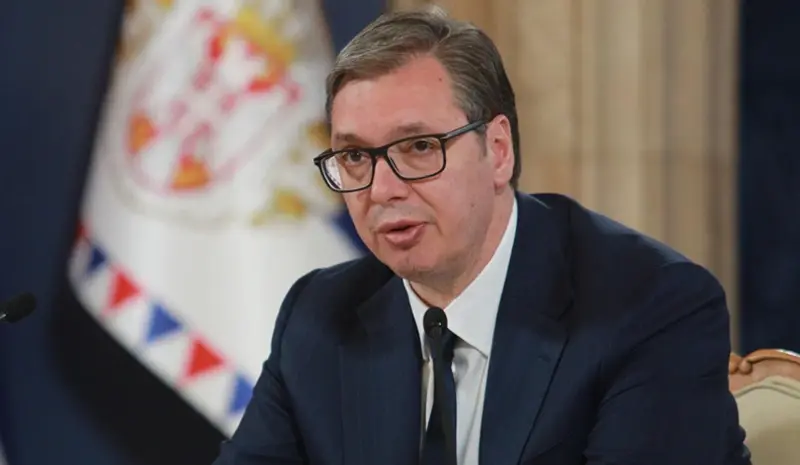
BELGRADE, AUGUST 27 /SRNA/ – Serbia's President Aleksandar Vučić says that Belgrade has understood the Zagreb-Priština-Tirana military alliance as a serious threat and is trying to deter potential aggression against Serbia accordingly, through diplomacy, political activity and the strengthening of its armed forces.
Commenting on criticism from Croatian officials over Serbia's acquisition of modern weapons, Vučić noted that no one had asked Serbia when Germany was arming Croatia with modern howitzers and attack helicopters, adding that Serbia had demonstrated that it could equip its armed forces to an unprecedented level and that more weapons would arrive.
"We looked at what our neighbours were doing and then did it better. Serbia is already a much tougher opponent today, and tomorrow it will be an even tougher one for all their alliances. Let them do their job with Priština and Tirana and build alliances. Our goal is deterrence; we do not want conflicts or wars, but we will not allow anyone to destroy our country," Vučić said.
He described as dark humour the statements by Croatian officials about "Serb cowardice and Croatian bravery," adding that it had not been particularly difficult for Croatia to fight against a relatively poorly armed people and a very weak Serbia in the 1990s, which was unable to provide any support.
Regarding Kosovo and Metohija, Vučić told the press that, should things not develop positively, he is ready to request talks at all levels in the United States in order to seek greater security for the Serb people in north Kosovo and Metohija.
"I do not know whether the EU will participate in this, but I would like it to and would be endlessly grateful. If not, it is my duty to appeal to those who have the greatest influence over Priština, namely the United States, and to fight for our people," Vučić said, adding that he expected to meet with European Commissioner for Enlargement Marta Kos in September.
The Serbia’s president stressed that the university of the Serbian Orthodox Church /SOC/ would contribute to better education for young people in Serbia and would enjoy the state’s full support.
Vučić expressed his belief that the SOC University, in accordance with the signed agreement, memoranda and all other documents, would also contribute to greater responsibility, seriousness and commitment to work among young people in the future.
He told the press that he did not know why the university’s opponents were so bothered by the church oil lamp and why they hated the books.
"Those who criticise the SOC University forget that our Serbian Church still has one of the largest libraries today, and that our priests, particularly bishops, are among the most highly educated people we have in Serbia when it comes to languages, philosophy, history and knowledge of many other sciences and academic disciplines," Vučić said.
He rejected claims by the CRTA organisation that SNS supporters were allegedly calling on people with dual citizenship in Republika Srpska and Serbia, thereby supposedly creating a duplicate voter register, adding that the current authorities had, in some years, granted up to nine times fewer citizenships to people from neighbouring countries and elsewhere, while the previous government had granted citizenship to as many as 700,000 people.

GENERAL RATKO MLADIĆ DIES IN THE HAGUE
REPUBLIKA SRPSKA REPRESENTATIVES IN JOINT INSTITUTIONS ARE THERE TO PROTECT ITS INTERESTS
DODIK: GRANNAS HAS NO SAY IN CHOICE OF HIGH REPRESENTATIVE
SDA AND DF DEPUTIES' REQUEST BASED ON RADICALISATION RATHER THAN NORMALISATION OF RELATIONS