VOJVODA ŽIVOJIN MIŠIĆ - VICTOR OF KOLUBARA BATTLE AND SALONIKA FRONT BREAKTHROUGH
Serbia - military commander - anniversary
07/05/2026
12:02
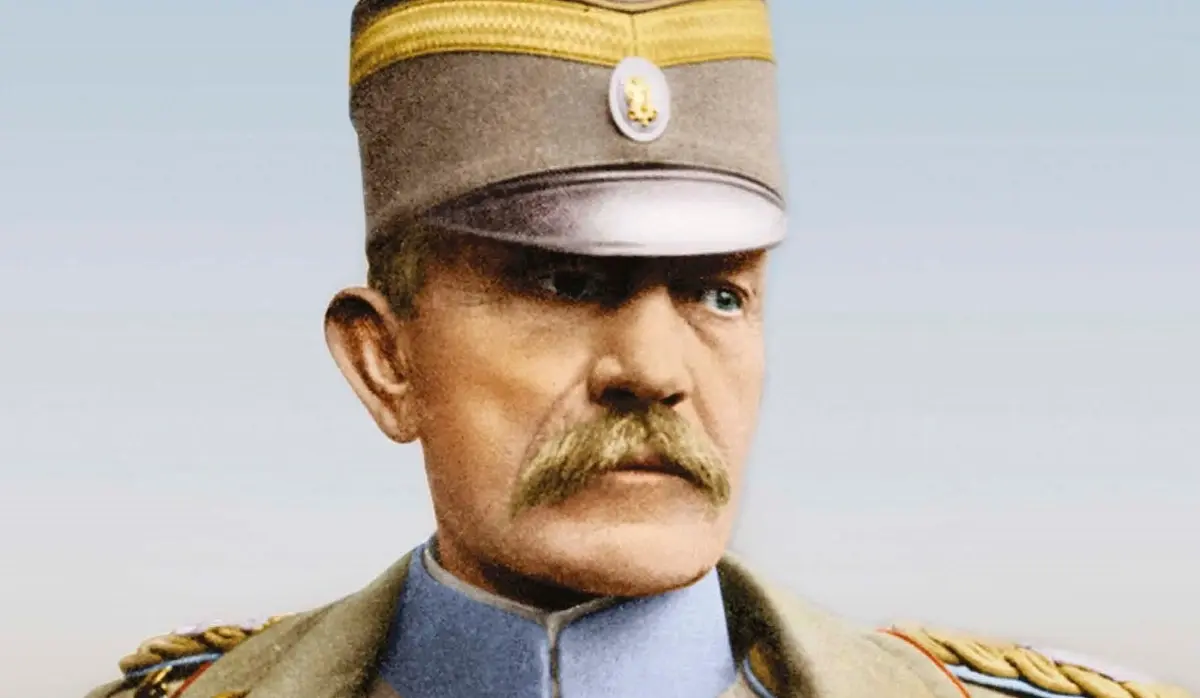
BIJELJINA, JULY 5 /SRNA/ – Serbian military commander Field Marshal Živojin Mišić /1855–1921/, who commanded the Serbian Army during the breakthrough of the Salonika Front in 1918 and led it to victory in the Battle of Kolubara, was born on July 6, 1855.
Mišić took part in the Serbian-Turkish Wars /1876–1878/, the brief Serbo-Bulgarian War of 1885, as well as the Balkan Wars, including the Battle of Kumanovo.
Following the May Coup, Mišić was forced into retirement with the rank of General Staff colonel because he was considered too closely associated with the deposed Obrenović dynasty. At his own request, however, he was recalled to active service during the Annexation Crisis in 1909.
He assisted Chief of the Serbian Supreme Command General Radomir Putnik in drafting Serbia's war plan in the event of a conflict with Austria-Hungary. During the Balkan Wars, he served as assistant chief of staff of the Supreme Command under General Putnik.
Mišić played a direct role in planning and directing operations against the Ottoman Vardar Army, and following the Battle of Kumanovo he was promoted to the rank of general.
After the Second Balkan War, Mišić was retired for a second time under similar circumstances, largely through the influence of officers belonging to the secret organisation known as the Black Hand.
However, shortly before the outbreak of the First World War, he was again recalled to active duty and appointed assistant chief of staff of the Supreme Command.
During the Battle of Kolubara, General Mišić was given command of the First Army, which was then in an extremely difficult situation. Owing largely to his personal leadership and military expertise, the First Army was transformed from a disorganized force into an effective fighting formation.
Mišić insisted on a deeper withdrawal and the shortening of the entire Serbian front, which would allow the other armies time to rest, replenish supplies and reorganise. This strategy proved successful, as the Austro-Hungarian Army overstretched its lines and suffered a crushing defeat in the Serbian counteroffensive.
In recognition of his achievements and the victory he secured, Mišić was promoted to the rank of vojvoda /field marshal/ on December 4, 1914.
Following the renewed joint offensive by German, Austro-Hungarian and Bulgarian forces against Serbia in October 1915, when the Serbian Army withdrew to Kosovo, Mišić proposed launching a counteroffensive.
The proposal was rejected by the other army commanders at a meeting in Peć, and the retreat continued. Afterward, Mišić relinquished command of the army and went to France for medical treatment.
In mid-1916, he was once again appointed commander of the First Army, which halted and forced the Bulgarian Army to retreat and liberated Bitolj following the Battle of Gorničevo.
Toward the end of the First World War, in June 1918, Mišić was appointed chief of staff of the Supreme Command.
King George V of the United Kingdom awarded Mišić the title of English knight.
The life and achievements of the celebrated Serbian field marshal have been commemorated in numerous works of art.
Field Marshal Živojin Mišić died on January 20, 1921. He was buried with full military and civilian honours at the New Cemetery in Belgrade, where a monument in his honour was unveiled on December 3, 1922.