NO ONE CHARGED OVER VARIVODE AND GOŠIĆ KILLINGS OF SERBS THREE DECADES LATER
Croatia - Veritas - remembrance
09/27/2026
10:24
BELGRADE, SEPTEMBER 27 /SRNA/ - Thirty-one years have passed since the killings of Serb civilians in Varivode and Gošić in Croatia, yet more than three decades later no one has been charged or convicted, as is also the case with many other killings of Serb civilians in neighboring villages after the Croatian military operation "Storm", the Veritas Documentation and Information Center said.
The killings of Serb civilians in the two villages in the Knin municipality took place almost two months after the end of the criminal military operation "Storm" against western parts of the Republic of Srpska Krajina, which at the time were under UN protection /Sectors South and North/.
All of the victims were killed in their yards, on their doorsteps or inside their homes, with firearms used at close range, Veritas reminds.
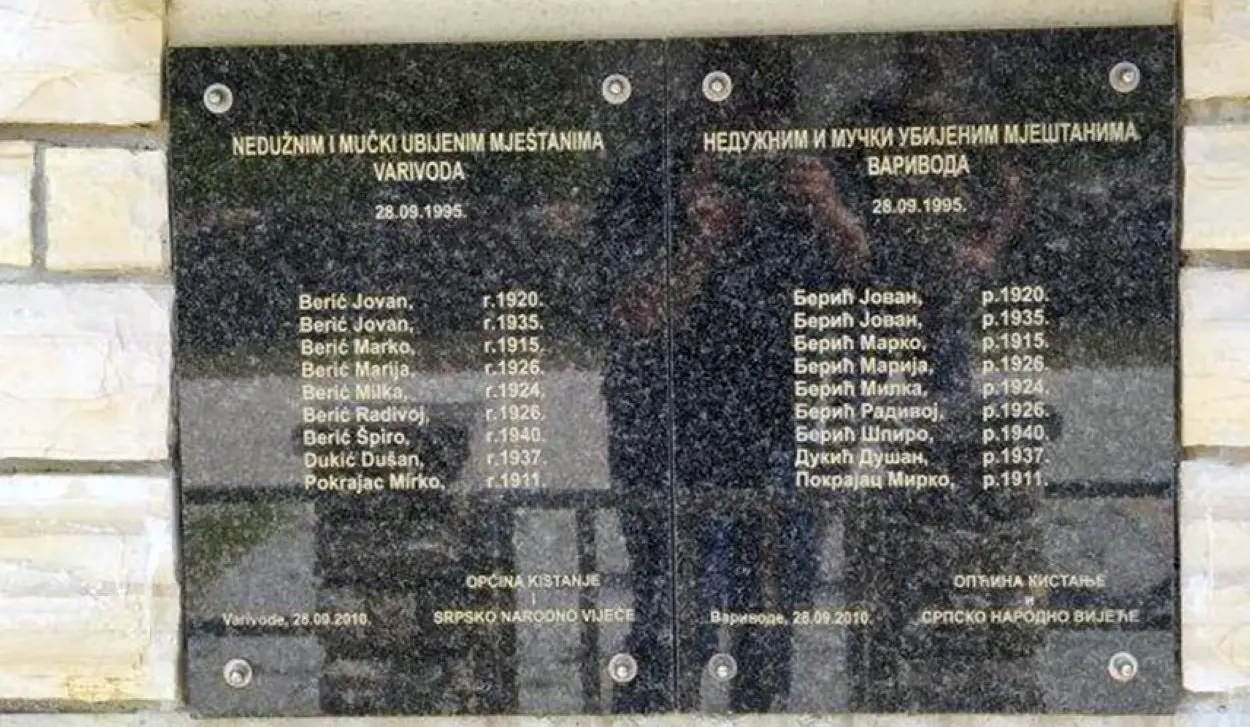
On September 28, 1995, nine local Serbs were killed: Jovan Berić /75/, Špiro Berić /55/, Radivoj Berić /69/, Marija Berić /69/, Mirko Pokrajac /84/, Dušan Dukić /59/, Marko Berić /82/, Milka Berić /67/ and Jovan Berić /56/, as well as Uglješa Ilijašević /54/, whose body was later found in dense vegetation near the village with a gunshot wound to the head.
The average age of the victims was 67, while in the nearby village of Gošić, seven Serb residents with an average age of 70 were killed on August 27 of the same year.
All those killed in both villages were civilians, and there was no fighting in the area either during the war or at the time of the killings.
They had remained in their villages because they could not or did not want to leave their homes, while some had also trusted calls by then-Croatian President Franjo Tuđman, who guaranteed personal and property security to those who had not "bloodied their hands."
Although Croatian police knew the identities of the victims, Veritas alleged that they were secretly buried at the Knin cemetery under the designation "unknown" in an attempt to hide the crime.
Their bodies were exhumed in the spring of 2001 by investigators from the Hague Tribunal, among the remains of 301 people buried at that cemetery from the period of Operation Storm and its aftermath.
Their families identified them by DNA analysis in 2002, after which they were reburied in their home villages, where the Municipality of Kistanje and the Serb National Council erected memorials to them. Those memorials have since been vandalized several times.
Under pressure from the international community and human rights organizations, the killings were prosecuted relatively quickly, and in 1996 prosecutors in Zadar indicted six former Croatian soldiers /Nikola Rašić, Ivan Jakovljević, Pero Perković, Ivica Petrić, Zlatko Ladović and Nedeljko Mijić/ on charges of murder for financial gain.
Although four of the accused admitted during the investigation to having committed the acts, a court in Zadar acquitted them the same year for lack of evidence. The Supreme Court later overturned that ruling and ordered a retrial.
During the retrial before the County Court in Šibenik, the prosecutor withdrew the indictment against all defendants on February 13, 2002, saying information had emerged about other possible perpetrators of the killings in both villages and announcing a new investigation. No one has since been charged.
According to Croatia's 1991 census, Varivode had 477 residents, including 472 Serbs, two Yugoslavs, one Croat and two others.
According to the 2021 census, the village had 61 residents, with no breakdown by ethnicity.
None of them were younger than 25, 31 were over the age of 65, while only four were under 40.