MEŠA SELIMOVIĆ - FOLLOWING IN FOOTSTEPS OF VUK, CRNJANSKI AND ANDRIĆ
Serbia - literature - anniversary
07/10/2026
09:51

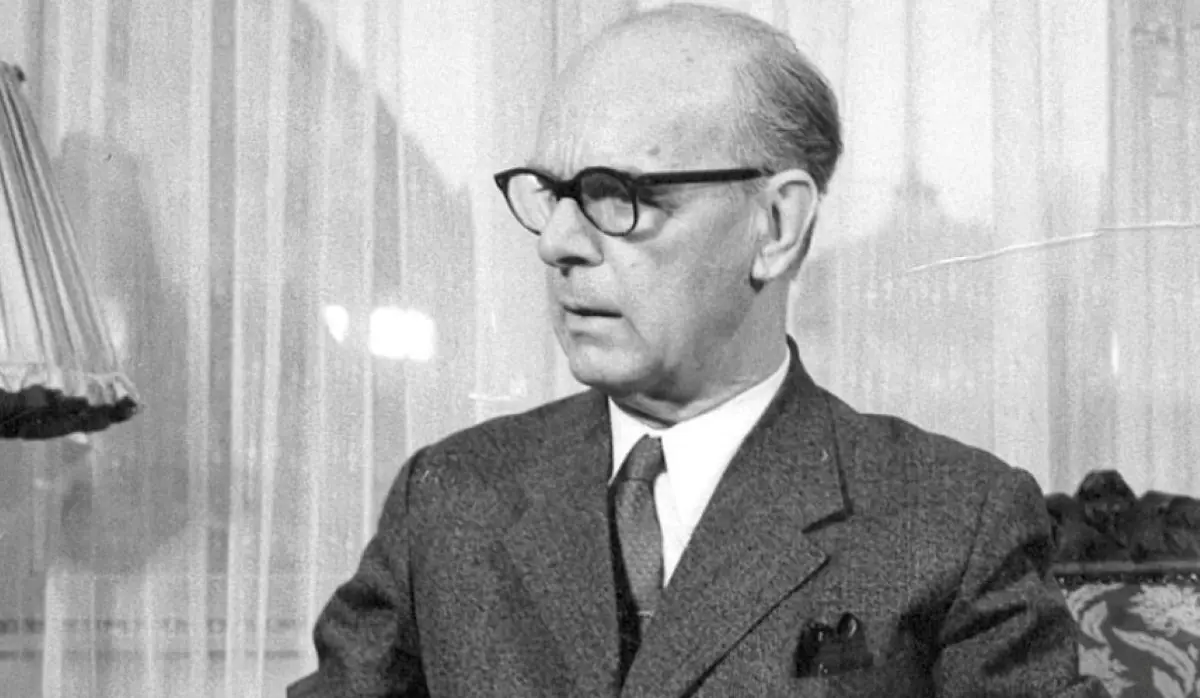
BIJELJINA, JULY 10 /SRNA/ - Writer Mehmed Meša Selimović, author of one of the greatest novels in the Serbian language, "Death and the Dervish", died in Belgrade on July 11, 1982.
As he himself revealed, Selimović was a descendant of the Serbian Vujović family. He graduated from the Faculty of Philosophy in Belgrade and, until the outbreak of the Second World War, worked as a teacher at the secondary school in his hometown of Tuzla.
Upon release from the Ustasha camp in 1943, he joined the Partisans. After the war, he served as director of the Drama Department of the National Theatre in Sarajevo, artistic director of "Bosna Film", and editor-in-chief of the "Svjetlost" publishing house.
Due to the persecution he was subjected to by the communists in the Socialist Republic of BiH, Selimović moved to Belgrade, where he remained until his death.
He wrote the novels "Death and the Dervish", "The Silence", "The Fortress", "Mist and Moonlight" and "The Circle" /unfinished/. He was also the author of the short story collections "The First Company", "A Foreign Land" and "The Girl with Red Hair", the study "For and Against Vuk", the essays "Writers, Opinions, Conversations", the memoir "Memories", as well as several film scripts.
Meša Selimović was a member of the Serbian Academy of Sciences and Arts /SANU/.
The novel "Death and the Dervish", one of the most significant works in Serbian literature, is distinguished by its unique treatment of the subject matter, the depth of its observations of human life in tragic circumstances, and its reflections on human existence.
The novel was inspired by the writer's personal tragedy, as Meša's brother, who was also a Partisan, was executed at the end of the war for a trivial reason - he had taken a piece of furniture from a warehouse.
Meša Selimović explained his national affiliation and his views on BiH on several occasions.
In his 1976 testamentary letter to the Serbian Academy of Sciences and Arts /SANU/, Selimović stated: "I come from a Muslim family, and by nationality I am a Serb."
"I belong to Serbian literature, while the literary work in BiH, to which I also belong, I consider only a regional literary centre, and not a separate literature of the Serbo-Croatian literary language," Selimović wrote.
He also stated that he equally respected his heritage and his chosen identity, as he was connected to everything that had shaped his personality and his work.
"Any attempt to separate this, for whatever purposes, I would consider an abuse of my fundamental right guaranteed by the Constitution. I therefore belong to the nation and literature of Vuk, Matavulj, Stevan Sremac, Borisav Stanković, Petar Kočić and Ivo Andrić, and I have no need to prove my deepest affinity with them," Selimović wrote.
Selimović sent this letter to SANU with, as he stated, an explicit request that it be regarded as a valid biographical record.
In his book "Memories", Selimović wrote that "the terrible genocide that the Ustashe began carrying out against Serbs in BiH, the unprecedented crimes that were difficult for people to comprehend because such mass barbarity had not been known in history, the suffering of entire Serbian regions, the destruction of all life - all of this forced a person to make a choice - either to resist or to become demoralized."
On one occasion, at the Literary Corner in Zagreb, an organizer asked Selimović a question apparently intended to provoke a controversial response from Meša: "Why do you, Mehmed Selimović, consider yourself a Serb?"
Selimović replied briefly and directly: "Until 1941, I felt like a Serb, and I did not ask myself why. Since 1941, I have known why I am one."
After the breakup of Yugoslavia, attempts were made in Sarajevo's political and, later, literary circles to "reclassify" Selimović from a Serb into a Bosniak, while completely disregarding his testamentary letter to SANU and his views on politics, national identity and literature.
Meša Selimović was buried in the Alley of Distinguished Citizens in Belgrade.