LINTA URGES EUROPEAN PARLIAMENT TO REJECT CROATIAN RESOLUTION ON VUKOVAR
Serbia - Association of Serbs from the Region
11/24/2026
12:54

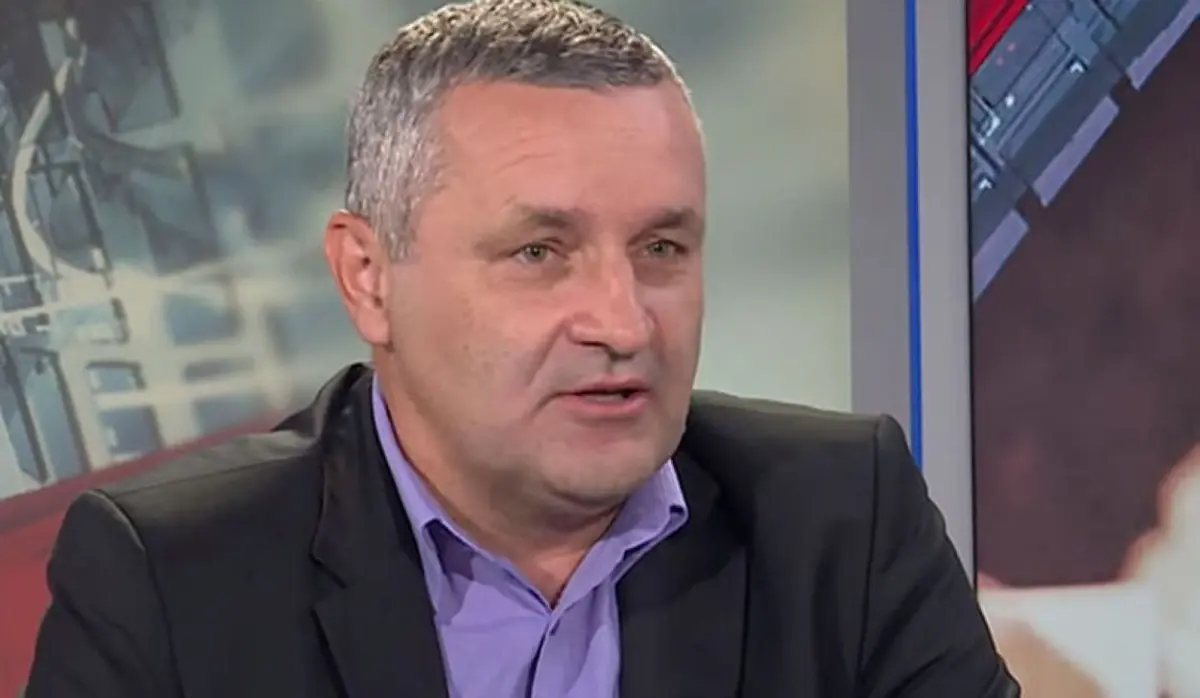
BELGRADE, NOVEMBER 24 /SRNA/ - Miodrag Linta, president of the Association of Serbs from the Region, said it was completely unacceptable that four Croatian members of the European Parliament had proposed a resolution on Vukovar that presents the events of 1991 in a one-sided and untrue way, and urged MEPs not to support it.
Linta said that the Croatian MEPs emphasized the responsibility of the Yugoslav People's Army /JNA/ and Serb forces in the document, while completely ignoring the suffering of Serb civilians and the responsibility of the Croatian leadership of the time, headed by Franjo Tuđman, for the policies and actions that led to the outbreak of armed conflict in Vukovar and Croatia.
He said that the current draft resolution only deepened divisions and spread hatred, the Association of Serbs from the Region said.
Linta said that the unequivocal condemnation of the crimes against Croatian civilians and prisoners at Ovčara could not be an excuse for keeping silent about the organized crimes against the Serb population before the liberation of Vukovar on November 18, 1991.
"During the spring and summer of 1991, Serbs in Vukovar were subjected to threats, pressure, arrests, torture and killings. The suffering of more than 200 Serb civilians must be an integral part of any serious and impartial look at the wartime events in this city," Linta stressed.
He reminded that the scale of lawlessness and arbitrary rule by Tomislav Merčep, commander of the Croatian paramilitary and police forces in Vukovar, was also documented in a letter that the Croatian government's commissioner for Vukovar, Marin Vidić Bili, sent to the Croatian leadership on August 18, 1991, pointing to Merčep's arbitrary conduct and usurpation of power.
Linta said that for many Serbs, Vukovar at that time was a kind of concentration camp, where they lived in constant fear for their own lives and the safety of their families.
He said that the statement by then Croatian President Franjo Tuđman on May 24, 1992, that "there would have been no war if Croatia had not wanted it" was an important part of the historical context that must not be left out of the debate on the causes of the 1991 war in Croatia.
He reminded that Josip Boljkovac, the first interior minister in Franjo Tuđman's government, had also claimed in public statements and in his book "The Truth Must Come Out" that in 1990 and 1991 it was not Yugoslavia that attacked Croatia, but Croatia that attacked Yugoslavia and the JNA, at the time the only legitimate and regular army.
Linta said that Boljkovac had claimed that the Serbs were the first to be attacked, that Croatian paramilitary forces had blockaded the JNA barracks in Vukovar, cut off electricity, water and food supplies, and fired on JNA soldiers inside the barracks compound, and that the JNA had been forced to launch an operation to lift the blockade.
Linta said it was particularly unacceptable that the draft resolution did not call on Croatia to open its war archives and release information on 30 known sites of mass and individual graves containing the remains of murdered Serbs.
Nor does it call for the identification of about 900 sets of remains of missing persons held at the Institute of Forensic Medicine in Zagreb, or for the fate of missing Serbs to be established, he said.
"It is tragic that the draft resolution does not even contain a demand that Croatia finally step up investigations and prosecutions of those responsible for serious war crimes against Serb civilians and prisoners of war," Linta said.
He reminded that in the process of joining the European Union, including through its 2011 Accession Treaty, Croatia had taken on obligations to prosecute war crimes effectively and respect the rule of law. However, many crimes against Serbs remain unpunished, and the families of Serb victims have been waiting for justice for decades.
For all these reasons, Linta urged members of the European Parliament not to support the proposed resolution in its current form and to demand that it be substantially amended.
He said that the amended document must contain clear demands for the condemnation of all crimes, establishing the responsibility of all perpetrators, opening Croatia's war archives, revealing the locations of graves, establishing the fate of missing Serbs and prosecuting those responsible.
"The European Parliament must apply equal standards to all victims and all states and must not allow four Croatian MEPs to abuse this important EU institution to promote a one-sided and untrue interpretation of historical events and to keep silent about the suffering of Serb civilians and the crimes committed against them," Linta said.
He said that the European Parliament had a duty to condemn crimes against all civilians, demand that responsibility be established and insist that the fate of all missing persons be clarified.
"Only an objective reckoning with the past, without a selective approach to suffering and responsibility, can contribute to truth, justice and lasting peace between Serbia and Croatia," Linta concluded.