KOVAČ: ZAGREB-TIRANA-PRIŠTINA MILITARY ALLIANCE DANGEROUS; HOLD SERBIA-SRPSKA-HUNGARY MEETING
Serbia - Republika Srpska - security
04/01/2026
13:30
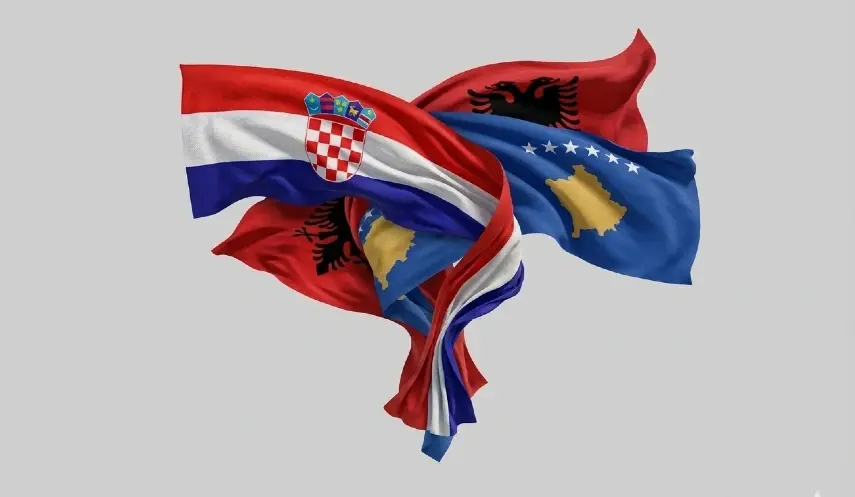
BELGRADE, APRIL 1 /SRNA/ – The threat posed by the Zagreb-Tirana-Priština military alliance to Republika Srpska is real, which is why not only a meeting of the Serbia - Republika Srpska top leadership should be held, but possibly a trilateral meeting with Hungary, Mitar Kovač, a member of the Serbia's parliamentary Defence and Internal Affairs Committee, told SRNA.
Commenting on the SNSD Presidency's initiative to adopt a joint position of Republika Srpska and Serbia on this issue, Kovač emphasizes there is a basis for such Srpska - Serbia meeting, in line with the special parallel relations and under the Dayton Peace Agreement.
"Perhaps the timing of such a meeting should be carefully weighed. I would not be far from the idea that, given that both Republika Srpska and Serbia have very good relations with Hungarian Prime Minister Viktor Orbán, i.e. with Hungary, we could wait for the time of his victory and perhaps organise a trilateral meeting at that level," Kovač said.
He believes that, in strategic terms, the assessment that the danger posed by the Zagreb-Tirana-Priština military alliance is greater for Republika Srpska. is very realistic
Kovač noted that Croatian politicians have often emphasized in difficult situations, when it comes to security and shaping relations within BiH, that they would influence the situation in BiH by default through the use of their army, as they did during the civil war in BiH, by cutting the Corridor and separating Krajina from the rest of Republika Srpska.
"These were their most frequent statements. Certainly, in that context they also have a number of other scenarios for the use of the Croatian army," said Kovač, who is also the president of the Eurasian Security Forum in Belgrade.
Kovač believes that after all this, Serbia - although it has so far spoken about military neutrality and not entering military alliances - might need to reconsider that decision and seek alliances with other countries of Southeast Europe, primarily Hungary, and possibly Italy too.
"The message from Serbia and Republika Srpska regarding this trilateral alliance would be logical and fair in every sense," Kovač emphasized.
He added that a joint position of Republika Srpska and Serbia would mean an adequate organisation of the people and opposition to the plans of Croatia, Albania and self-declared Kosovo – a territory under NATO control.
"Especially since this alliance did not arise on its own, nor is it natural, but rather emerged under the mentorship of some leading European countries, primarily Britain and Germany," Kovač added.
He believes that official Sarajevo would not respond appropriately to a joint position by Serbia and Republika Srpska, particularly those forces that uphold the interests and values from the civil war in BiH together with the Croatian Army and the HVO.
"It can be expected that such a jointly adopted position would face condemnation from those forces in Sarajevo and that they would seek other states and institutions in Europe to take a stance on such a meeting and the adoption of such a position," Kovač said.
The SNSD Presidency concluded that the military alliance of Zagreb, Tirana and Priština represents a direct danger to Republika Srpska and is directed against the Serbs, and that it will therefore initiate a meeting of the leaderships of Serbia and Republika Srpska at the highest level in order to adopt a joint position on the matter.