KOVAČ: BOSNIAKS PUSH FOR CENTRALIZED BiH MODELED BY POLITICAL ISLAM AGENDA
Serbia - BiH
03/22/2026
11:57
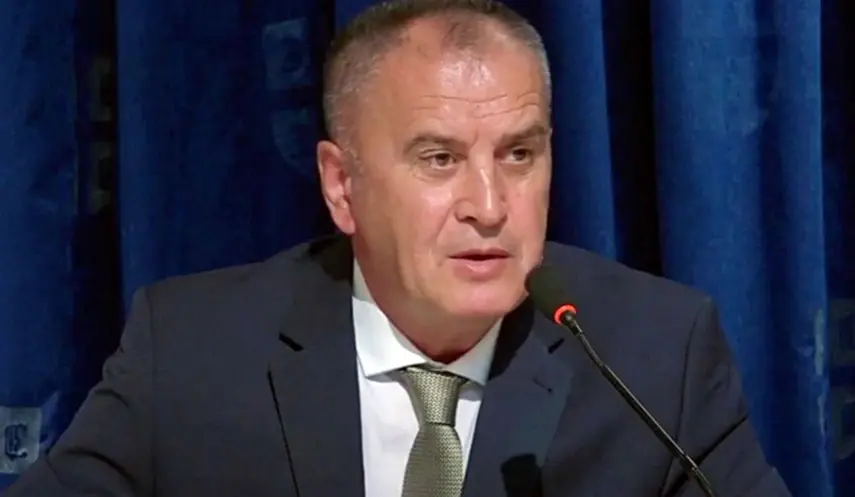
BEOGRAD, MARCH 22 /SRNA/ - A joint, all-Bosniak, statement by Bosniak political and religious leaders on alleged Islamophobia in BiH shows that the idea has matured among them to continue pursuing a unitary BiH modeled on political Islam, Mitar Kovač, director of the Eurasian Security Forum, has assessed for SRNA.
Commenting on the claims in the statement and the context in which it was signed, Kovač pointed out that political Sarajevo had previously maintained tacit agreements regarding Islamic interests in BiH, supported by most parliamentary parties in the Federation of BiH and at the level of joint institutions.
"The problem for them is that it is becoming clear that the political capital they invested through lobbying in the United States, European institutions, and the Islamic world was excessively high," Kovač said.
He explained that, following global geopolitical changes, Bosniaks now find themselves at a crossroads, primarily due to the different approach of US President Donald Trump and his administration toward the more radical segments of the Islamic world, which, he said, oppress other peoples and religious groups.
"All recent developments, including the lifting of indictments and travel bans on Serb officials, are seen by them as a favorable wind for Republika Srpska’s political goals, particularly in terms of restoring Dayton competencies and resetting relations in BiH," Kovač said.
He stressed that this is particularly difficult for Bosniaks, who view it as a national loss, and are therefore continuing efforts toward a unitary BiH shaped along the lines of political Islam.
"In such a system, there would be room for Serbs and Croats only to the extent that they are compliant enough to remain in politics, while the framework of autonomous rights of the two constituent peoples would be subject to change, potentially leading over time to a significant outflow of Serbs and Croats toward Serbia and Croatia," Kovač stated.
According to him, this reflects the ideology of political Islam in Sarajevo, and such statements essentially point to an Islamic character of BiH as envisioned by its proponents.
"When they speak of a democratic BiH or a civic state, behind that stands an Islamic BiH, as reflected in many political programs of the most influential Bosniak parties in Sarajevo," Kovač explained.
He thinks this is not surprising, but should serve as a wake-up call for Serbs and Croats, particularly for Republika Srpska, highlighting the need to find the lowest common denominator of national interest among all political actors, both in government and opposition.
"This is a warning not only for those in power but also for all political actors in Republika Srpska. It confirms that Republika Srpska has long had valid reasons to demand political changes and guarantees of its rights in accordance with the Dayton Agreement," Kovač stressed.
He believes that the struggle for original competencies should not be abandoned.
"Ultimately, it is necessary to reconsider the will of political actors in Republika Srpska on whether to remain in such a BiH or to seek a higher level of autonomy and guarantees of political rights for the Serb people," Kovač concluded.

REQUEST FOR MACUT’S PLANE TO FLY OVER BiH SENT ON SEPTEMBER 11; KONAKOVIĆ’S CLAIMS EXTREMELY MALICIOUS
KALABUKHOV: I WILL CONTINUE WORKING TO STRENGTHEN TIES BETWEEN THE TWO PEOPLES
MASTILOVIĆ: GOVERNMENT RECOGNIZES QUALITY AND IMPORTANCE OF ISTOČNO SARAJEVO UNIVERSITY
MACUT: UNITY OF SERB PEOPLE ALWAYS PRESENT