GULIĆ: NDH WILL BE REMEMBERED ONLY FOR GENOCIDE AGAINST SERBS, JEWS, AND ROMA
Croatia - World War II
04/10/2026
16:44
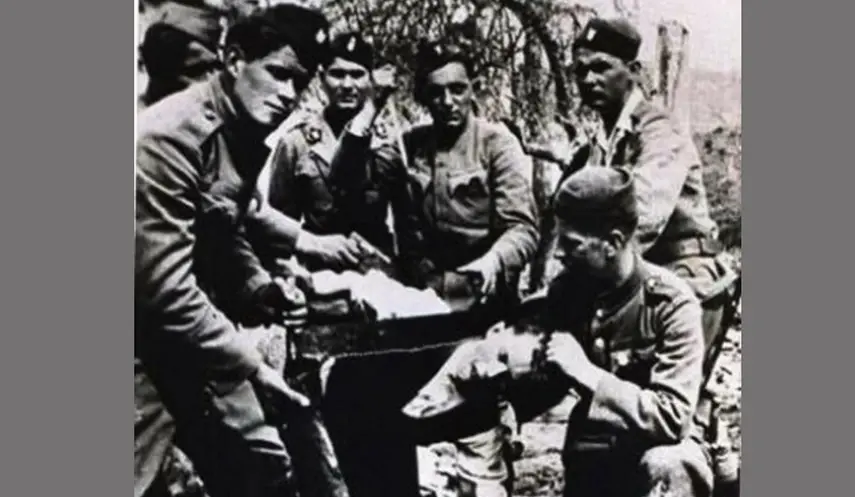
BELGRADE, APRIL 10 /SRNA/ – The Independent State of Croatia /NDH/ will be remembered in history for nothing else but the genocide against the Serb, Jewish, and Roma peoples, historian Milan Gulić assessed.
On the occasion of the 85th anniversary of the establishment of the NDH, which was proclaimed today in 1941, Gulić recalled that the state was formed following the attack by Germany and Italy on the then Kingdom of Yugoslavia and the occupation of its territory.
He pointed out that the territory of Yugoslavia was partitioned and that the largest part of its central area was taken over by the NDH, which was established with the support of Nazi Germany and Fascist Italy.
"In its structure it modeled itself on them and relied on them, while during its existence an entire network of concentration camps was formed. The very basic aim of that state was the extermination of undesirable peoples, primarily the Serb people," Gulić told SRNA.
In his opinion, denying the fact that the NDH was a state diminishes the nature of the crimes it committed and reduces them to the crimes of a group of individuals, which is not the true nature of the crimes committed by the NDH.
"Here, the state intended to destroy almost a third of its own population, considering that Serbs made up nearly a third of the population in the territory encompassed by the NDH," Gulić said.
He added that he is not surprised that the ideology of such a state is still alive and that in today’s Croatia there are attempts to rehabilitate the NDH and the Ustasha regime for everything, especially for the horrific crimes.
The NDH was proclaimed on April 10, 1941, and lasted until the end of the Second World War, systematically persecuting and killing Serbs, Jews, Roma, and all those who did not fit into its Greater Croatia programme and racist theories that were legally enforced.
Soon after the establishment of the NDH, concentration camps were formed, among the most notorious being Jasenovac and Jadovno, as well as camps for women and children such as Stara Gradiška, Jastrebarsko, and Sisak.
According to data of the Donja Gradina Memorial Zone, 700,000 people were killed in Jasenovac alone. Among them were 500,000 Serbs, 40,000 Roma, 33,000 Jews, and 127,000 anti-fascists, and around 20,000 children.