GOUILLONJON: MARCH POGROM - VIOLENCE UNLIKE ANYTHING SEEN IN POST-WAR EUROPE
Serbia - Kosovo and Metohija - remembrance
03/17/2026
12:37
BELGRADE, MARCH 17 /SRNA/ – The Director of the Office for Public and Cultural Diplomacy of Serbia Arnaud Gouillon assessed that the 2004 March pogrom against Serbs in Kosovo and Metohija was ethnically and religiously motivated violence unlike anything seen in Europe since the end of World War II.
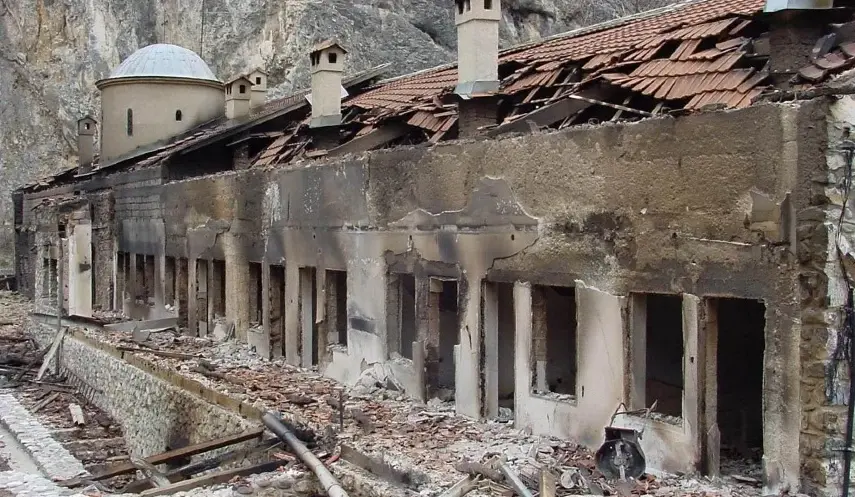
He recalled that in just a few days, more than 1,000 Serb homes were destroyed, 35 Orthodox churches and monasteries were demolished or desecrated, and thousands of people were expelled from their homes within just a few hours, reads a statement from the Government of Serbia.
Gouillon noted that at that time he decided to establish the Solidarity for Kosovo humanitarian organisation, which has been helping the Serb community in Kosovo and Metohija for more than two decades through numerous projects and spreading the truth about its position abroad, especially in France.
The March pogrom in Kosovo and Metohija, one of the most tragic events in recent history of Serbs, began on March 17, 2004, when Albanians expelled 4,000 Serbs, ethnically cleansed six towns and nine villages, and destroyed or desecrated 35 Orthodox churches and monasteries, as well as more than 800 Serb-owned houses.
It was the second major Albanians' pogrom against Serbs after the NATO aggression in June 1999, when, in the presence of international military forces, nearly a quarter of a million Serbs and other non-Albanians were expelled from Kosovo and Metohija.