GEOPOLITICAL DEVELOPMENTS THAT HAVE DEFINED 21ST CENTURY
World - economy
04/22/2026
10:12
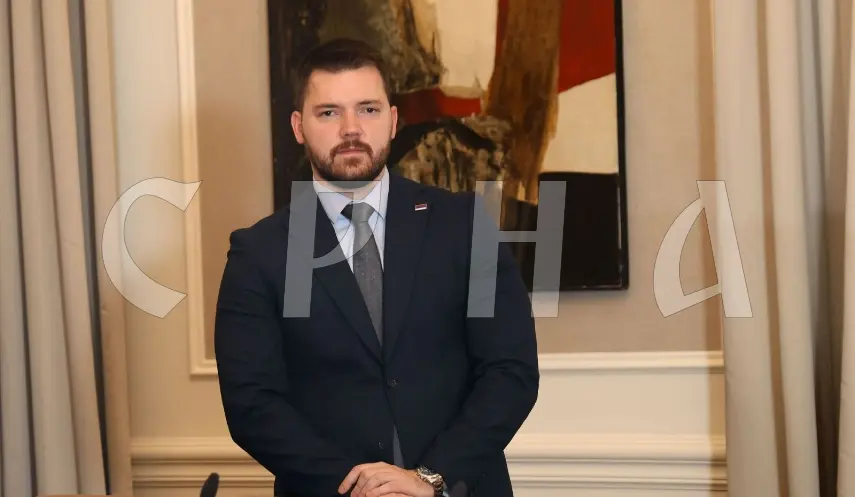
BANJA LUKA. APRIL 22 /SRNA/ - Realism, unlike the liberal optimism of the 1990s, starts from a simple but harsh assumption: states are rational egoists in an anarchic international system, the international and economic policy expert Nemanja Plotan assessed.
SRNA publishes Plotan's column on geopolitical developments in its entirety:
It has been just over a quarter of a century since the world entered the 21st century with immense optimism.
The fall of the Berlin Wall in 1989, the doubling of democracies by 2004, declining poverty, fewer wars and refugees – all of it seemed like a triumph of liberal democracy and the free market.
The West believed that history had ended, that global markets were free, that democracy and prosperity were inseparably linked, and that the rest of the world would simply follow this model.
It was an era of consensus, where elections were won in the political center, and the West saw itself as a morally legitimate leader with the right to intervene in the name of human rights – from BiH and Kosovo and Metohija to Sierra Leone.
But that illusion collapsed faster than anyone could have expected. The early 2000s marked the beginning of a period of paralysis and contradictions.
The 2008 financial crisis shattered faith in free markets and elites. China joined the World Trade Organization in 2001, and within just seven years became economically larger than France, Britain, Germany, and Japan, lifting 900 million people out of poverty in the process.
Social media, which helped spark the Arab Spring in 2011, accelerated polarization and shattered the old consensus. Instead of a bell curve of public opinion centered around moderation, voices shifted to the extremes.
The West began to question its own moral superiority: movements such as Black Lives Matter and environmental activism challenged the very foundations of Western legitimacy.
Interventions in Iraq and Afghanistan, which cost $3.5 trillion, ended in humiliation – unlike China's Belt and Road Initiative, which delivered tangible infrastructure gains.
Thus, by 2014, driven by public dissatisfaction and distrust toward elites, we entered the era of populism. The consensus died, globalization was called into question, and the link between prosperity and democracy was broken. Many nations began to prioritize prosperity and stability over liberal democracy.
The war in Iran, currently shaking the Middle East and the global economy, has only further confirmed that we have entered a period of pure realism. There are no longer illusions about a universal liberal order, Western moral superiority, or the inevitable spread of democracy.
This is a return to classical realpolitik – a world of interests, power, and survival, where there is no room for sentimental illusions about the "international community," "values," or the "end of history".
Realism, unlike the liberal optimism of the 1990s, starts from a simple but harsh assumption: states are rational egoists in an anarchic international system.
They do not act out of love for democracy, human rights, or climate justice, but out of the desire to ensure their survival, increase their power, and protect vital interests. In such a world, there are no permanent friends or eternal enemies – only temporary alliances and constant rivalries.
It is precisely this realism that best explains current global developments. The war in Iran is not a conflict between "good and evil," but a classic struggle for control over energy and trade arteries and regional dominance.
The United States and Israel seek to prevent Iran from becoming a nuclear threat that could, beyond spreading Islamism, also undermine the petrodollar system, while Iran, using proxy groups, attempts to impose its vision of the Middle East and weaken Western influence.
The same applies to the broader picture. China is not exporting "communism" – it is building an empire through debt, infrastructure, and technological dominance. America no longer pretends to build democracies around the world; it is fighting to maintain its primacy and prevent China from becoming too powerful.
Europe, once the chief moral preacher, is now desperately seeking cheap energy and realizing that its green agenda is becoming a luxury it can no longer afford. Even small states in the Balkans no longer dream of "European values" – they calculate how much it will cost them to survive in a new multipolar world where major powers no longer pretend to play by the same rules.
Realism teaches us that international politics is an eternal struggle for power, not a moral story with a happy ending. Those who forget this pay the highest price – as we have seen in Iraq, Afghanistan, Libya, and now in the Middle East.
In such a world, there is no room for naivety. There is only cold calculation, strategic patience, and the readiness to protect one's own interests before the ideals of others.