EU SEEKS CLOSER CANADA TIES TO STRENGTHEN RESISTANCE TO U.S. POLICY AND PRO-WAR APPROACH SUPPORT
World - geopolitics - Milivojević
09/19/2026
12:32
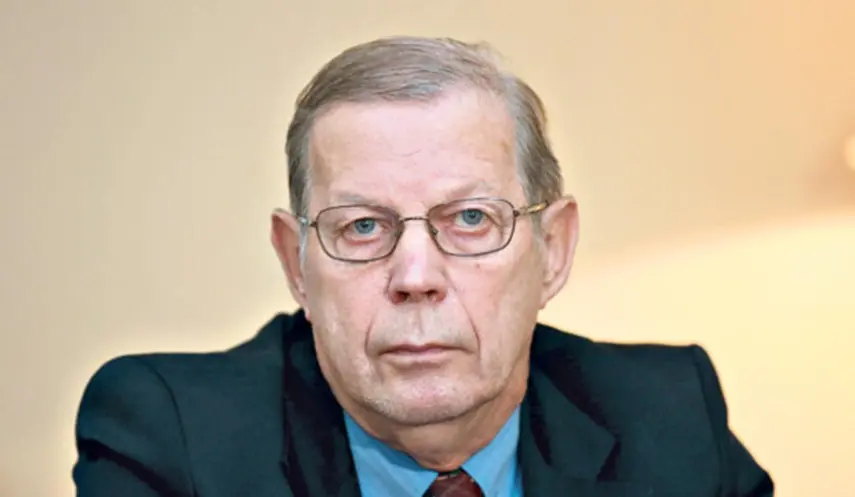
BELGRADE, SEPTEMBER 19 /SRNA/ – Career diplomat Zoran Milivojević argued that the European Union's invitation for Canada to become its first associate member was aimed at strengthening resistance to Washington's policies and bolstering what he described as a pro-war approach within the bloc.
Commenting on the proposal, Milivojević said he believed the initiative primarily reflected an interest among European political elites in strengthening the "coalition of the willing," in addition to taking a more independent position toward the United States.
"They want to strengthen the war option through the activities of the 'coalition of the willing' as the policy currently dominating the EU, given that Canada supports that policy and is prepared to participate in it through NATO, but also directly, in military-political terms and perhaps even financially," Milivojević told SRNA.
He added that Canada's involvement would reinforce both that policy and the broader concept pursued by the EU and members of the "coalition of the willing".
"The other question is how politically and strategically feasible this is. We have already seen the American reaction. We should assume that the United States will not allow this, at least in that sense, because US President Donald Trump has described the EU's invitation to Canada as a hostile act," Milivojević said.
He assessed that closer cooperation with Canada was more or less possible through NATO, but that it would be far more difficult to implement if it involved a political realignment under which Canada formally moved closer to the EU.
"In the security sphere, yes, but in legal and political terms, I do not think it is realistic," Milivojević believes.
He pointed out that closer EU ties with Canada would also strengthen Britain's position and influence because Canada is a member of the Commonwealth, raising broader questions about the nature of the EU.
"Since the United Kingdom is not an EU member, Canada and Britain would in some way call into question the legal nature and essence of the Union as a continental organization, because Canada is an overseas country," Milivojević pointed out.
He argued that the proposal opened a range of broader geopolitical questions with global implications.
"But in this security dimension, where the EU has an interest in strengthening this war option, Canada suits them well," Milivojević said.
He assessed that the practical limit of such cooperation would likely be through NATO and the "coalition of the willing", rather than through full political integration.
"The ultimate reach of this initiative is for it to operate through NATO and the 'coalition of the willing,' and in fact through strengthening the war option at this moment, because Europe's political elites are directly dependent on the survival of that option," Milivojević believes.
According to his opinion, any form of Canadian association with the EU would also amount to opposition to current US policy, which he said differs from that of European leaders on Ukraine.
He said the Trump administration’s policies were more sovereignty-focused and less globalist, placing Washington at odds with political elites in both the EU and Canada.
European Commission President Ursula Von Der Leyen proposed during her annual State of the Union address in Strasbourg, which Canadian Prime Minister Mark Carney also attended, that Canada become the EU's first associate member.
Von Der Leyen called in her speech for the creation of a more independent EU in an "openly hostile world," referring to Russia and the war in Ukraine while avoiding any direct mention of increasingly strained relations between the United States and the EU.
In his address to members of the European Parliament, Canadian Prime Minister Mark Carney called for an "alliance for the future" between Canada and the EU 27 members, arguing for deeper cooperation to strengthen their resilience in a changing global environment.