COSTA: THE WESTERN BALKAN PARTNERS CAN COUNT ON THE EU
EU – Balkans – summit
11/25/2026
20:10

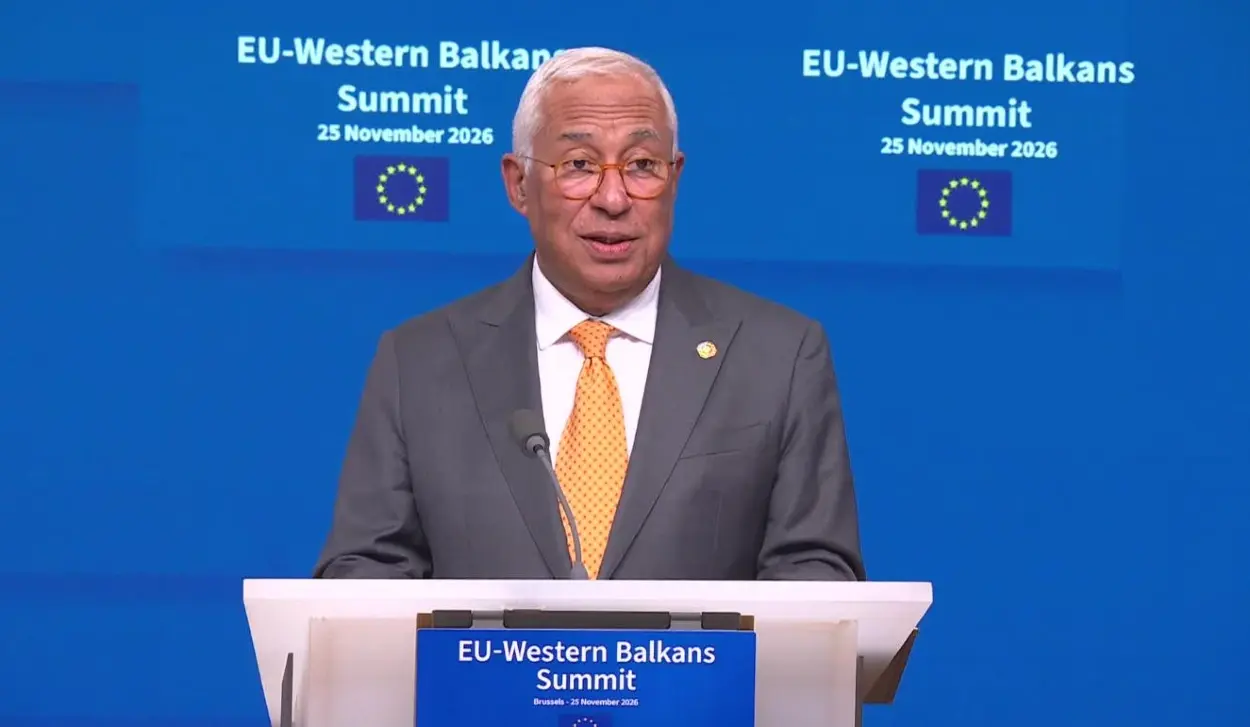
BRUSSELS, NOVEMBER 25 /SRNA/ – Western Balkan countries can count on the EU, which is their partner and will remain so, European Council President Antonio Costa said.
Speaking at a press conference following the EU-Western Balkans Summit in Brussels, he stressed that the frequency of contacts between Brussels and the region reflects the intensity of the Union's political engagement with the Balkans, while the challenging geopolitical situation further highlights the need for the closest possible relations.
According to him, today's summit reaffirms the Western Balkans' EU membership perspective.
“My message to our partners was clear: they must maintain momentum and implement the reforms that will bring them into the EU. Enlargement is an opportunity that must be seized,” Costa stressed.
He said that the summit addressed the results of the previous EU-Western Balkans Summit in Tivat and discussed how to take the region's integration into the EU to a higher level.
“Citizens of countries in the region are already feeling the benefits of this approach, and we are exploring opportunities to make further progress,” Costa noted.
He said that the progress made by Montenegro and Albania on their path towards EU membership demonstrates that joining the bloc “is not an illusion, but a real possibility for those who make the effort”.
“This year, the EU began drafting Montenegro's accession treaty, something we had not done in more than ten years. Albania has also begun closing negotiating chapters. All other Western Balkan countries can make progress on their path towards EU membership,” Costa stressed.
He noted that the EU accession process is not solely about implementing reforms, as regional cooperation, reconciliation and good neighbourly relations are also key conditions for membership.
“I look forward to further progress in resolving bilateral issues, because the problems of the past must be overcome and it is time to look ahead. Only then can our Western Balkan partners make real progress and assume their responsibilities as future EU member states,” Costa said.
He added that the EU itself is an example of such a process, having been built on reconciliation and peace, with enlargement playing a key role in achieving these goals.