"CHILDREN OF BRADINA", FILM ON BRUTAL CROAT-MUSLIM CRIME, SCREENED IN BELGRADE
Serbia - BiH - culture of remembrance
11/18/2026
21:22

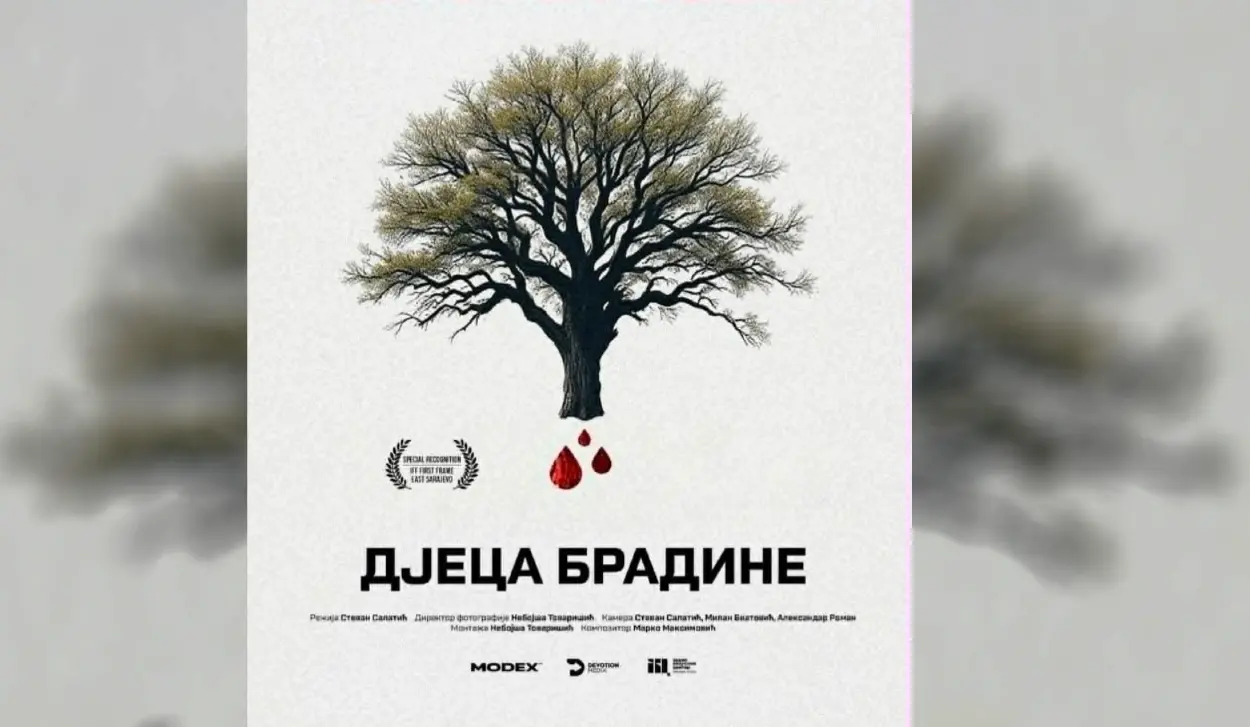
BELGRADE, NOVEMBER 18 /SRNA/ - The documentary "Djeca Bradine" /"Children of Bradina"/ by Stevan Salatić, about a brutal crime committed by Croat-Muslim forces in May 1992 against the residents of Bradina, once the largest Serb village between Konjic and Sarajevo, premiered in Belgrade on Wednesday evening.
The true story is told through the memories of people who were children at the time, whose childhood was cut short in the most horrific way. It is also told by two doctors who were prisoners in the notorious Čelebići camp, where Serbs were tortured. The film was screened in the main hall of the assembly of Stari Grad, Belgrade's central municipality.
Salatić told SRNA that Bradina, along with Vogošća, was one of the deepest wounds inflicted on the Serb people during the Defensive-Patriotic War.
"The film is about the suffering of Serb civilians when more than 4,000 armed members of Muslim-Croat forces, the regular Croatian Army, the so-called Army of BiH and the republican Interior Ministry attacked the village of Bradina on May 25, 1992. On May 25, the village was razed to the ground, 45 people were killed, children were robbed of their childhood, and the village, which once had 1,000 inhabitants, was left without residents," Salatić said.
On a second level, the film widens the story to the whole Konjic area, once home to about 8,000 Serbs, of whom only a few hundred remain today. They were driven from their homes, and many ended up in the Čelebići camp, where they were tortured and from which some never came out alive.
"The film's third thread runs through the testimonies of doctors Petko Grubač and Relja Mrkajić. Through their accounts of what they had to treat in Čelebići and the equipment they had to use to keep beaten Serb prisoners alive, I tried to describe the horrors of that notorious torture site for the Serb people," Salatić said.
He said it was important for as many people as possible to see the film because, as he put it, if the memory of the victims is not preserved, an arrogant history often ensures that a crime is remembered for its perpetrators and for the crime itself, not for its victims.
"My goal is to use the stories of the people who survived all this to present Bradina as a great shrine, where a large number of innocent people lost their lives and the survivors permanently lost their homes and were left with lifelong trauma," Salatić said.
Before the war, about 1,000 Serbs lived in Bradina, which until 1992 was the largest Serb village between Mostar and Sarajevo. Today only two people live there. A memorial bearing the carved names of 88 murdered residents is the only testimony to their suffering, for which no one has been punished.