SARAJEVO'S LEGAL-POLITICAL GAMES OVER SERB LAND
FBiH - Sarajevo - seizure of Serb property
02/24/2026
11:43
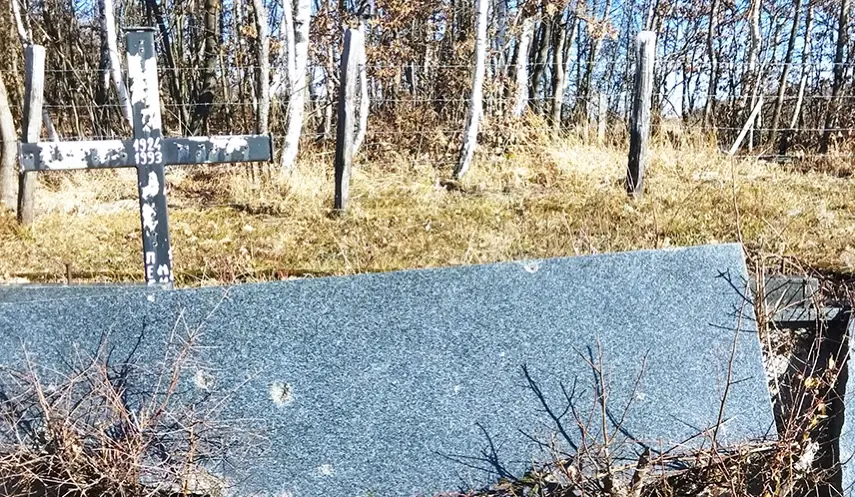
SARAJEVO, FEBRUARY 24 /SRNA/ - Serb property in Sarajevo municipalities within the Federation of BiH /FBiH/ is being targeted by local authorities who are attempting to seize it by incorporating it into spatial plans for national parks; one example is the Žuč Orthodox Cemetery, which is the most devastated cemetery in that entity.
The president of the association Truth and Justice Dušan Šehovac told SRNA that authorities in Sarajevo are trying to force Serbs to abandon their property and renounce ownership of it.
"The authorities are trying to prevent Serbs from enjoying their property in Sarajevo. This is done by designating land owned by Serbs as having a higher public interest, such as national parks, green areas, or recreational zones... Serb property is placed into that function, and owners are prevented from disposing of it, building on it, or selling it," Šehovac said.
Šehovac points out that the "Sarajevo legal-political Olympic Games, in which Serbs were disqualified before the games even began, have continued for years," and that they have been particularly pronounced since the signing of the Dayton Peace Agreement and the subsequent exodus of Serbs from Sarajevo.
"The final result is that there are no Serbs left in Sarajevo, while their property is being taken, expropriated, and occupied, `preserved for future generations,` and turned into green longitudinal corridors, as well as sites for sports and recreation. Large areas of Serb land are not even Sarajevo's, because Sarajevo neither purchased that land at a fair price nor intends to do so in the foreseeable future. Serb land is no longer Serb either, because Serbs can neither cultivate it nor sell it," said Šehovac.
Šehovac, himself a native of Ilidža, emphasized that Serbs from Ilidža, longtime residents who lived in areas that are today designated as a water protection zone or the Vrelo Bosne National Park, were separated from their land as far back as 1945, some voluntarily and some by force, because they could neither use nor sell it, and that a fourth generation is still waiting for justice.
"All forms of individual and collective legal-political games are being played to drive Serbs away, to create terrains, not their own and unfit, to which they cannot return. The price of the land has been reduced to a minimum, promises are made that it will be purchased, but it is unclear which generation of Serbs will actually realize that right," Šehovac said.
He added that the most recent example is the concept of a green longitudinal transversal /green corridor/ following ZETRA /the Green Transversal/ because Sarajevo "likes green".
"We have this new green corridor, which stretches from the Serb areas of Briješće, Sokolje, and Zabrđe, across Mijatovića Kosa, Žuč, Grahovište, Hum, and ends at Betanija," Šehovac specified.
Šehovac stated that this plan explicitly designates the Žuč Park-Forest as an area intended for sports and recreation, and that it explicitly prohibits residential and industrial construction directly on protected green areas.
He noted that all levels of government, from the joint institutions to the city authorities, are aware of this problem and that all have promised to help Serbs from these areas realize their human and property rights, but that no further progress has been made.
He also pointed out that the Žuč Orthodox Cemetery is the most devastated in the FBiH.
"Orthodox cemeteries testify to the centuries-long presence of Serbs in a given area. Tombstones with Cyrillic inscriptions, names and surnames, crosses, as well as dates of birth and death, constitute a silent but undeniable proof of the historical reality of a community," said Šehovac.
Šehovac assessed that, in this sense, a cemetery is an archive of a people; it shows where someone lived, how long they lived there, and what identity they upheld.