LAZIĆ: ATTACKS ON CEMETERIES SHOW FBiH IS WAGING A CULTUROCIDE AGAINST SERBS
FBiH - vandalism
11/08/2026
14:16

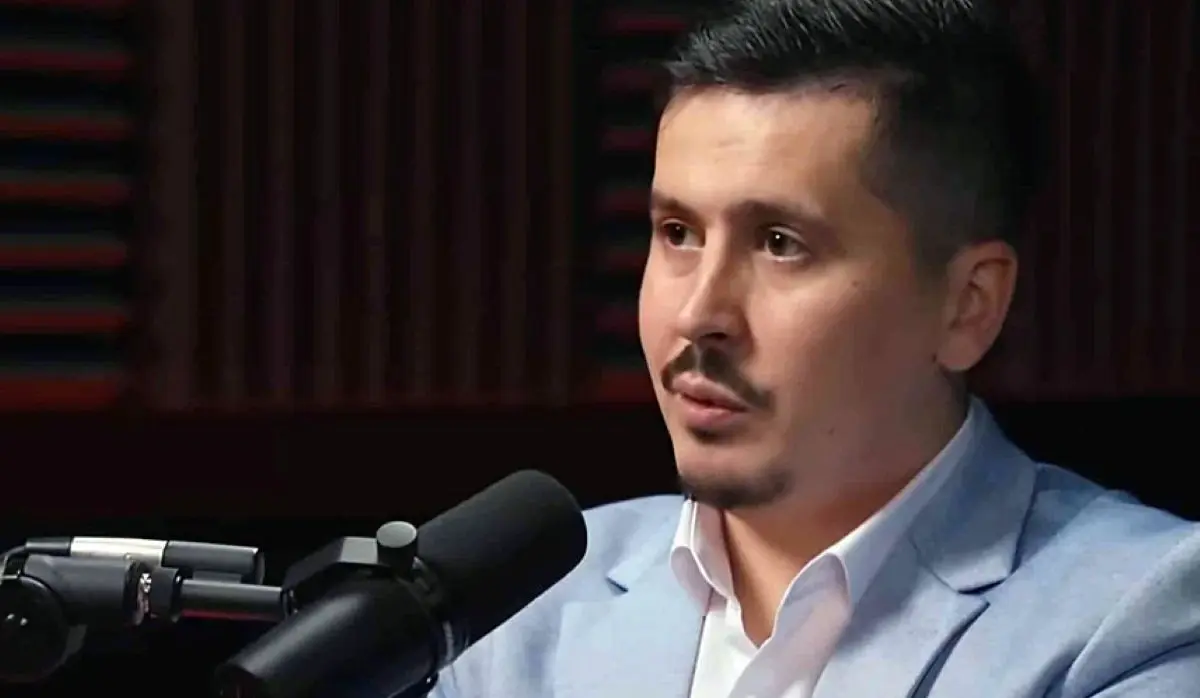
BELGRADE, NOVEMBER 8 /SRNA/ - A campaign of culturocide is being carried out against Serbs in the Federation of BiH /FBiH/ with the aim of erasing traces of their existence, which is why Orthodox cemeteries, as evidence that the Serb people once lived there, are increasingly coming under attack, theologian Nebojša Lazić told SRNA.
"Graves are being targeted because they prove that a people once lived there who built, fought, and, as Petar Kočić used to say, suffered both on the Turkish stake and the Austro-Hungarian gallows. That people, in fact, historically created BiH itself as it is today," Lazić pointed out.
Speaking about the recent destruction of shelters in Orthodox cemeteries in the area around Banovići, Lazić pointed out that the perpetrators had still not been identified, just as in previous similar cases, which had not been prosecuted, encouraging the perpetrators to continue their attacks.
"The perpetrators keep repeating these attacks because of the lack of public engagement and the failure to address this issue seriously. Even the federal media do not report on it adequately. In a way, attacking Serb cemeteries, places of worship and monasteries has even become something desirable," Lazić said.
He believes that attacks on cemeteries carry particular significance because they are the only evidence of the historical continuity of Serbs in places where they no longer live, as well as throughout the Federation of BiH, where Serbs account for a statistically negligible share of the population.
As he explained, cemeteries are being targeted because they do not fit into the Bosniak concept of reshaping the entire course of history and eroding Serb national identity, endowments, and historical traces of existence.
"Everything is being done with the aim of committing culturocide, or cultural and ethnic cleansing, which involves the destruction of monuments and evidence of the existence of that people," Lazić stressed.
He also recalled attacks on minors from Serbia and the ban on Jewish gatherings in Sarajevo, saying that these incidents testify to widespread intolerance and a climate of hostility in Sarajevo, where appropriate responses and legal mechanisms have completely failed.
"As a rule, the perpetrators are never found, cases are shelved, and nothing is done, even though these are cases involving the incitement of religious and national hatred and violations of the UN's fundamental human rights conventions," Lazić stressed.
He added that statements by officials in the police and other institutions also testify to this practice. Such statements are generic and amount to little more than formal announcements, which are mostly drafted and published to appease the international community.
"That is a farce. They are trying to give the impression that they are taking action, but they rarely even respond or provide information of public importance. It all boils down to bureaucratic wording devoid of substance. People working in these institutions do not even respond to questions, despite being legally obliged to do so under FBiH law," Lazić said.
As he said, everything goes round in circles, following an established pattern that is essentially the trigger for continued attacks on Serbs, their property, cemeteries and places of worship.
"First, the relevant officials issue statements devoid of substance, then this dry information is filtered through the media, and everyone waits for things to die down until the next attack. Unfortunately, these attacks have become a kind of everyday occurrence," Lazić stressed.
At the beginning of November, a wooden shelter at the Gradina Orthodox cemetery in the village of Lozna, near Banovići, was cut down and toppled. Displaced Serbs from the area had built it to provide a place for gatherings during village patron saint celebrations and memorial Saturdays.
A few days later, a shelter was also demolished at the Orthodox cemetery in the village of Borovci, around three kilometres from the cemetery in Lozna.

EXHUMATIONS IN CROATIA COME UNDER SHARP CRITICISM
SERB CEMETERIES ARE BEING VANDALISED IN FBiH, JUST AS IN KOSOVO AND METOHIJA

IG METALL UNION CALLS ON WORKERS AT MERCEDES-BENZ PLANT TO GO ON STRIKE
TRIBUTE PAID TO MITROVDAN HEROES, UNITY PROVED CRUCIAL IN DEFENSE