BUILDINGS OF PARLIAMENT AND COUNCIL OF MINISTERS BUILT ON SERBIAN CEMETERY
FBiH - Sarajevo - property of Serbs and the SOC /2/
06/27/2026
09:51
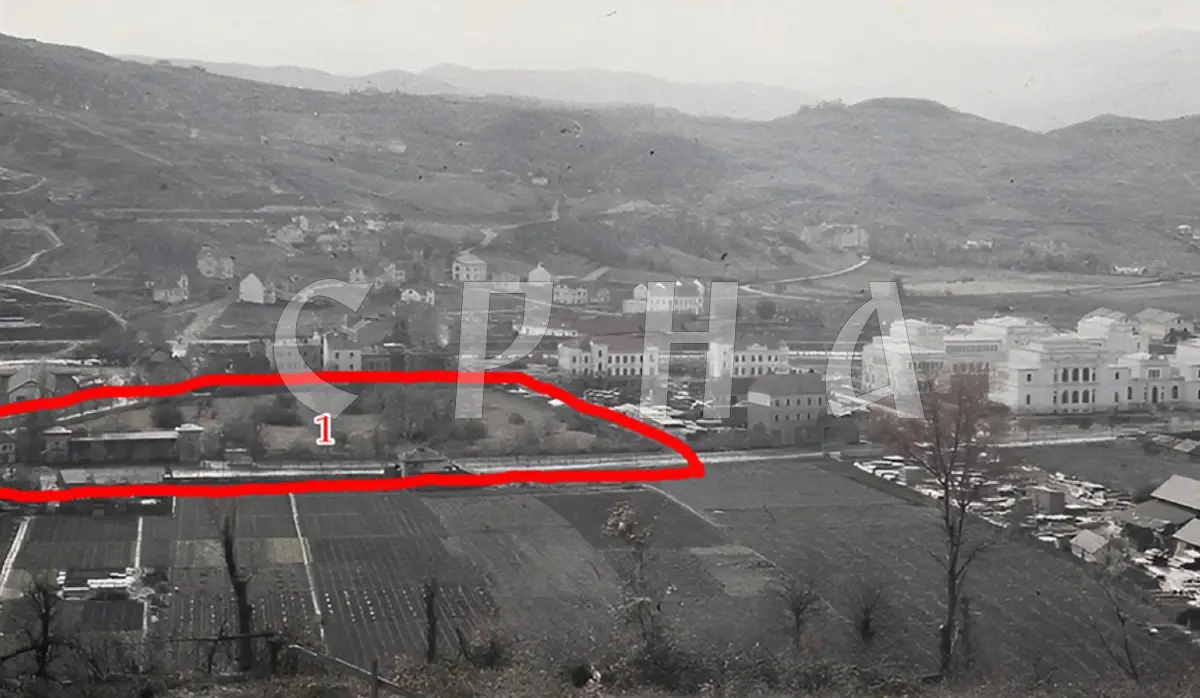
SARAJEVO, JUNE 27 /SRNA/ - According to historical data, the Chapel of the Heroes of Vidovdan /St. Vitus Day/ in Sarajevo is unique in that, in addition to stone, it was built from monumental tombstones and stone crosses from the destroyed Christian Orthodox cemetery Donja Hiseta in Carina-Vrbanja, which was the name of the current BiH Square, where the buildings of the Parliamentary Assembly of BiH and the Council of Ministers are located.
Written by: Željka DOMAZET
The chapel was built according to the design of Aleksandar Derok. On the plaque built into the chapel, which bears the inscription "Vidovdan Heroes" with their names, there are also Njegoš's verses symbolic of the ideological and libertarian orientation of the entire Vidovdan cult of Serbs: "Blessed is he who lives forever, because he had a reason to be born".
The chapel is still located in Sarajevo today. The following are buried in the common grave: Gavrilo Princip, Bogdan Žerajić, Vladimir Gaćinović, Nedeljko Čabrinović, Danilo Ilić, Veljko Čubrilović, Neđo Kerović, Mitar Kerović, Miško Jovanović, Jakov Milović, Trifko Grabež and Marko Perin.
OLDEST SARAJEVO CEMETERY IS CHRISTIAN
Publicist Dragan Mijović is diligently researching and documenting data on the property of the Serbian Orthodox Church /SOC/ and Serbs in Sarajevo so that the facts about what belongs to whom in the city on the Miljacka River are not erased forever.
Mijović told SRNA that it is little known that the oldest Sarajevo cemetery was a Christian cemetery under the administration of the Serbian-Orthodox Church Municipality of Sarajevo.
"It was located exactly in the area where the buildings of the joint bodies of BiH, the Parliament and the Council of Ministers, with the accompanying square, are today. According to some archaeological findings, the cemetery was buried centuries before the arrival of the Ottomans in our area. Remains of Roman buildings in the form of mosaic fragments and other artifacts have also been found at the site," Mijović said.
He specifies that the cemetery was located in the current city quarter of Marijin Dvor, at a place called Carina, one of the points where the main roads, such as the Hambina Carina, the Višegrad Gate and Alifakovac, entered the city.
Mijović adds that a tax was paid at these places for importing goods into the city.
"For this reason, the cemetery in question was called the Old Cemetery at Carina for the longest period of time, but it was also called differently at various times. Since the area has existed for centuries, Orthodox Christians have been buried there. There was no other cemetery," says Mijović.
Mijović states that upon their arrival in these areas, the Turks recorded the Giaour settlements - Brodac, Atik-Varoš /Old Town/, Eski-Trgovište - /Old Market/ and other smaller settlements from which the city of Sarajevo developed when, after the Ottoman occupation, Isa Bey Ishaković built his saray /palace/ there.
"In the inventory of his endowments of February 1462, he recorded a plot of land that bordered on the west side with the infidel /Giaour/ cemetery near the Prince's Field. The field, together with the house, belonged to Prince Bogčin, who was the son of Prince Šćepko /Štipko/, whose grave gabled tombstone with a carved Cyrillic inscription is located in the Orthodox cemetery in Donji Kotorac," Mijović specifies.
Mijović explains that for these reasons, the cemetery was sometimes called Bogčinovo in old documents, and sometimes Crkvina.
19 DUNAM PLOT
"In later Turkish notebooks, the cemetery plot is mentioned as Vasiljeva Bašča /garden/. According to tradition, the said Vasilj donated his garden - land - to the Serbian Church Municipality in order to expand the cemetery, with a bequest that a church and a school be built there. The total area of the plot was almost 19 dunams /18,743 square meters/. On the north side there was also a cemetery chapel with an area of 60 square meters," Mijović pointed out.
Regarding the need to expand the cemetery, says Mijović, it should be remembered that Sarajevo during the Ottoman period was a very "plague-ridden place", susceptible to epidemics such as plague and cholera.
"Then hundreds of fresh mounds would sprout up overnight at `Carina'. There was a saying about someone who had been working in a certain place for a long time: `He won't leave, just like the plague from Sarajevo.` There is also a curse that was said to someone in anger: `May he expand the cemetery at Carina,`" Mijović noted. /to be continued


FIRST JOINT RUSSIAN-CHINESE ROCK FESTIVAL OPENS IN BEIJING
SERBIAN CHILDREN WERE IMPRISONED IN CAMPS IN THE 20TH CENTURY IN AN ATTEMPT TO DESTROY AN ENTIRE PEOPLE
DODIK: WE WILL PRESERVE MEMORY OF HEROIC HALYARD OPERATION

MINIĆ: SERBIAN TRICOLOR HAS NEVER BEEN ON THE WRONG SIDE OF HISTORY